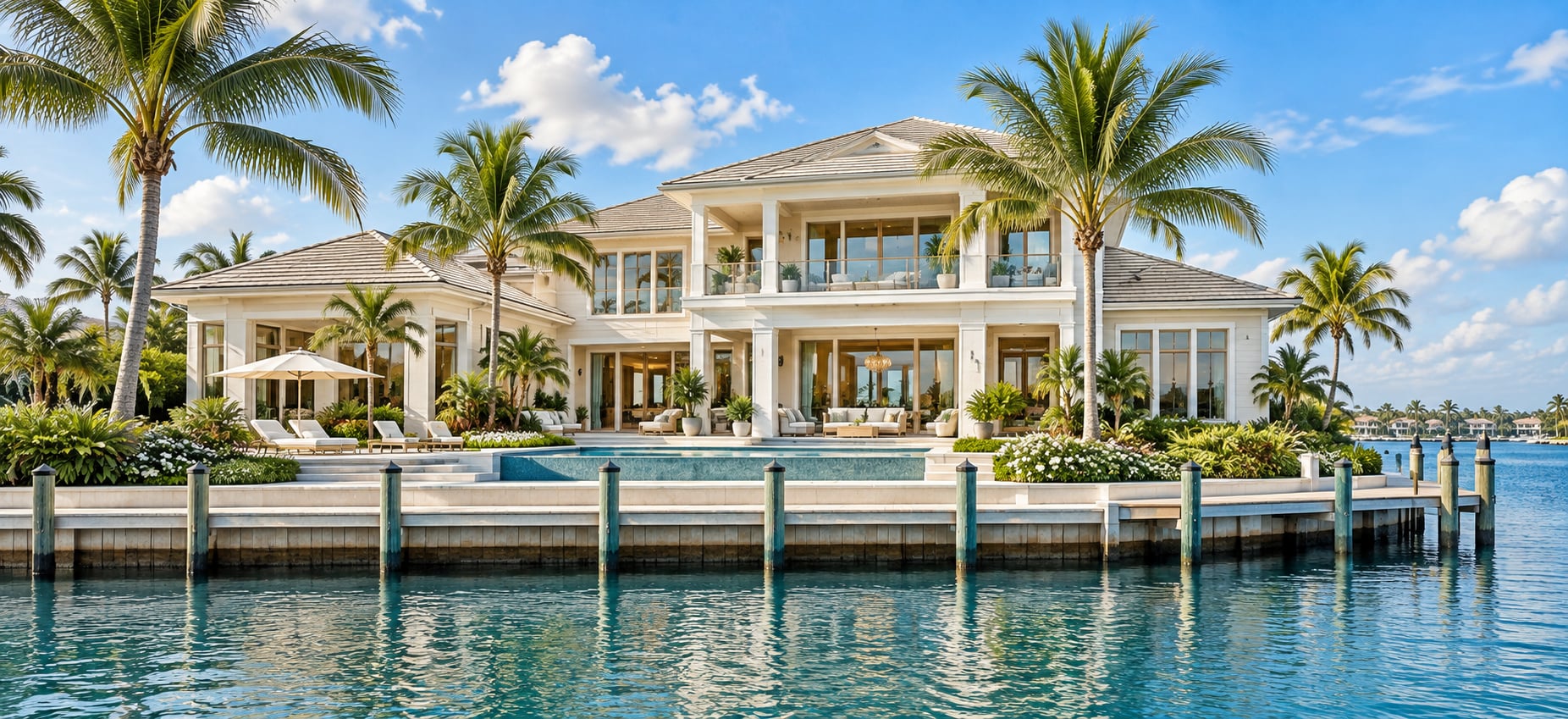
Fort Myers Beach · Waterfront
Waterfront Homes on Fort Myers Beach. Beach Living and Water Lifestyle.
Luxury waterfront homes with views, access, and community that make life in Southwest Florida unforgettable.
Fort Myers Beach Waterfront: Beach-Lifestyle-First Market
Fort Myers Beach waterfront is fundamentally different from Naples waterfront. This is island culture, casual beach living, strong seasonal demand, and vacation-home orientation. It's less resort-extreme than Naples, more accessible in pricing, and more seasonal in market dynamics.
Beachfront on Fort Myers Beach commands a substantial premium over comparable non-waterfront, depending on beach orientation and unit size. These premiums reflect beach-lifestyle appeal and strong vacation-rental demand.
The buyer profile is different from Naples. Naples attracts buyers seeking prestige and year-round luxury. Fort Myers Beach attracts couples, relocating buyers, and investors seeking beach-living with strong seasonal income. If you want year-round luxury, Naples. If you want beach-living and seasonal rental income, Fort Myers Beach is the sweet spot.
It is not the ultra-premium tier that Naples occupies. It is driven by tourism demand and lifestyle appeal rather than by luxury speculation.
Explore Fort Myers Beach Waterfront
Beachfront vs. Bay-Front: The Core Choice
Your first decision on Fort Myers Beach waterfront is beachfront or bay-front. This determines pricing, lifestyle, and investment returns.
Beachfront means direct Gulf access, sand at your doorstep, sunrise and sunset views, and maximum vacation-rental appeal. Beachfront also comes with the greatest hurricane exposure, the highest insurance cost, the heaviest salt-air maintenance burden and the most seasonal demand volatility.
Bay-front means protected water-access, boat slips, peaceful views, and moderate vacation-rental appeal. Maintenance burden is lower. But beach access is indirect or nonexistent.
Lifestyle buyers should buy beachfront if beach-culture fits them. Bay-front is for boaters who want water-access without beach premium. Investment buyers should carefully model seasonal demand and carrying costs before choosing beachfront.
Seasonal Dynamics: Peak Season Drives Everything
Fort Myers Beach is SEASONAL. This is not year-round destination like Naples. Peak season is November through April. This window drives the large majority of rental income and sets the pricing trajectory for the year.
Peak season weeks around Thanksgiving, Christmas and spring break command the highest nightly rates of the year for beachfront. Spring and autumn sit below that. Summer, from May to September, is slow, with lower rates and high vacancy.
Annual occupancy for beachfront vacation rentals concentrates heavily in peak season, so the headline figure hides how uneven the year is. But cash-flow is lumpy: strong peak-season months, weak off-season months. You must carry the property through slow periods.
Primary-residence buyers should understand seasonality affects neighborhood feeling. November-April, Fort Myers Beach feels vibrant and busy. May-September feels quieter and more local. If you want consistent community activity year-round, Fort Myers Beach may feel seasonal.
Hurricane Exposure and Insurance Reality
Fort Myers Beach is in the direct hurricane path. Direct exposure, high storm surge potential, and strong wind loads are real concerns.
Homeowners insurance for beachfront homes on Fort Myers Beach is expensive, and comprehensive coverage on a beachfront property is a significant annual cost. This is 4-5x higher than non-waterfront. Flood insurance is mandatory for Gulf-front and is a separate annual cost.
The total annual insurance burden across homeowners, flood and wind is substantial on Fort Myers Beach beachfront. This significantly affects carrying costs and investment cash-flow calculations. Many buyers underestimate this cost until they get actual quotes.
Building codes are strict for beachfront (hurricane-resistant construction required). This drives up construction costs for new builds and repair costs if storm damage occurs. Understand your building's age, construction standards, and history of storm damage before buying.
Hurricane season (June-November) adds uncertainty to beachfront ownership. Strong storms can drive insurance costs even higher post-season. Investors must model for this volatility.
Vacation Rental Market and Investment Positioning
Fort Myers Beach beachfront is THE vacation-rental market in Southwest Florida. Strong short-term rental demand drives pricing and enables cash flow for investors.
Professional property management companies specialize in FMB beachfront. Management fees take a meaningful share of rental revenue. Management comes off the top of rental income, and what remains has to cover mortgage, insurance, HOA, utilities and maintenance. This only works if you're disciplined on carrying costs.
Rental restrictions vary by building and HOA. Some allow unlimited rentals. Others restrict to 120 days per year or require 30-day minimum stay. Verify rental policies before buying if income is part of your strategy.
Positioning matters for rental returns. Gulf-front condos rent stronger than bay-front. Top-floor ocean-view units rent stronger than mid-floor with partial views. Beachfront detached homes rent stronger than small condos. Understanding your rental property type determines realistic income projections.
Investment buyers should run conservative occupancy models. Price rentals below market peak, not at peak. Budget for vacancy and maintenance every year. Modelled conservatively, net cash flow lands well below the gross once every cost is counted.
Dock, Seawall, and Waterfront Maintenance
Bay-front and canal-front waterfront homes on Fort Myers Beach have dock and seawall considerations. Beachfront condos typically have no private dock but may have common-area beach access and HOA-maintained infrastructure.
If you have a private dock, budget for its maintenance every year. Seawall replacement, if needed, is a major capital item and the cost scales with length and condition. HOA typically handles common seawalls in condo buildings.
Beach erosion is a long-term concern on Fort Myers Beach. Some beach properties have seen significant erosion over decades. Check historical beach-line changes and seawall construction before buying premium beachfront. A home 50 feet from beach today might be 30 feet in 20 years if erosion continues.
Marina-based bay-front properties need to understand slip quality and marina maintenance standards. A well-maintained slip is worth it. A deteriorating marina negatively impacts property value and lifestyle satisfaction.
Frequently Asked Questions
How much premium for beachfront vs. bay-front in FMB?
Premium reflects beach-access quality and vacation-rental appeal. Beachfront is peak-season dependent.
Is FMB waterfront a good vacation-rental investment?
Yes, with strong seasonal demand. Model conservatively: allow for real off-season softness rather than applying peak rents across the year. A modest net cash flow is realistic once all costs are counted. Professional management is essential.
How seasonal is Fort Myers Beach waterfront really?
Very seasonal. Peak season from November to April drives the large majority of annual rental revenue. Summer (May-Sep) is slow. If buying for personal use, prepare for seasonal neighborhood energy swings.
What are actual insurance costs for FMB beachfront?
Homeowners, flood and wind are priced separately and the total moves with elevation and building age. Factor this into carrying-cost calculations; it's a major expense.
Is hurricane risk real on Fort Myers Beach?
Yes. Direct exposure, storm surge risk, and strong wind loads are significant. Buildings follow strict codes. Insurance reflects this risk. Understand your building's age and storm history.
Can I rent out my FMB waterfront property?
Yes. Check the HOA and building rental restrictions before you buy, because they vary: some cap how many days a year a unit can be rented, others set a minimum stay length. Work with professional management company. Strong peak-season demand makes beachfront especially attractive for rentals.
Fort Myers Beach
What waterfront looks like on Fort Myers Beach
Island living with beach culture, vacation vibes meet established neighborhoods along the Gulf.
Fort Myers Beach is island living where beachfront commands strong vacation-rental appeal and established neighborhoods offer affordable beach access. Beachfront condos attract investors seeking strong seasonal demand, and beach-access homes appeal to those wanting the lifestyle without premium beachfront pricing. I guide buyers and sellers through island market dynamics.
- The homes
- Gulf-front single-family homes are rare and carry direct beach access. Bay-front and waterfront condos dominate, typically one to three bedrooms with shared amenities. Canal-access single-family homes and non-waterfront townhomes fill out the rest. Built mainly from the 1990s through the 2010s, with custom and specialty builders on the waterfront. Island constraints keep new construction limited.
- Why people choose it
- Gulf waterfront on a walkable barrier island, with rental demand that peaks November through April. Island living without club formality, and water access that is practical rather than ceremonial.
- Getting around
- 7-mile barrier island with walkable, mixed residential-commercial. Estero Boulevard main commercial corridor. Island separation creates distinct market. Seasonal demand peaks November-April with strong vacation rental infrastructure.
- Nearby
- Bay Beach, Estero Boulevard, San Carlos Island, Bonita Beach Peninsula, Flamingo, North Island
- The trade-off
- Denser and more walkable than Sanibel or Captiva, with stronger seasonal rental demand than Bonita Springs or Estero. The island is still rebuilding in places after Hurricane Ian, and recovery has not moved at one pace across it, so the block matters as much as the building.
The method
How we do it on Fort Myers Beach
Waterfront: keep exploring
Ready to make your move with Kris Asquith at Premiere Plus Realty?