2026-10-30 · 8 min read · Fort Myers Beach
What Should You Check for Salt Air Corrosion Before Buying a Home on Fort Myers Beach?
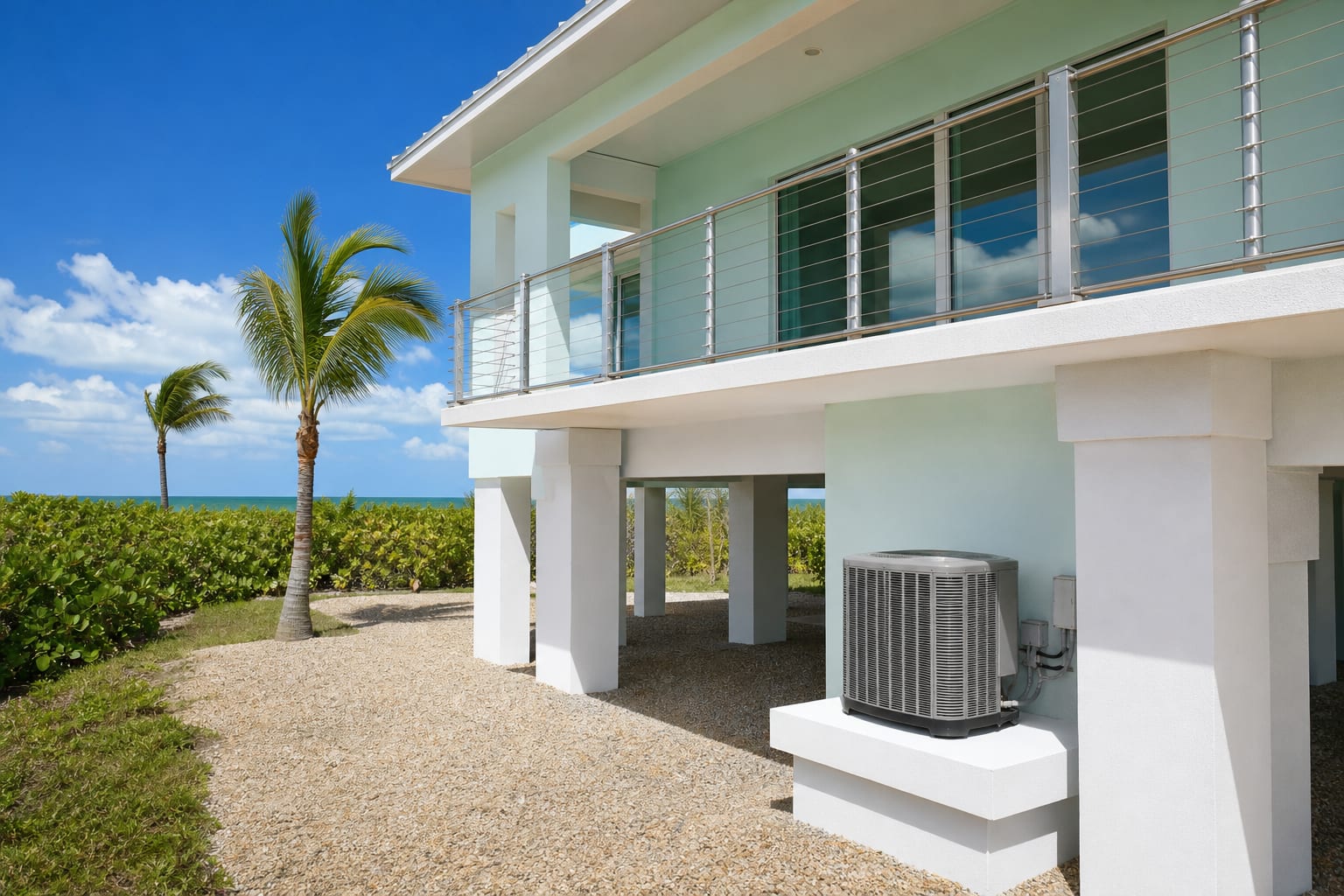
What should you check for salt air corrosion before buying a home on Fort Myers Beach?
Look at every place where metal or concrete meets the outdoors: the air conditioning equipment outside, the railings and the fasteners that hold them, the concrete on balconies, stairs and pilings, the hardware on doors, windows and the garage, and the metal connectors in the space under an elevated home. Then ask the seller what upkeep has been done and when. Those answers tell you whether you are buying a home that has been looked after on a schedule or one with replacements waiting, and they are hard to judge from listing photos.
I am Kris Asquith, Broker Associate at Premiere Plus Realty, and I help buyers and sellers on Fort Myers Beach and in eight other Southwest Florida markets. Fort Myers Beach sits on Estero Island, a barrier island with the Gulf on one side and Estero Bay and Matanzas Pass on the other, so salt is in the air whichever way the wind blows. Corrosion is a normal part of owning a home there. What matters is how well each home has been built and kept to handle it.
Why does salt air matter more on the island than on the mainland?
Because salt carried in the air settles on every surface and holds moisture there, and wet salt speeds up rust on steel and pitting on aluminum. Homes closest to the water and those facing the prevailing breeze tend to take the most, but nothing on the island is out of reach of it. Florida's building code recognizes this, and homes in coastal exposure are generally built with corrosion-resistant materials, such as stainless steel or hot-dip galvanized fasteners and connectors, in the places that matter most.
Two homes on the same street can age very differently depending on what was used and how they were maintained. A newer elevated home built with marine-grade materials and rinsed regularly can look close to new for years, while a home of the same age built with ordinary hardware may already show rust streaks. So treat the build materials and the upkeep record as part of the price, the same way you would the roof or the air conditioning.
How do you check the air conditioning equipment outside?
Look closely at the condenser, the outdoor unit. Its thin metal fins and coils are exposed to salt air all the time, and corrosion there is one of the most common reasons coastal air conditioning equipment is replaced sooner than it would be inland. Ask how old the unit is, whether it has a coastal or corrosion-resistant coating, and whether it has been serviced and had its coils cleaned. Look for flaking or crumbling fins, white or green crust on the copper and aluminum, and rust on the cabinet, the fasteners and the stand it sits on.
On an elevated home the condenser usually sits on a raised platform or a wall bracket so it is above the flood elevation, and that support is metal too, so check the brackets and bolts as well as the unit. Air conditioning is also one of the four items on a four-point inspection, which many insurers ask for on older homes, and my article on what a four-point inspection covers on Fort Myers Beach explains what the inspector records.
What should you look for on railings, stairs and fasteners?
Rust where metal meets metal, and stains where metal meets concrete or wood. On railings, look at the base plates, the welds and the screws. Stainless steel used near salt water is commonly a marine grade, and a lower grade can show brown tea staining on the surface. Powder-coated aluminum is common too, and the thing to watch for is bubbling or lifting paint, which usually means corrosion is working underneath it. Push gently on each railing and note any that move.
On exterior stairs, check the stringers, the treads and every bolt. Rusted fasteners in a deck or a stair are a structural question, not a cosmetic one, and they are worth having a licensed contractor look at before your inspection period ends. On a canal home, give the dock hardware, the ladder and the boat lift cables and motor the same attention. My article on rebuilding a dock or seawall on Fort Myers Beach covers what is involved if that work is coming.
What does rust on concrete mean?
It can mean the steel reinforcing inside is rusting. Concrete balconies, stairs, slabs and pilings are reinforced with steel bars, and when salt and moisture reach that steel it rusts and expands, which cracks the concrete from the inside and can push pieces of the surface off. That is called spalling. The early signs are rust-colored streaks running down from a crack, hairline cracks along the line of a bar, and concrete that sounds hollow when tapped.
In a single-family home, ask your inspector to look closely at the balconies, the stair landings and the pilings, and ask the seller whether any concrete repair has been done. Concrete restoration on a structural element often needs a permit, and the Town of Fort Myers Beach handles building permits for homes on the island. In a condominium building, spalling repair is a common reason for major projects, and Florida's milestone inspection law was written with exactly this kind of deterioration in mind. My article on milestone inspections before buying a condo on Fort Myers Beach explains what those reports cover.
What about doors, windows and the garage?
Open, close and lock every one of them. Sliding glass doors run on rollers and tracks that collect salt and sand, and a slider that drags or sticks may only need cleaning or new rollers, or it may have a corroded frame. Check the hinges, locks and handles on entry doors, the hardware and tracks on windows, and the springs, rollers and track on the garage door. On storm shutters and storm panels, check the tracks, anchors and fasteners for rust, because a shutter that will not close is no protection when a storm is coming.
None of this is unusual on the island, and much of it is routine replacement. The point is to know before you commit what needs attention and roughly what it involves, so ask your inspector to note the condition of each door and window and to photograph anything that is corroded.
What should you check under an elevated home?
The metal connectors that hold the house together. Elevated homes rely on steel straps, ties and anchors to connect the floor to the pilings and the roof to the walls, and the ones you can see from the ground level are worth a careful look. Surface discoloration on galvanized steel is common; flaking, pitting or connectors that have visibly lost metal are a question for a licensed engineer or contractor. Look at the electrical equipment mounted under the home too, such as meters, disconnects and any elevator equipment, since corrosion there is a safety and insurance concern. My article on checking the electrical system before buying on Fort Myers Beach covers that side in more detail.
Who handles corrosion in a Fort Myers Beach condo?
It depends on the declaration. In most condominium buildings the association maintains the structure, the exterior walls, the balconies' concrete and often the railings, while the unit owner may be responsible for things like sliding doors, windows or the unit's own air conditioning equipment. The documents set the line, so read them rather than assuming. Ask the association whether any concrete restoration, railing replacement or window project is planned, and how it will be paid for. Projects like these can lead to a special assessment, and my article on special assessments before buying a condo on Fort Myers Beach shows where to look in the budget, the reserves and the minutes.
What should you do with what you find?
Sort it into three groups: what is structural, what affects insurance, and what is routine upkeep. Spalling concrete, corroded stair or deck fasteners and badly corroded connectors belong in the first group and deserve a written evaluation from a licensed professional before you decide. A failing condenser can affect both insurance and comfort. Pitted door hardware or a stiff slider is ordinary maintenance on the island. Your contract's inspection terms set how long you have to decide, so book your inspections the day you go under contract. My step-by-step buying process shows where the inspection period falls.
If you are selling, gather receipts for air conditioning service, railing or hardware replacement and any concrete repair before you list, so a buyer sees a home that has been kept up. My page on buying a home on Fort Myers Beach covers the wider picture, and I am glad to go through the inspection reports on a specific home with you. Get in touch or call (239) 300-1427.
This article is a general overview and is not legal, insurance, engineering or construction advice about any particular property. Confirm the specifics with your home inspector, a licensed contractor or engineer, your insurance agent, a real estate attorney and the Town of Fort Myers Beach.
Frequently Asked Questions
Does salt air shorten the life of an air conditioner on Fort Myers Beach?
It often does. The outdoor condenser's fins and coils are exposed to salt air all the time. Ask how old the unit is, whether it has a corrosion-resistant coating and whether the coils have been cleaned and serviced, and have your inspector check it closely.
What is concrete spalling, and is it serious?
Spalling happens when steel reinforcing inside concrete rusts and expands, cracking the concrete and pushing pieces off. Rust streaks and hollow-sounding concrete are early signs. On a balcony, stair or piling it is a structural question, so have a licensed professional evaluate it.
Will a home inspection catch corrosion?
A home inspector will note visible corrosion on equipment, railings, doors and concrete, but cannot see inside walls or concrete. If the report flags rust on structural parts, ask a licensed contractor or engineer for a closer look during your inspection period.
Who pays for corrosion repairs in a Fort Myers Beach condo?
The declaration decides. The association usually maintains the structure and balcony concrete, and the unit owner may be responsible for doors, windows or the unit's own air conditioning. Ask whether any concrete or railing project is planned and how it will be funded.