2026-10-08 · 7 min read · Sanibel
Should You Buy an Elevated Home or a Ground-Level Home on Sanibel?
Why does elevation matter so much when you buy on Sanibel?
Because on a barrier island, the height of a home's lowest floor decides more about owning it than almost any other single feature. I am Kris Asquith, Broker Associate at Premiere Plus Realty, and I work with buyers and sellers on Sanibel and eight other Southwest Florida markets. Much of the island sits in FEMA special flood hazard areas, and elevation relative to the required flood level affects your flood insurance, how far you can renovate before the rules change, and what you are allowed to do with the space at ground level.
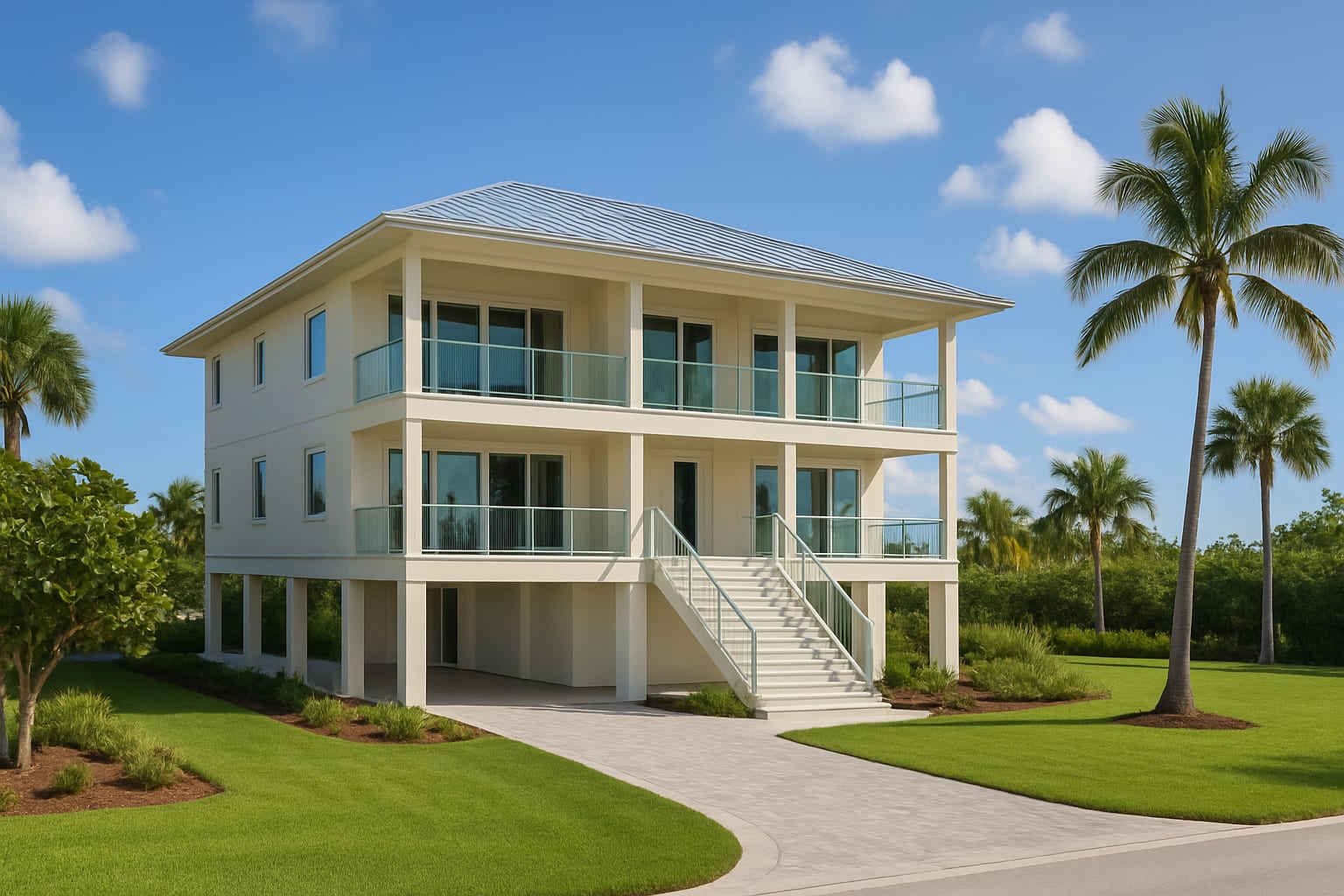
Sanibel has both kinds of homes. Some older houses were built at or near grade before today's flood standards existed. Others, including much of the rebuilding after Hurricane Ian's storm surge in 2022, sit on pilings or raised foundations with parking and storage underneath. Neither is automatically the right choice, but they are different purchases, and it helps to know which questions belong to which. Elevation is one of the first things I look at in any Sanibel buying checklist.
What is an elevation certificate, and how do you get one for a Sanibel home?
An elevation certificate is a FEMA form completed by a licensed surveyor, engineer or architect. It records the property's flood zone, the base flood elevation that applies to it, and the measured elevation of the building's lowest floor and key equipment. The base flood elevation is the height floodwater is expected to reach in a flood that has a one percent chance of happening in any given year, and the comparison between that number and the lowest floor is what insurers and building officials care about.
Ask the seller first whether they have a certificate. If they do not, ask the City of Sanibel's building department whether one is on file for the address. If neither has one, a surveyor can prepare a new certificate, and it is worth ordering early in your inspection period rather than waiting for an insurance agent to request it. Make sure the certificate reflects the home as it stands today: a house that was raised, rebuilt or added onto after the certificate was prepared may not match it.
How does elevation change flood insurance on a Sanibel home?
In general terms, a home whose lowest floor sits above the base flood elevation is treated as a lower flood risk than one built below it, and that difference shows up in what flood coverage costs. A ground-level home built before current standards can carry a noticeably different premium from an elevated home a few lots away, even when the two look alike from the street.
I do not quote insurance figures, because they depend on the specific structure, the coverage chosen and the insurer, and a number that is right for one address can be wrong for the next. What I do recommend is getting real flood and homeowners quotes on the exact property, using its elevation certificate, before your inspection period ends. That gives you the actual carrying cost of the home rather than an estimate, and it is often the figure that separates two otherwise similar houses.
What can you do with the space under an elevated home on Sanibel?
Less than many buyers assume. Under federal floodplain rules that the City enforces, an enclosed area below the base flood elevation is limited to parking, building access such as stairs or an elevator landing, and storage. It is not meant to be finished living space, and in the higher-risk coastal zones the walls of those enclosures are generally required to be designed to break away under storm surge.
This matters for diligence. Over the years some owners in flood zones have finished ground-level enclosures into bedrooms, offices or game rooms without permits. A finished space under an elevated home is a reason to ask questions: whether it was permitted, whether it complies with floodplain rules, and whether an insurer will treat it as a problem. Check the City's permit history for the address and compare it with what you see. If the downstairs looks like part of the living area, assume it needs explaining until the record says otherwise.
Can you renovate or expand a ground-level home on Sanibel?
Yes, but there is a ceiling on how much, and buyers of older ground-level homes need to understand it before they price a remodel. Sanibel, like other coastal communities in the National Flood Insurance Program, enforces the substantial improvement standard, often called the 50 percent rule. If the cost of improving or repairing a building in a flood zone reaches half of the building's market value, the whole structure must be brought into compliance with current floodplain requirements, which usually means meeting today's required elevation.
For a ground-level home, that can turn a planned kitchen, bath and window project into a question of whether to raise the house or rebuild. The same rule applies to repairs after storm damage. Before you buy an older home with renovation plans, ask the City how it calculates the threshold and whether earlier work on the property counts toward it. I explain how the standard works in practice in my article on the 50 percent rule for renovations on Marco Island; the federal standard is the same, though each city sets its own procedures, so confirm Sanibel's directly.
What are the everyday trade-offs between an elevated home and a ground-level home?
An elevated home puts the main living level above the flood elevation, usually with covered parking, storage and an entry below. Expect stairs, and on many newer homes an elevator. The raised living level often gives longer views over the water or the vegetation around it, and the ground level stays useful for what the rules allow. An elevator is a mechanical system like any other, so include its age, service records and any flood exposure of its equipment in your inspection.
A ground-level home offers step-free living from the driveway to the lanai and a direct connection to the yard and pool. Its risk profile is different: the structure, the electrical and mechanical systems and everything inside sit closer to any water that comes ashore. Ask what happened to the home in Hurricane Ian and in later storms, what was repaired and how, and whether the repairs were permitted. Florida sellers of residential property now owe buyers a written flood disclosure at or before contract, and my guide to Florida's flood disclosure law explains what that form does and does not cover.
Elevation also interacts with where the home sits on the water. A Gulf-front home, a bayfront home and a canal home each face different exposure, and my guide to Gulf-front, bayfront and canal homes on Sanibel walks through those differences.
What should you check before making an offer on either kind of Sanibel home?
A short list covers most of it. Get the elevation certificate, or order one. Pull the City's permit history and compare it with the home as built, paying particular attention to ground-level enclosures, additions and storm repairs. Read the seller's flood disclosure alongside that permit record. Get real flood and homeowners insurance quotes on the specific address. If you plan to renovate, ask the City about the substantial improvement threshold before you commit to a budget. And have your inspector look closely at anything at ground level: wiring, mechanical equipment, slabs and lower walls.
I schedule those steps inside your inspection period in the buying process, when you still have room under the contract to ask questions, negotiate or step back. For sellers, having the certificate, permits and repair records ready before listing answers a buyer's first questions in advance, and it belongs in any plan for selling a home on Sanibel.
Who can help with a specific Sanibel property?
The City of Sanibel's building department is the authority on floodplain requirements, permits and the substantial improvement threshold for an address. A licensed surveyor prepares elevation certificates, and a licensed insurance agent can quote flood coverage once you have one. This article is a general overview and is not legal, insurance or construction advice for any property.
If you are weighing an elevated home against a ground-level one on Sanibel, get in touch or call (239) 300-1427. I will help you get the elevation, permit and insurance questions answered for the specific homes you are considering, before you commit.