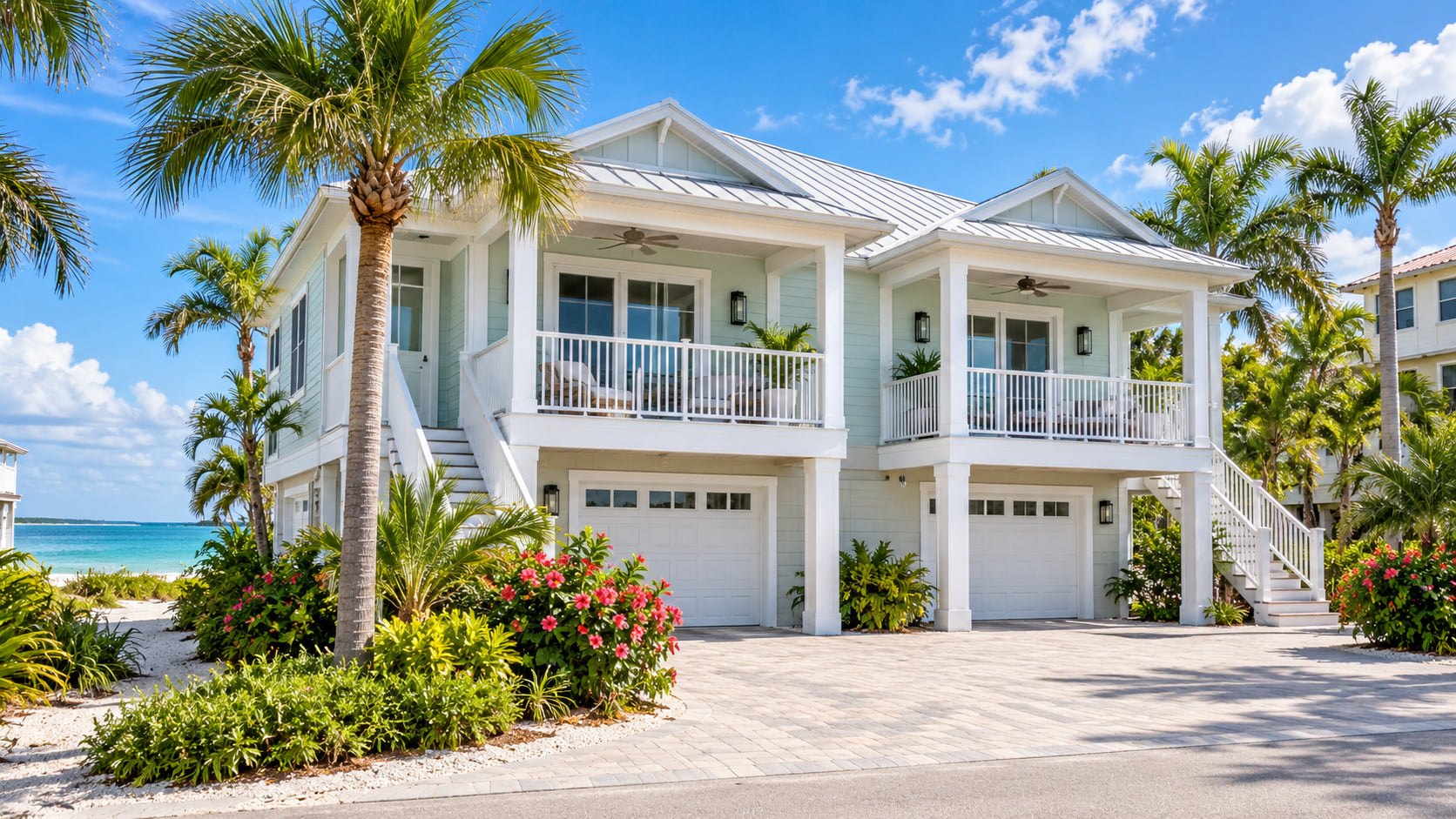
Marco Island Investment Property
Property bought for return, evaluated on the numbers rather than the finish level.
What Kind of Investment Market Is Marco Island?
A finite one, and that is the honest starting point rather than a sales line.
Marco Island is a barrier island in Collier County with a fixed land area. No new Gulf-front lots are being created, and there is no meaningful supply of undeveloped land waiting to become inventory. That is a structural fact about the island rather than a forecast, and it is the only part of the investment case that does not depend on what the market does next.
What it does not tell you is what a property will earn. I will not put a number on that, and I would be skeptical of anyone who does. What I can do is walk you through the three things that actually decide it: what you are allowed to do with the property, what it costs you to hold, and whether the water behind it does what the listing implies.
I am Kris Asquith, Broker Associate at Premiere Plus Realty, and I work across nine Southwest Florida markets including Marco Island.
Check a Building's Rental Rules
What Are You Actually Choosing Between?
Three different purchases, with three different tenants and three different sets of problems.
Gulf-front condos. The strongest seasonal position on the island and the highest cost to get into. These carry the shortest vacancy in peak season and the largest gap between peak and summer, so the whole year has to be modelled rather than the good months.
Beach-proximate condos a street or two back. A materially lower entry point for a property that still rents on the beach. For many owners this is the better balance between what the purchase costs and what the property actually earns.
Canal and sound-side properties. A different tenant again, usually one bringing a boat. Confirm what the water actually connects to and whether a fixed bridge limits the vessel that can get out, because that single detail decides who will rent it. Cape Marco, Key Marco and Hideaway Beach each sit differently against this and are not interchangeable. Hideaway Beach in particular ties ownership directly to its club, so membership there is not optional the way it is in some communities.
The Marco Island Gulf access page goes further into what the different water actually gives you.
What Decides Whether You Can Rent It at All?
This is the question that should come before you look at a single floor plan, and it is the one most often asked last.
On Marco Island the answer sits in two places. The first is the building or association documents: the minimum lease term, how many separate tenancies are permitted in a year, whether every tenant must be approved and how long that takes, and whether a new owner must wait a period after closing before renting at all. The second is what the city permits for that address, which is not the same question and does not always give the same answer.
A building that allows a small number of longer leases is a perfectly sound annual rental and an unworkable weekly one. An investor who buys the second expecting the first has bought the wrong property, and no amount of good management fixes it afterwards.
Documents also get amended. What an owner did five years ago is not a guarantee of what you may do now. Get the current documents, read the rental section, and confirm it in writing inside your inspection period. The step-by-step buying process shows where that check sits, and it sits early on purpose.
What Does It Actually Cost to Hold?
The gross rent is not the number that decides whether the purchase was worth making. What reaches you is what is left after the following, and on an island every one of them runs higher than it would inland.
Association dues, which on a Gulf-front building fund real amenity and eventually its replacement. Property taxes at the non-homestead rate rather than the rate a resident owner pays. Insurance including both flood and wind, which are separate cover and separately priced. Management and turnover, which on a seasonal property is a recurring cost rather than an occasional one. Ordinary maintenance, which salt air accelerates.
Waterfront adds seawall and dock upkeep on top of all of that, and those are the costs owners most often leave out of the arithmetic entirely.
Ask about reserves and assessment history in any building you are serious about. An association that has deferred major work has moved that expense into your ownership period, whatever the current dues suggest.
What Changes If You Buy More Than One Unit?
The financing does, and it changes at a specific place: four units.
Two to four units is generally still residential lending. Five and up is commercial, which means different underwriting, different terms, and a lender who will want to see the property's operating numbers rather than only yours. Those are two different searches with two different sets of economics, and it is worth knowing which one you are running before you fall for a building.
So establish the financing first. If you might go past four units, talk to a lender who writes commercial loans and find out what they will underwrite and on what terms. That conversation tells you whether five and up is available to you or whether four is your ceiling.
The investment property guide covers that line in more detail and how it plays out across the rest of the coast.
How I Would Approach It With You
Income property is negotiated on documents and operating numbers rather than on finishes, and the diligence period is where the money is made or lost.
Bring me a property and I will read the rental rules, the association documents, the reserve position and the operating statements with you before you write anything. If the numbers only work when nothing goes wrong, they do not work, and I would rather say so early than help you buy it.
Get in touch or call (239) 300-1427, and I will pull the current rental rules for any Marco Island building you are considering before you spend a weekend touring it.
Frequently Asked Questions
Can I rent out any property on Marco Island?
No, and this is the question that decides everything else. The answer sits in the building or association documents and in what the city permits for that address, and those are two separate checks. Minimum lease term, how many tenancies a year are allowed, tenant approval and any waiting period after closing all vary building by building. Establish the rules before you choose the property.
What return will an investment property on Marco Island make?
Nobody can honestly tell you that in advance, and be skeptical of anyone who offers a number. What can be established before you buy is what you are permitted to do with the property, what it costs to hold across a full year rather than a peak season, and what the water behind it actually connects to. Those three decide the outcome.
What is different about buying more than four units?
The lending. Two to four units is generally residential; five and up is commercial, with different underwriting and terms, and a lender who will assess the property's operating numbers rather than only your own finances. Have that conversation before you shortlist buildings, because it decides which buildings are realistic.
Does a canal property on Marco Island reach open water?
Often, but never assume it. Confirm what the water connects to and whether a fixed bridge limits the size of vessel that can get out, address by address. That single detail decides who will rent the property and what they will pay to do it, and it is the most common thing buyers take on trust from a listing.
What costs do investors most often leave out?
Seawall and dock upkeep on waterfront, flood and wind insurance as separate cover, taxes at the non-homestead rate rather than the resident rate, and the assessment history of the association. A building that has deferred major work has moved that expense into your ownership period whatever its current dues look like.
Marco Island
What investment - 2 units or more looks like on Marco Island
An exclusive island paradise, luxury waterfront estates, natural beauty, and resort-style living.
Marco Island is island living at the southern end of the region, with waterfront estates, deep-water canal access and a real beach. New Gulf-front lots are not being created, and that single fact shapes most of what happens in the market here. I work with buyers and sellers who want to understand Marco Island on its own terms rather than as a cheaper Naples.
- The homes
- Private custom builders dominate the top of the market. New construction is limited because there are no new Gulf-front lots to build on. Beachfront condos run one to three bedrooms. Gulf-front estates and canal-access waterfront estates make up the rest.
- Why people choose it
- Deep-water canal access straight out to the Gulf, a genuine beach, and island separation while still being bridged to the mainland. Most of the island's canals reach open water without a bridge, which is not true everywhere in the region.
- Getting around
- Bridged to the mainland, with direct Gulf access through maintained deep-water channels. Island geography keeps the market distinct from Naples even though the drive is short.
- Nearby
- Hideaway Beach Club, Key Marco yacht club, Cape Marco, Marco Shores, Old Marco, Goodland
- The trade-off
- Marco is shaped by island geography and the fact that no new Gulf-front inventory is being created. Compared with Naples you tend to get more house on the water and less depth of club infrastructure behind it.
How we do it on Marco Island
Investment - 2 units or more: keep exploring
Ready to make your move with Kris Asquith at Premiere Plus Realty?