2026-11-10 · 8 min read · Bonita Springs
What Should You Check About the Generator Before Buying a Home in Bonita Springs?
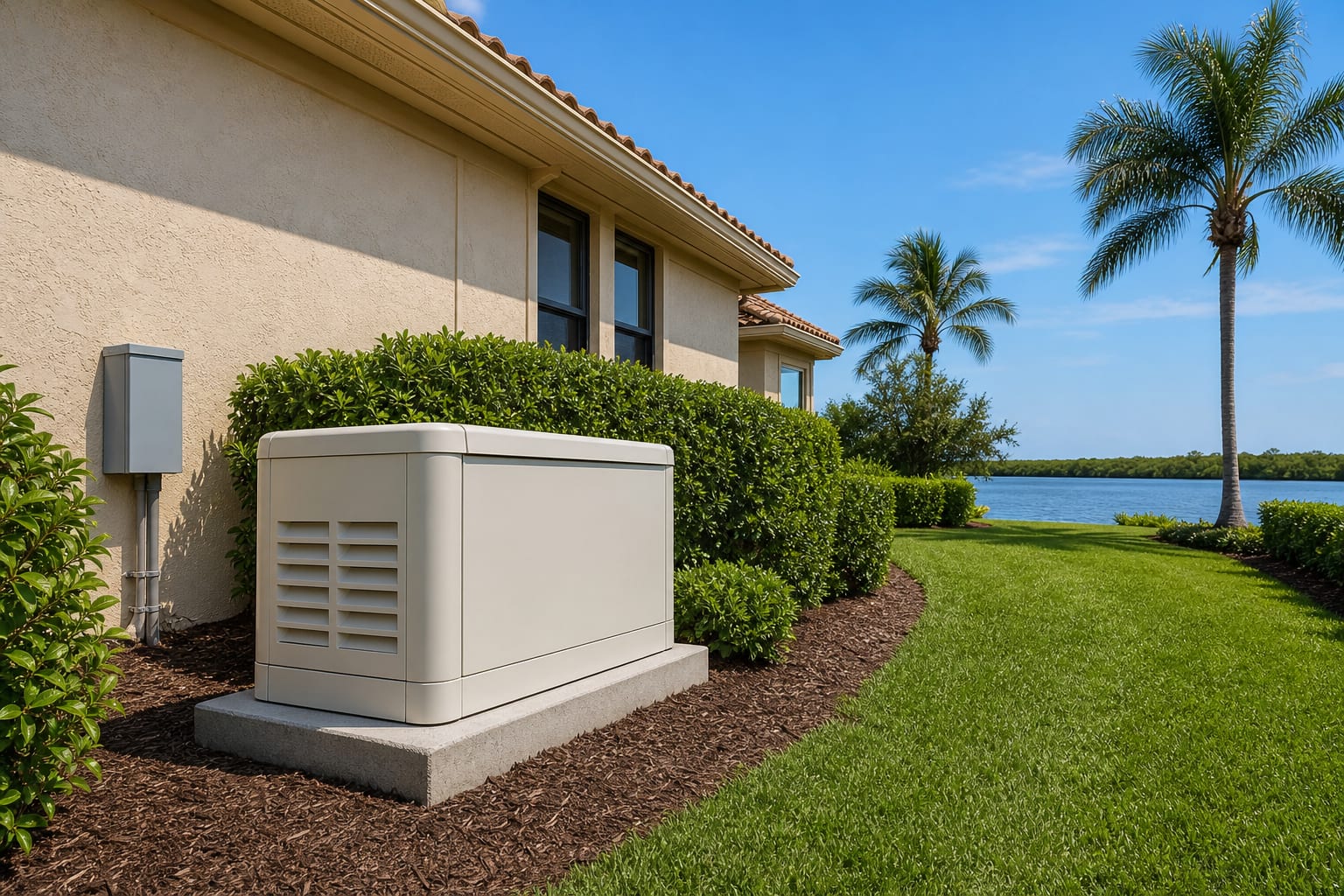
What should you check about the generator before buying a home in Bonita Springs?
Seven questions cover it. Is it a standby or a portable unit? Which circuits does it back up? Does it burn natural gas or propane, and where is the fuel? Has floodwater ever reached it? Are there permits with final inspections for the generator, the transfer switch and the fuel line? Did the association approve it? And who has serviced it, and when? Get those answers from the seller and the records, then pay a generator technician or licensed electrician to run it under load during your inspection period. A standard home inspection rarely goes that far, and a generator that has never been tested is a promise, not a feature.
I am Kris Asquith, Broker Associate at Premiere Plus Realty, and I help buyers and sellers across Bonita Springs and eight other Southwest Florida markets. Homes here run from older single-family homes near the Imperial River and Old 41 to club-community homes built across several decades and new construction east of I-75, and a generator can show up on any of them. It is about the days after a storm has passed and the power is still out. It is never a reason to stay through one: when Lee County orders an evacuation for your zone, leave.
What kind of generator does the home have, and what does it power?
There are two broad setups. A standby unit is installed for good on a pad outside the house and wired in through an automatic transfer switch, so when the grid goes down it starts by itself and takes over within moments. A portable unit lives in the garage or a shed until it is needed, and someone has to roll it out, start it and plug it into an inlet box that feeds the panel through a manual transfer switch or an interlock kit. A listing that says "generator ready" may mean only that the inlet or the switch is there and no generator comes with the home.
The bigger question is coverage. An installer can wire a generator to back up every circuit in the panel, or only a short list of essentials, and the two feel nothing alike on day three without power in September. Get the circuit list in writing from the seller or the installer's paperwork, then have your electrician confirm it at the transfer switch. The items most people care about are the air conditioning, the refrigerator and freezer, the kitchen, the water heater, the pool pump and, on a home with a private well, the well pump. Running central air takes far more capacity than lights and a refrigerator, so if cooling matters to you, ask whether anyone has seen this generator carry the air conditioner. My article on checking the electrical system before buying in Bonita Springs covers the panel and wiring the generator feeds.
Where does the generator sit, and has water ever reached it?
Look at where it stands first. Bonita Springs has seen two kinds of flooding in recent memory: the Imperial River overflowing after heavy rain following Hurricane Irma in 2017, and storm surge pushed into neighborhoods near the bay and Bonita Beach by Hurricane Ian in 2022. A generator on a slab-level pad in either kind of area may have been standing in water at some point. Homes built or substantially improved under current flood rules are generally expected to keep their mechanical equipment at or above a set elevation, which is why some newer generators sit on raised stands.
So ask the seller plainly whether water ever reached the unit and what happened next. Floodwater gets into the engine, the alternator and the control board. A unit that went under may since have been replaced, or it may have been cleaned and returned to service. As a buyer you want to know which, and to see the invoice either way. Compare the answer with the seller's written flood disclosure and the permit record. My article on finding out whether a Bonita Springs home has flooded shows how to put those records side by side.
What fuel does it run on, and where is the fuel kept?
Home standby units are usually fueled by natural gas or propane. With natural gas, the generator draws from the utility line and the question is simply whether the home has gas service and whether the hookup was permitted. With propane, there is a tank somewhere on the lot, either above ground or buried in the yard, and three things to settle: where it is, how much is in it, and who owns it. Many propane tanks are leased from the supplier rather than owned, and a leased tank stays tied to that company's contract, so ask the seller for the supplier's name and the terms you would be taking over.
Run time is the practical test. Ask the technician to estimate how many hours or days the fuel supply will keep the generator going at its real load, because a tank sized for a few lights will not carry central air for long. Then look at how the tank is held in place. FEMA's flood-zone guidance calls for fuel tanks to be anchored so rising water cannot float them loose, and your inspector can tell you whether this one is strapped or bolted down.
What permits and records should the seller have?
A generator installation normally touches three trades: electrical work for the transfer switch, gas or propane work for the fuel line, and the pad and placement itself. Look for a permit with a passed final inspection covering each part. The City of Bonita Springs keeps the permit history for homes within city limits, so search the address there, and ask the seller for copies of anything they have. The transfer switch deserves particular attention because it is what keeps generator power from flowing backward out to the street, where it can injure utility workers restoring service.
Next, the maintenance file. A standby unit needs oil changes, filter changes and a healthy battery on a schedule, and many models run a short automatic self-exercise on a set schedule. Ask when it was last serviced, by whom, and whether that weekly exercise is still happening. Long gaps in service, or a unit swapped out after a storm with nothing filed at the City, should be raised before your inspection period ends, since any unpermitted work becomes yours on the day you close. Ask, too, whether the manufacturer's warranty is still active and whether it can be transferred to you. My article on checking the permit history before buying in Bonita Springs explains how to read the record line by line.
Did the community approve the generator?
Many Bonita Springs homes sit in communities with an association and an architectural review process, and a generator is an exterior change that the community's documents may cover: where it can go, how it is screened, and whether it needs written approval before it is installed. Ask the seller for the approval letter, and ask the association whether there are any open violations on the property. An unapproved generator, or one placed somewhere the rules do not allow, becomes the new owner's conversation with the association after closing.
If the home has no generator and you want to add one, read the community's rules on placement and screening before you buy rather than after, and ask the association what its approval process involves. My article on the HOA and club questions to ask before buying in Bonita Springs covers the rest of what to request from the association.
What about a portable generator?
If the plan for this home is a portable unit, look at how it ties in. The correct connection is a permitted inlet on the outside wall that feeds the panel through a transfer switch or interlock. A cord run into a wall outlet, sometimes called back-feeding, is dangerous and is exactly what electricians warn against. Then picture where the generator would actually sit while it runs. Carbon monoxide is the danger: the U.S. Consumer Product Safety Commission says never to operate one indoors, in a garage, or anywhere enclosed or partly enclosed, and to keep it well away from doors, windows and vents. Opening the garage door does not make the garage an outdoor space, and a screened lanai counts as partly enclosed. Make sure the home has carbon monoxide alarms that work.
Finally, put it in the contract if you want it. A portable generator generally counts as the seller's belongings rather than part of the real estate, so it leaves with them unless the contract says otherwise.
Who looks after the generator in a Bonita Springs condo?
In a condominium, any generator serving the building is normally common property, which makes it the association's to maintain and replace. Your questions go to the manager or the board: Is there a building generator? Which systems does it back up, for example elevators, corridor and stairwell lighting, fire alarm and sprinkler equipment, or lift stations? When was it last load-tested and serviced? Is it listed in the reserve study with a replacement date? A building generator is an expensive item, and if reserves fall short, owners can face a special assessment when it fails. Whether a unit owner may bring in a portable generator is a question for the declaration and the house rules, so read them rather than relying on what the seller does. My article on milestone inspections before buying a condo in Bonita Springs covers the other building-level records worth asking for.
What should you do with what you find?
Put each finding in one of two piles. The first is routine ownership: the generator ran under load, its paperwork is complete, the association signed off, and it has been serviced on schedule. Plan to keep that service contract going. The second pile needs a professional opinion in writing before you decide anything: corrosion inside the cabinet, a history of standing in floodwater, a loose fuel tank, no permit, no approval, or a post-storm replacement that nobody can document. With an estimate in hand you can ask the seller to fix it, ask for a credit, or rethink the deal. The inspection period in your contract is short, so schedule the generator technician in the first days after you sign. My step-by-step buying process shows where the inspection period falls, and my guide to buying a home in Bonita Springs covers the rest of the purchase.
If you are selling, gather the generator, transfer switch and fuel permits, the community approval, the service records, the warranty and any propane lease before you list, and have the unit serviced so it runs when a buyer's technician tests it. I am glad to go through the records on a specific home with you. Get in touch or call (239) 300-1427.
This article is a general overview and is not legal, insurance or construction advice about any particular property. Confirm the specifics with a licensed electrician or generator technician, your home inspector, your insurance agent, a real estate attorney, the association and the City of Bonita Springs.
Frequently Asked Questions
Does a home inspection cover the generator?
Not in any depth. Most general inspectors record that a generator exists and its visible condition. To learn whether it really works, hire a generator technician or licensed electrician to start it, put it under load, cycle the transfer switch and open the cabinet, all within your inspection period.
Does a generator stay with the house when it sells in Bonita Springs?
A standby unit bolted to a pad and wired into the panel is generally part of the property. A portable unit is generally the seller's to take. If you are counting on either one, name it in the contract.
Do I need HOA approval for a generator in a Bonita Springs community?
In many communities, yes. A generator is an exterior change, and the community's documents may set where it can go, how it is screened and whether written approval is needed first. Ask the seller for the approval letter on an existing generator, and read the rules before you buy if you plan to add one.
How can I tell whether a Bonita Springs generator took on water in a past storm?
Start with the seller's written flood disclosure and a direct question about the generator. Ask for repair or replacement invoices, then check the City of Bonita Springs permit record for work after Irma or Ian. A technician opening the cabinet can spot corrosion or water lines that paperwork misses.