2026-10-27 · 8 min read · Estero
What Should You Check Before Buying a Lakefront Home in Estero?
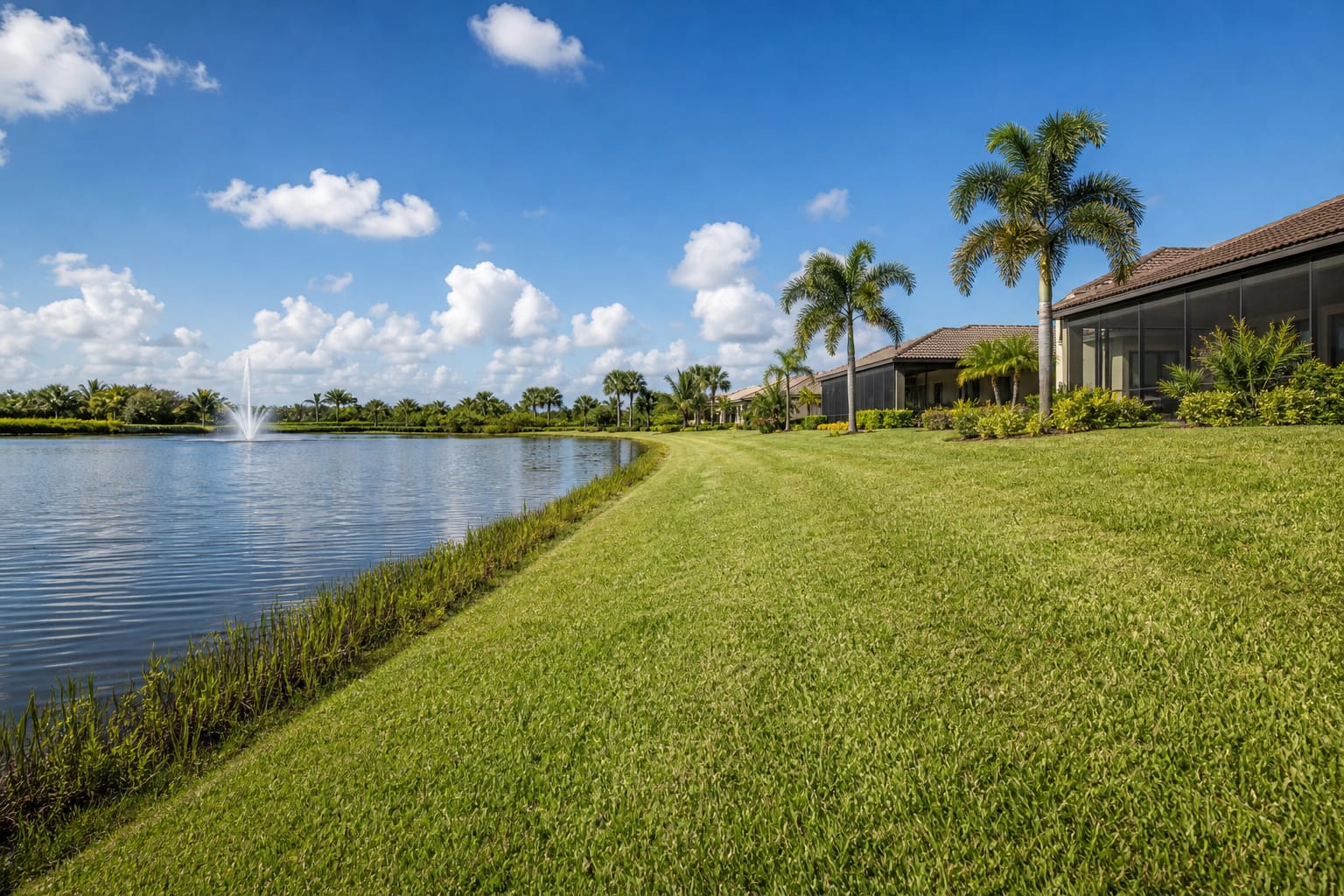
What should you check before buying a lakefront home in Estero?
Find out who owns the lake and the bank behind the house, where your lot line actually ends, what the community allows you to do on and beside the water, who pays when the bank erodes, and how the water level changes through the year. A lake view is one of the most sought-after features in an Estero community, and every one of those answers lives in documents you can read before your inspection period ends, not after closing.
I am Kris Asquith, Broker Associate at Premiere Plus Realty, and I help buyers and sellers across Estero and eight other Southwest Florida markets. Estero is an inland village with no Gulf frontage of its own, so most of its water views are lakes inside master-planned communities. They look alike from the lanai, but the rules behind them are set community by community, and two lakefront homes a mile apart can come with very different rights and responsibilities.
Is the lake behind an Estero home a natural lake?
Usually not. Most lakes in Estero's master-planned communities were dug when the community was built, as part of its stormwater management system. Their first job is to collect and hold rainwater running off roofs, streets and lawns, and the system is permitted through the South Florida Water Management District. That is why the lakes are there, and it explains most of the rules that come with them.
It also explains why the water level moves. Southwest Florida has a wet summer and a dry winter and spring, and a stormwater lake rises and falls with that cycle. A bank that looks full and green in a September listing photo can show a wide strip of exposed slope in late spring. If you can, see the home at more than one time of year, or ask the seller and the association how far the level usually drops. Neither is a defect; it is simply how these lakes are designed to work.
Who owns the lake and the bank behind the house?
In many communities the lake itself sits on a separate tract owned by the homeowners association or, where there is one, the community development district. Your lot may stop at the top of the bank or partway down it rather than at the water, and the strip along the bank is often covered by a lake maintenance easement that lets the association reach the lake with equipment.
The plat and a current survey show where your lot ends and where any easement runs. Ask the title company for the recorded plat, and read the survey line by line rather than glancing at the drawing. My article on whether you need a new survey when you buy explains what a survey shows and why a buyer orders one. If a community development district owns the lake, its budget and assessments are separate from the HOA's, so ask for both.
Who pays when the lake bank erodes?
The community documents decide, so read them rather than assuming. Lake banks wear away over time from rain runoff, wind on the water and irrigation, and in some communities the association or district restores them as a shared cost, while in others part of the responsibility falls on the owner of the lot behind. Bank restoration is one of the larger projects a lake community takes on, so it is worth asking directly.
Ask the association three things: who maintains the bank behind this specific lot, whether any bank restoration work has been done or is planned, and whether it is funded from reserves or could lead to a special assessment. The budget, the reserve schedule and recent board minutes usually answer all three. My article on what Estero HOA fees actually cover shows where lake maintenance tends to sit in a community budget.
What can you actually do on the lake?
That depends entirely on the community. Many Estero lake communities do not allow swimming, and many limit or prohibit boats, docks and fishing from the bank. Others allow more. Corkscrew Shores is a lake community where residents can put a boat on the lake, but there are no private docks behind the homes and the lake has no route to Estero Bay or the Gulf. My article on keeping a boat at Corkscrew Shores covers how that works, and my article on the difference between Gulf-access and lake communities in Estero explains why a lake lot and a Gulf-access lot are different purchases.
Read the lake rules in the declaration and the rules and regulations, and ask the association for anything adopted since. Florida's freshwater lakes can hold alligators and other wildlife, and community rules about swimming and pets near the water usually reflect that. If kayaking, fishing or a boat on the lake matters to you, confirm it in writing before you commit.
What can you build or plant near the water?
Less than you might expect, so check before you plan. A pool, a lanai extension, a new screen enclosure, a fence, a dock and even some landscaping near the bank usually need approval from the community's architectural review committee, and work inside a lake maintenance easement may not be allowed at all. Some communities also restrict what can be planted along the water's edge, because the planted shelf near the shoreline is part of how the lake filters runoff.
If a pool or a bigger lanai is part of why you want the home, ask the association whether the setback and the easement leave room for it, and get the answer before your inspection period ends. If the home already has a pool, have it inspected along with the screen enclosure.
Does a lakefront lot change your flood risk or insurance?
Not automatically. A stormwater lake is designed to hold water during heavy rain, and living beside one is not the same as being in a higher-risk flood zone. What decides your flood insurance is the home's flood zone on the FEMA map and its elevation, which an elevation certificate records. Ask the seller for the elevation certificate and any flood policy, and ask your insurance agent for a quote on the specific address early in your inspection period.
My article on whether homes in Estero need flood insurance walks through the zones and the paperwork. It is also worth asking the seller whether the yard has ever held standing water after a large storm, and checking the permit record for any repairs after one.
What should you do with what you find?
Put it in one place before you commit: the plat and survey showing where your lot ends, the lake rules, the answer on bank maintenance, any planned lake or bank project, and the insurance quote. If something matters to you, such as a boat on the lake or room for a pool, get it confirmed in writing by the association rather than relying on what a neighbor or a listing says. Your contract's inspection terms set how long you have to make those decisions. My step-by-step buying process shows where the inspection period falls and what happens next.
If you are selling a lakefront home, gather the survey, the lake rules, any bank work records and the elevation certificate before you list, so a buyer sees answers rather than questions. My page on waterfront homes in Estero covers the wider picture, and I am glad to read the lake rules for a specific community with you. Get in touch or call (239) 300-1427.
This article is a general overview and is not legal, survey or insurance advice about any particular property. Confirm the specifics with the community association, a licensed surveyor, your insurance agent and a real estate attorney.
Frequently Asked Questions
Do you own the lake behind a lakefront home in Estero?
Usually not. In many Estero communities the lake sits on a separate tract owned by the homeowners association or community development district, and your lot may stop at or partway down the bank. The plat and a current survey show exactly where your lot ends.
Can you swim or put a boat on a lake in an Estero community?
It depends on the community. Many Estero lake communities do not allow swimming and limit or prohibit boats and docks, while some, such as Corkscrew Shores, allow boats on the lake. Read the declaration and the current rules, and confirm in writing if it matters to you.
Who pays to fix lake bank erosion in Estero?
The community documents decide. In some communities the association or district restores banks as a shared cost, and in others part of the responsibility falls on the lot owner. Ask the association who maintains the bank behind the specific lot and whether any project is planned.
Why does the lake level drop at certain times of year?
Most Estero community lakes are stormwater lakes, built to collect rainwater. They rise in the wet summer months and fall in the dry season, so the bank can look very different in late spring than it does in a summer listing photo.