2026-08-21 · 13 min read · Estero
Waterfront vs. Inland on Estero: Which Makes Sense for Your Home?
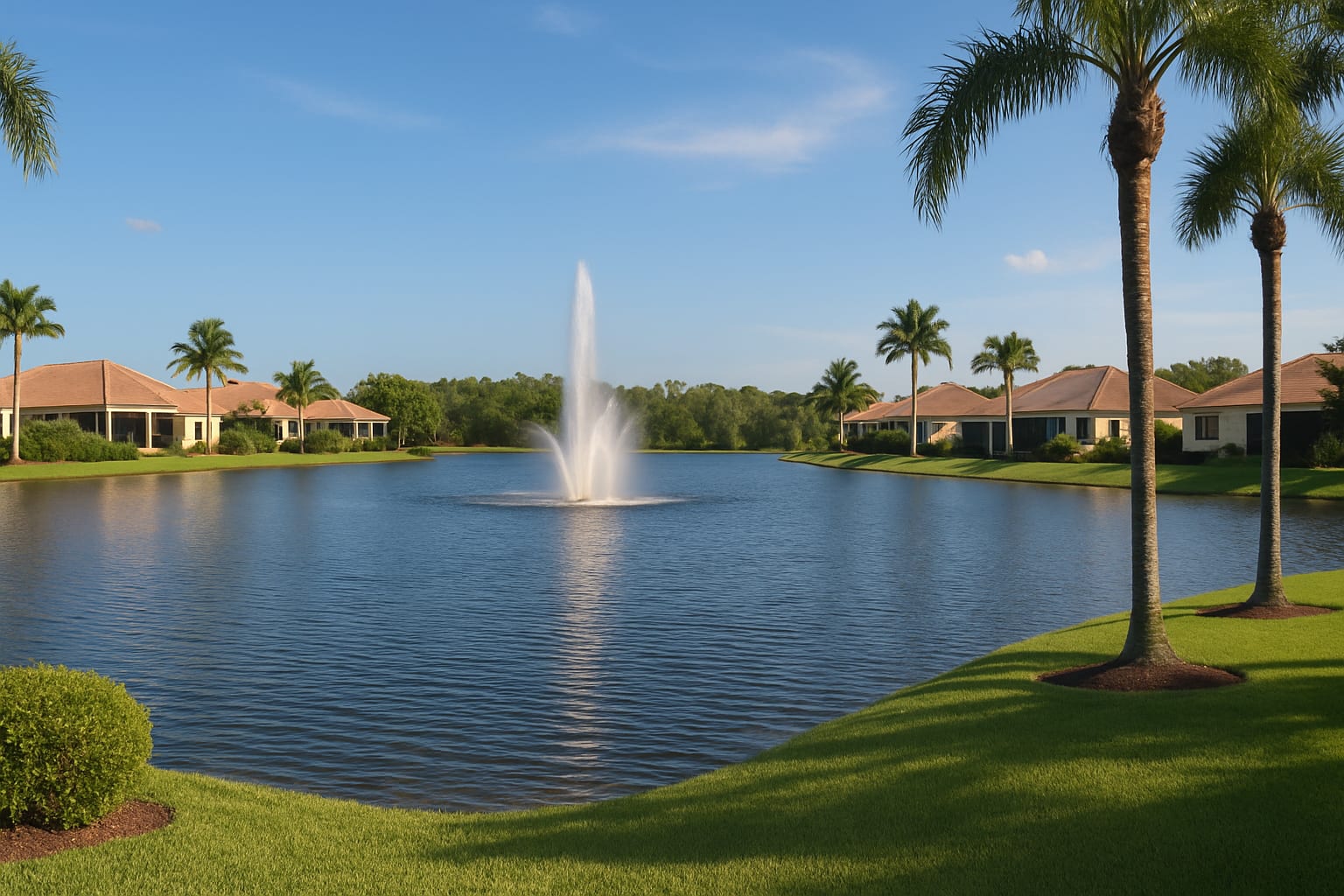
Waterfront vs. Inland on Estero Bay: What's Actually Different?

On Estero Bay, you have two distinct choices: properties with direct water access and bay views, or inland homes in master-planned communities. Kris Asquith, a Broker Associate at Premiere Plus Realty, helps buyers on Estero understand this decision every week. The choice isn't just about views. It is about lifestyle, maintenance, resale and cash flow if you're investing.
Waterfront on Estero Bay means direct access to the bay or the Gulf, with dock potential, tidal water views, and island living. Inland on Estero means master-planned community amenities, golf courses, and lower maintenance. Which wins? It depends on what you're buying for.
Waterfront on Estero Bay: Price, And What It Actually Costs
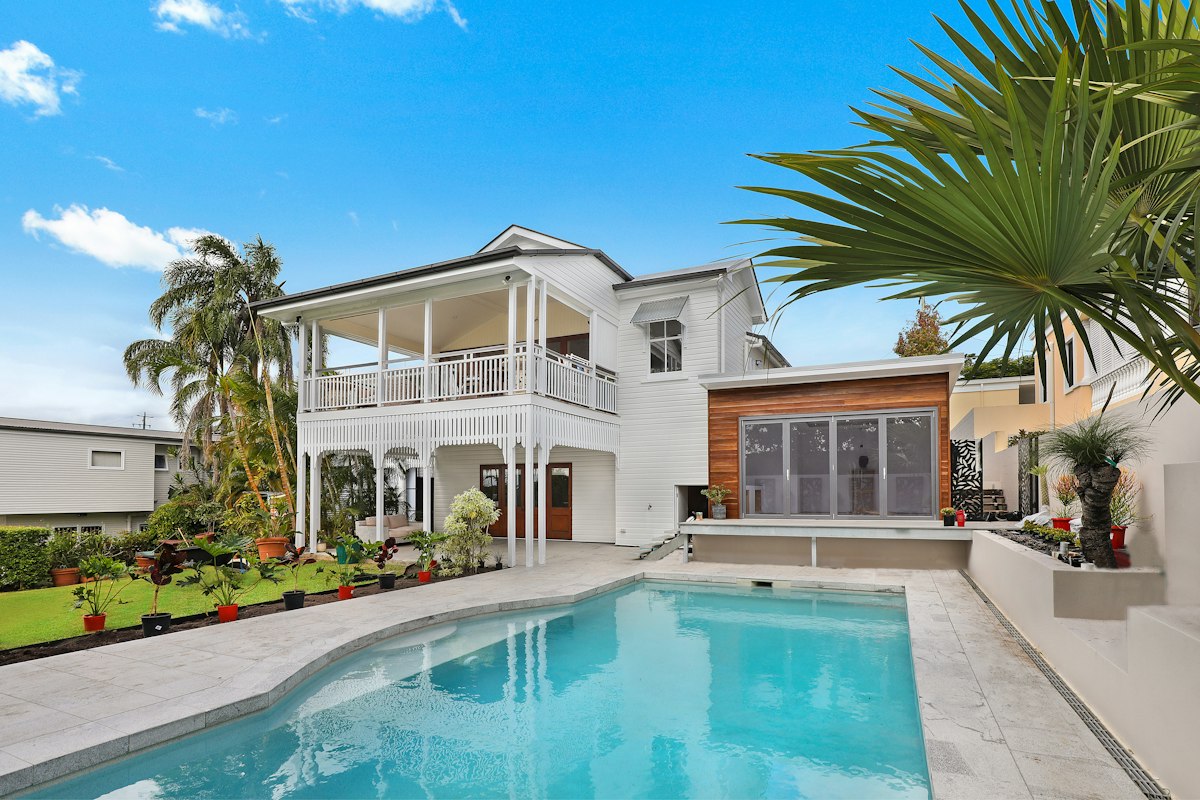
A three-bedroom waterfront home on Estero Bay is priced according to dock access and view quality.
Why the premium? Scarcity. Estero sits in Lee County, and the bay shoreline inside it is a fixed quantity: no more of it is being made, however much the county grows around it.
Waterfront also carries costs that inland does not. Seawall and dock maintenance is an annual line item, dock repairs or seawall reinforcement come round every several years, and flood insurance runs higher. Those are real carrying costs, and they belong in the comparison alongside the purchase price.
Bottom line: waterfront costs more to buy and more to hold. Whether that is the right trade depends on how much you will actually use the water and whether you can absorb the maintenance, not on a rule of thumb.
Inland on Estero: Amenities, Value, and Predictable Ownership
Inland in Estero means master-planned communities like Corkscrew Shores, Grandezza and Verdana Village. These communities offer resort-style amenities: pools, restaurants, fitness and landscaped common areas, with golf at Grandezza but not at Corkscrew Shores, which is built around its lake. A three-bedroom inland home with club access costs considerably less than equivalent waterfront.
Inland homes hold steady, unspectacular demand. You're paying for predictability and lifestyle, not scarcity. The trade-off: zero waterfront drama. No dock inspections, no seawall repairs, no flood insurance premiums. Homeowners associations cover common area maintenance.
Inland works for buyers who want stability, golf communities, and lower carrying costs. It also works for investors who model cash flow over 7-10 years without surprise maintenance bills. On Estero, inland is the "sleep at night" option.
Dock Access and Boat Ownership: The Waterfront Reality

If boat ownership is your draw to waterfront on Estero Bay, start with a distinction that trips up a lot of buyers: Gulf-front and Gulf access are not the same thing. A Gulf-front home sits directly on the beach and does not have a dock behind it, because there is no navigable water at the back of the property. If you want to keep a boat at the house, what you are actually looking for is Gulf access, which means bay, canal or river frontage with a route out to the Gulf. Bayfront on Estero Bay is that category. Gulf-front is not.
What limits the boat is the route, not the label. Estero Bay is shallow and has real tidal variance, so usable depth at a given dock changes through the day, and any fixed bridge between that dock and a pass sets a ceiling on air draft no matter how much water is underneath. Confirm depth at low tide, bridge clearance on the route you would actually run, and the rated capacity of the dock and lift at that specific property before you assume a particular boat will work there.
Dock maintenance isn't optional. Wood docks need vinyl sheathing replacement every 5-7 years. Concrete docks last longer but cost more upfront. Mooring posts corrode in saltwater. This is why waterfront buyers hire marine surveyors before purchase. The difference between a sound dock and a failing one is a substantial hidden cost.
For boat owners: factor dock maintenance, slip fees if docking elsewhere, and tidal access into your waterfront decision. Many Estero waterfront buyers discover the dock they loved at purchase becomes a maintenance headache by year three.
Location Within Estero Bay: Waterfront Neighborhoods That Hold Value
Not all waterfront on Estero is the same product. Gulf-access frontage and interior lake frontage are different products, and the gap between them is wider than the listings suggest.
Pelican Sound and West Bay Club are the two Estero communities with Gulf access by boat, both through the Estero River, and West Bay Club also has a private beach club on the Gulf. Most other Estero communities are built around lakes rather than Gulf-access water. Each draws a different buyer and feels different to live in.
For inland, Corkscrew Shores, Grandezza and Verdana Village lead on amenity value. These master-planned communities hold their character better over time, because the amenities are maintained collectively rather than left to individual owners.
Which Choice Matches Your Timeline and Goals?

Choose waterfront on Estero Bay if: you are holding for the long term, can absorb the annual maintenance, want lifestyle waterfront access, and prioritize growth over predictability.
Choose inland on Estero if: You want lower carrying costs, community amenities (golf, restaurants, pools), predictable expenses, and don't need water views to be happy.
Kris Asquith works with buyers on Estero Bay to model both scenarios: waterfront appreciation vs. inland cash flow. The right choice depends on your timeline, risk tolerance, and lifestyle priorities.
If you want to see both sides side by side, start with Estero real estate for the market overview, then compare Estero non-Gulf access waterfront homes against the inland communities covered on the Estero home buying page. The step-by-step buying process shows how the search, offer and inspection stages differ when a dock and a seawall are part of the purchase.
Contact Kris Asquith to walk through your own numbers on a specific property.