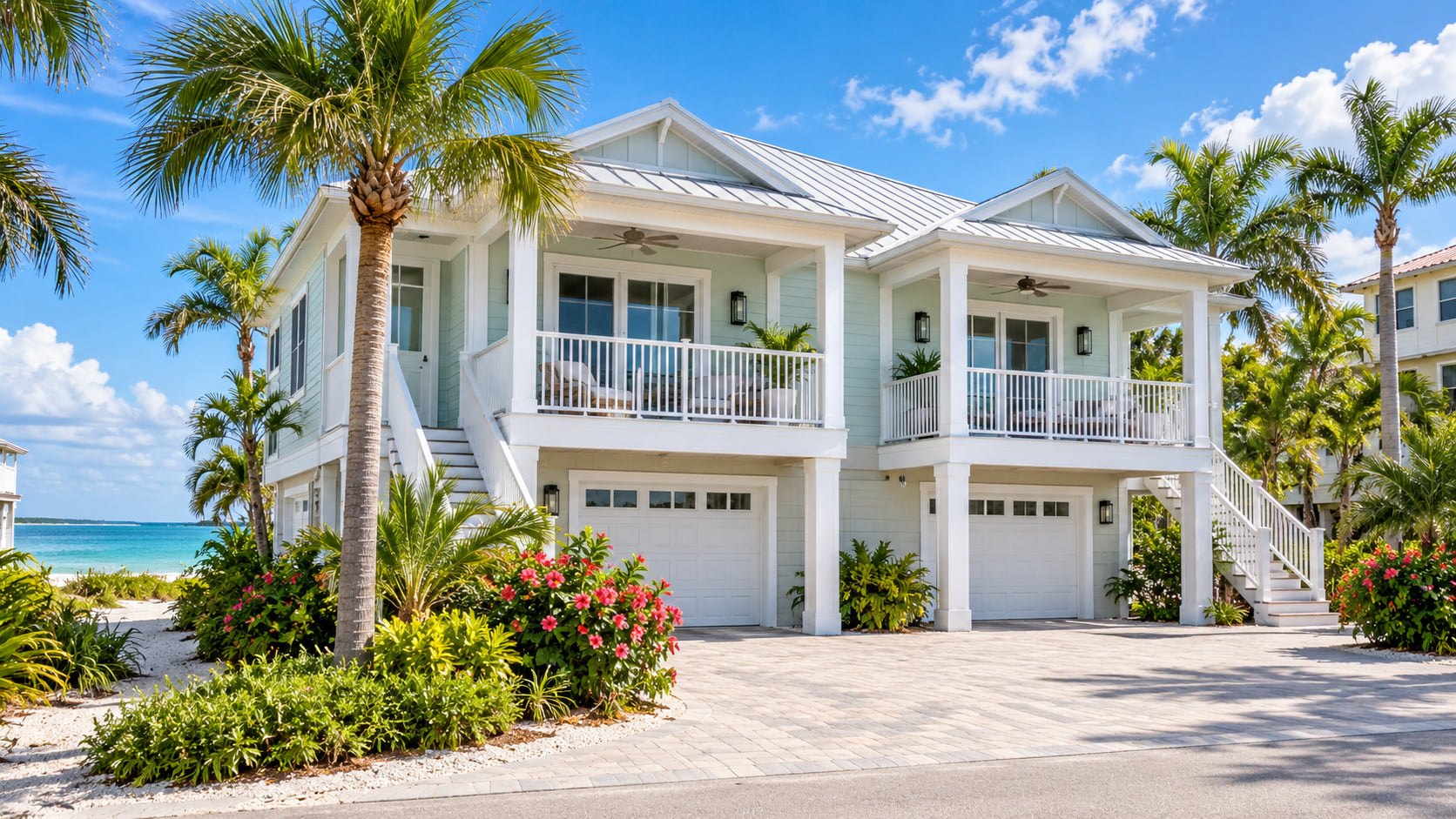
Captiva Island Investment Properties
Property bought for return, evaluated on the numbers rather than the finish level.
Is Captiva a Realistic Investment Market?
Captiva is one of the smallest markets on this coast and one of the most particular. Captiva Drive runs the length of the island and there is no second road. Blind Pass separates it from Sanibel at the south end. Roosevelt Channel runs along the bay side. That is the whole geography, and it does not change.
Supply is the entire investment thesis here. There is a fixed and genuinely small number of properties on Captiva, no undeveloped land waiting to absorb demand, and no mechanism by which more gets built. Most markets talk about scarcity as a selling point. On Captiva it is a structural fact you can verify by driving the island in under fifteen minutes.
What follows from that is straightforward. Entry costs are high, the pool of available properties in any given month is small, and patience matters more than timing. This is not a market where you wait for the right listing every quarter. It is one where you decide what you want, get properly positioned, and move when something matching it appears.
Talk Through a Captiva Purchase
What Makes Captiva Different From the Rest of the Coast?
The access route. Everything reaches Captiva over the Sanibel Causeway and then up through Sanibel. Guests, contractors, deliveries, turnover crews and repair parts all take the same road. That single fact shapes what maintenance costs, how long work takes to schedule, and how a turnover day actually runs. Owners who model Captiva on a mainland rental are usually surprised by this, and it is the first thing worth understanding.
The resort infrastructure. South Seas Island Resort anchors the north end of the island and brings rental and hospitality infrastructure with it. That matters for an investor, because a destination market with established infrastructure behaves differently from one where every owner is solving the same operational problems alone.
The demand is destination demand. Nobody rents on Captiva because of where it is convenient to. They rent because of the island itself. That makes demand less sensitive to the things that move mainland rental markets and more sensitive to the island's own condition and reputation.
North Captiva is a separate proposition. North Captiva Island is reachable only by boat or small aircraft. It shares a name and very little else, and it should be evaluated as its own market rather than as an extension of this one.
What Should You Verify Before You Buy a Captiva Rental?
The rental rules for that specific property. Captiva's rules are not Sanibel's, and what a neighbouring property does is not evidence of what yours may do. Confirm the minimum stay, any limit on the number of tenancies, and any association approval requirement in writing during your inspection period.
Condition, and the paperwork behind it. The islands took a direct hit from Hurricane Ian and a great deal has been rebuilt since. Properties differ enormously in what was repaired, to what standard, and with what permits. This has become the central diligence question on Captiva rather than a footnote to it. Ask for the permit history, not just a description of the work, and have the structure inspected by someone who knows island construction.
Flood zone and elevation. These drive insurance and they drive what you may do to the property later. Get the elevation certificate and get real insurance quotes on the actual address during your inspection period rather than an estimate afterwards.
What the water access actually is. Bay side, Gulf side and channel frontage are three different things with three different maintenance profiles. The Captiva Gulf access homes page covers the distinctions, and the step-by-step buying process shows where each of these checks belongs in the timeline.
What Does It Cost to Run a Rental on Captiva?
Gross rent on a well-placed Captiva property is strong. The costs behind it are also higher than most first-time island owners expect, and the gap between the two is where the investment is actually decided.
Budget for association dues, property taxes at the non-homestead rate, insurance including flood and wind, management, turnover and cleaning, and maintenance that runs harder than mainland maintenance because salt air and sun are relentless on exteriors, fixtures and mechanical systems.
Then add the island premium on labor. Every trade that comes to Captiva travels to get there, and that shows up in what routine work costs and in how far ahead it has to be booked. Owners who build this into the model from the start do fine. Owners who discover it in their first season find the numbers tighter than they planned.
Ask directly about reserves and recent assessments on any property inside an association. On an island where rebuilding has been widespread, an association's financial position is a more useful signal than its amenity list.
Who Actually Does Well Owning on Captiva?
Owners who do well here tend to share three things. They are patient about acquisition, because the right property does not appear on demand. They are realistic about holding costs rather than optimistic. And they treat the property as something they will own for a long time rather than something they will trade.
Owners who struggle are usually the ones who bought on the rental figure alone, without checking what the association permits, what the structure actually needs, or what it costs to keep a property in condition on a barrier island.
If you want to compare this against the neighbouring island before you commit, Sanibel investment properties covers a market with different rules and a different renter, and Captiva real estate covers the island as a whole. The investment property guide covers the decision at the level above any single market.
Get in touch and we can go through a specific property, its permit history and its real holding cost before you write an offer on it.
Frequently Asked Questions
Can you rent short-term on Captiva Island?
Captiva has an established rental market, and its rules are not the same as Sanibel's. What applies to your property depends on the property, its zoning and any association it sits in, and rules do change. Confirm the minimum stay, any cap on the number of tenancies and any approval requirement in writing for the specific address during your inspection period. Never rely on what a neighbouring property does.
How does Captiva compare with Sanibel as an investment?
They are genuinely different markets that happen to be connected. Captiva is smaller, more resort-oriented and more expensive to enter, with rental rules that are generally more accommodating. Sanibel is larger, quieter, heavily shaped by conservation land, and draws a longer-staying renter. Neither is the better buy in the abstract. They suit different owners and different strategies.
What did Hurricane Ian change for buyers here?
It made condition and permit history the central question rather than a secondary one. A great deal has been rebuilt across both islands, and properties differ widely in what was repaired, to what standard and with what permits. Ask for documentation of the work rather than a description of it, use an inspector who knows island construction, and get real insurance quotes on the specific address before your inspection period ends.
Is North Captiva the same market?
No. North Captiva Island is a separate island reachable only by boat or small aircraft, with no road connection to Captiva. Access, servicing, construction logistics and the renter it attracts are all different. It can be a good purchase, but it should be evaluated on its own terms rather than as a cheaper way into Captiva.
How hard is it to manage a Captiva rental from out of state?
It is entirely workable, and it depends more on your management arrangement than on the distance. The island has experienced management operators handling placement, turnover and maintenance. What deserves your own attention is the purchase: the rental rules, the structure's condition and permit history, and a holding cost that accounts for island labor and travel. Get that right and the ongoing operation is routine.
Captiva
What investment - 2 units or more looks like on Captiva
Untouched island charm, pristine beaches, exclusive properties, and escape-to-paradise living.
Captiva is the quietest and most limited of the barrier islands. New construction is rare, inventory is genuinely scarce, and commercial development has been held down on purpose. The beaches are the reason people come and the shortage of listings is the reason they wait. I guide buyers and sellers through a small and slow-moving market.
- The homes
- Mostly existing estates from custom and specialty builders, with very little new construction. Beachfront and Gulf-front properties dominate the top of the market. Development constraints and environmental controls limit what can be added.
- Why people choose it
- Exceptional beaches, near-total separation from the mainland, and a scale of development that has been deliberately held down. People buy here for the island itself rather than for what it does next.
- Getting around
- Island access only. Resort island with minimal traffic and exceptional separation from mainland. No commercial development beyond essential services.
- Nearby
- Beachfront estates, waterfront/bay-front neighborhoods, private communities
- The trade-off
- Smaller and quieter than Marco Island or Sanibel. What you buy is separation and beach quality. What you give up is amenities, services and any depth of inventory, so the right property can take a season to appear.
Investment - 2 units or more: keep exploring
Ready to make your move with Kris Asquith at Premiere Plus Realty?