2026-09-24 · 8 min read · Bonita Springs
Who's Responsible for Seawall and Dock Repairs on a Bonita Springs Waterfront Home?
Who's Responsible for Seawall and Dock Repairs on a Bonita Springs Waterfront Home?
It depends on exactly where the structure sits and what the community's own documents say, and it is genuinely not safe to assume. I am Kris Asquith, Broker Associate at Premiere Plus Realty, and I work Bonita Springs alongside eight other Southwest Florida markets. A seawall or a dock behind a bay-front or canal-front home in this area can belong to the homeowner outright, to the community association as a shared structure, or occasionally to the county, and the difference between those three answers can be tens of thousands of dollars the day a repair becomes necessary. Buyers rarely ask this question until they need the answer, which is exactly the wrong time to be asking it.
Why Does This Come Up More in Bonita Springs Than Inland?
Because Bonita Springs' best-known waterfront neighborhoods sit on Estero Bay rather than on a freshwater lake, and bay water carries salt. Salt air and brackish water work continuously on anything metal or exterior facing the water, so a seawall, a dock's pilings and hardware, and a boat lift's mechanical parts wear on a shorter timeline here than the same structures would on an inland lake lot. That is not a defect of any specific property. It is simply the maintenance reality that comes with bay frontage, and it means the ownership question is not academic. Something on that lot will eventually need real money spent on it, and the point of asking early is finding out in advance whose money that is expected to be.
Does the Homeowner Own the Seawall, or Does the Association?
Check the recorded plat and survey for the specific lot before assuming either answer. In some Bonita Springs communities the seawall sits entirely within the platted boundary of the homeowner's own lot, which generally makes it the homeowner's structure to maintain and insure like any other part of the property. In others, particularly where a community was built around a shared bay-front common area, the seawall sits on association-owned or association-maintained land even though it runs directly behind private backyards, which shifts the maintenance obligation, and often the cost, to the association's reserve fund and its dues. The recorded survey answers this more reliably than a listing description or a neighbor's recollection, and it is worth pulling before you get attached to a specific house.
What About the Dock and Boat Lift Behind the House?
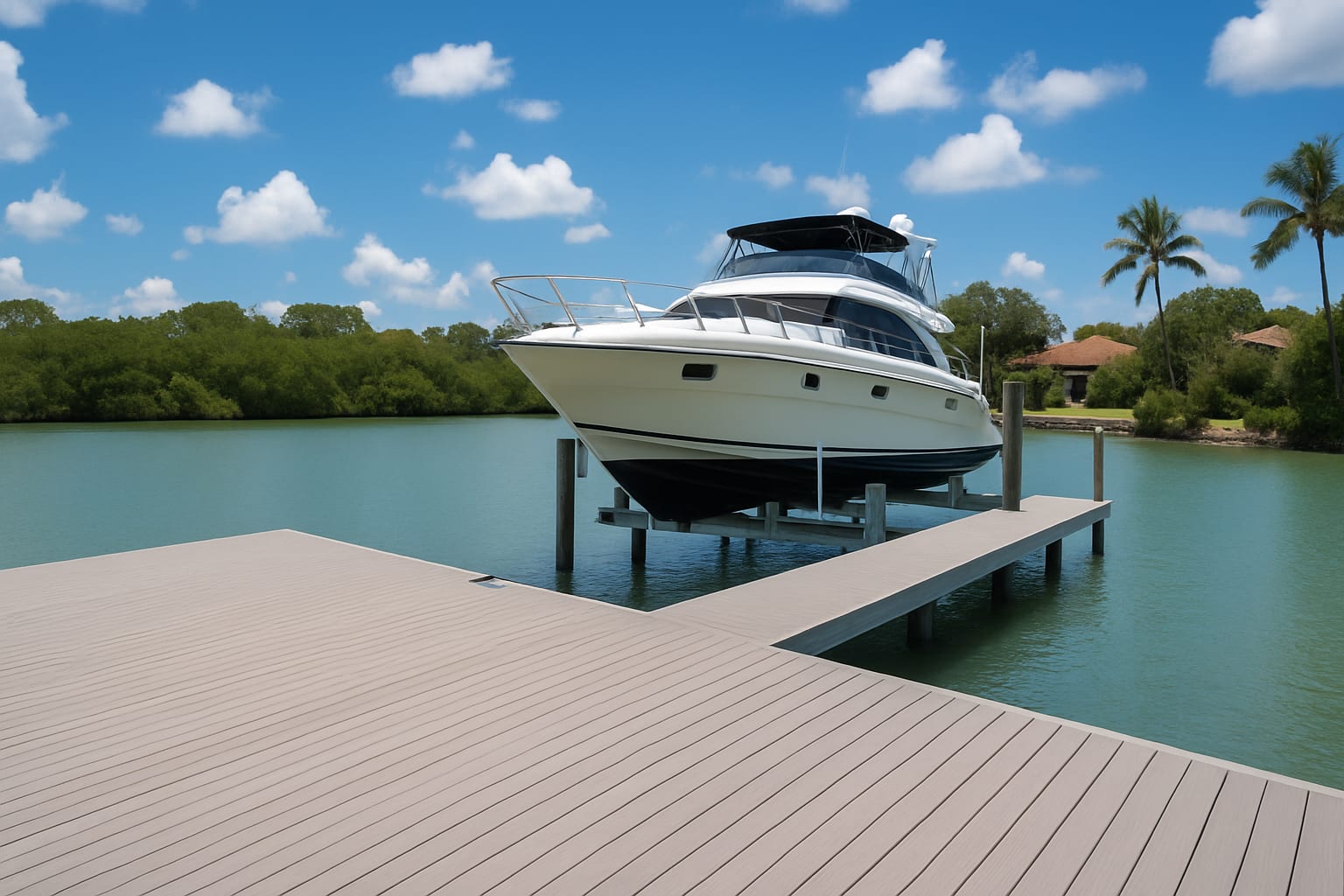
A private dock and lift are usually a different answer from the seawall even on the same lot. Even where a seawall is treated as a shared or association structure, a dock and lift built by a specific homeowner are typically that homeowner's private property and their responsibility to maintain, repair and insure, the same way a pool or a lanai screen enclosure would be. That split matters because it means a buyer can be looking at two separate maintenance questions on the same waterfront lot rather than one, and the answer for the seawall does not automatically tell you the answer for the dock. Ask about both separately, and if boat access is part of why you are buying, get the dock and lift's condition and ownership status in writing before you write an offer.
Does Homeowners Insurance Cover Seawall or Dock Damage?
Not automatically, and this is where sellers and buyers alike are often surprised. A standard Florida homeowners policy is written around the dwelling and is not designed as a marine structures policy, so a seawall, dock or lift frequently needs its own separate rider or a distinct policy to be covered at all, and even then coverage can exclude gradual deterioration, erosion and earth movement, which is how a lot of seawall failure actually happens over time rather than in a single storm event. Never assume a structure is covered because the house is insured. Ask your insurance agent directly, in writing, whether the specific seawall, dock and lift on a property you are considering are covered, under which policy, and what is excluded, before you rely on that coverage in your decision.
What Permits Does Repairing or Replacing a Seawall in Bonita Springs Require?
Work on a seawall touches regulated waters, so it generally requires permitting beyond a standard county building permit, potentially including state environmental review and, depending on the waterway, federal review as well. The exact permitting path depends on the specific waterway, the scope of the work and whether the structure is being repaired in place or replaced, so it is not something to estimate from a general rule. If you are buying a home with a seawall that already shows visible wear, ask the seller or the association whether any permitting or engineering work has already started, since a head start on that process can be a meaningful part of what you are actually buying, or not buying, along with the house.
What Should a Buyer Check Before Closing on a Bonita Springs Waterfront Home?
Four things, gathered during your inspection period rather than after. First, the recorded survey, to see whether the seawall sits inside the private lot or on association land. Second, if an association is involved, its reserve study and minutes, to see whether seawall and dock repair is funded on a real schedule or left as an unplanned future assessment. Third, a marine contractor's or engineer's assessment of the seawall, dock and lift's actual current condition, since a general home inspection does not typically cover these structures in the same depth. Fourth, direct confirmation from your insurance agent of what is and is not covered on that exact address. None of these take long to request, and all four change what the property actually costs to own beyond the price on the contract.
Where Should You Start?
Pull the survey and ask the ownership question before you fall for the view, whether you are comparing established bay-front homes against newer construction in Bonita Springs or weighing a canal lot against a bay lot entirely. I can walk you through what a specific property's documents actually say and connect you with the right marine contractor for an honest condition assessment before you commit to anything. Get in touch or call (239) 300-1427, and we will look at the actual survey and governing documents for the address you have in mind rather than a general assumption about how it works.