2026-10-18 · 7 min read · Estero
What Should You Check About the Pool and Screen Enclosure Before Buying a Home in Estero?
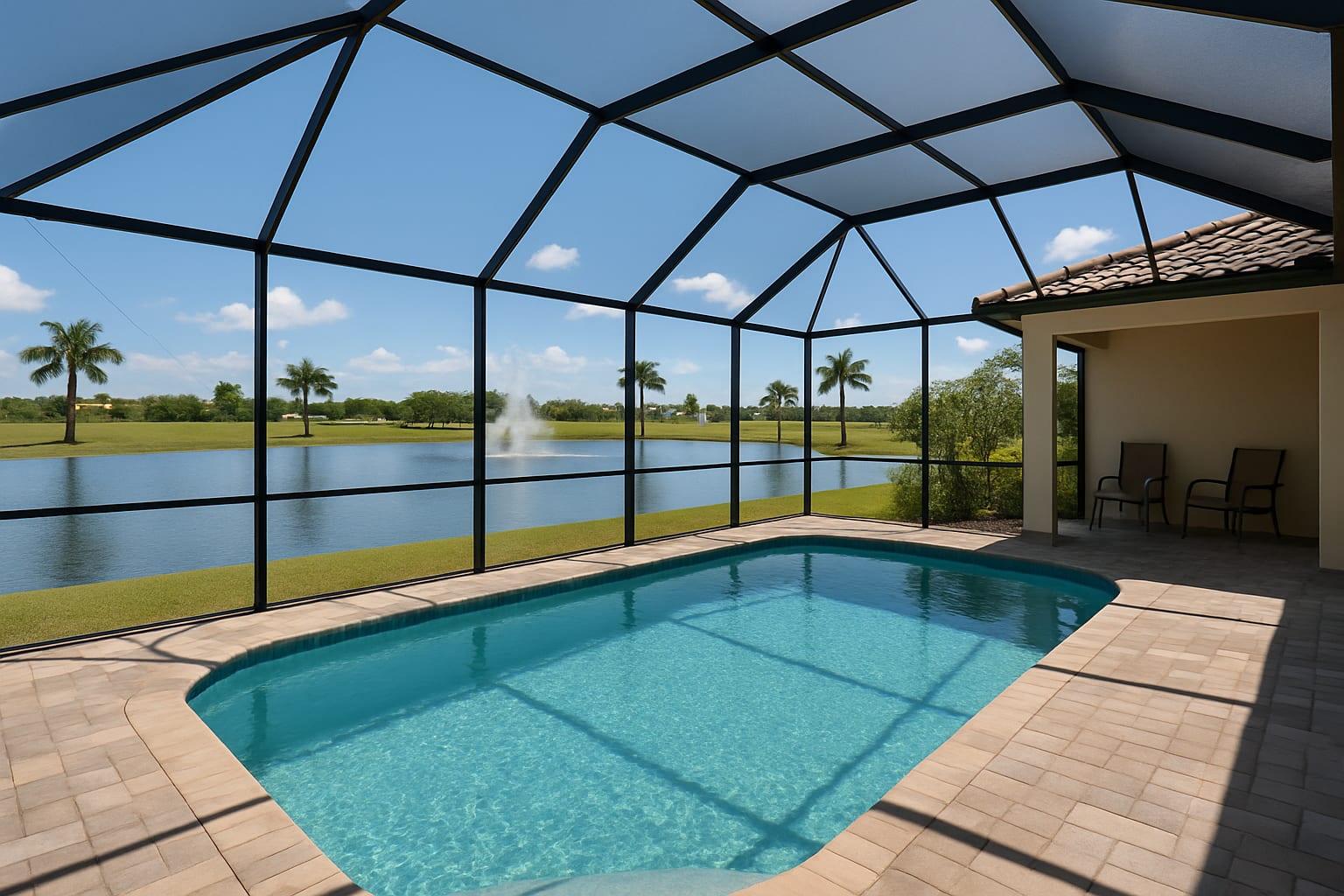
What should you check about the pool before buying a home in Estero?
Check five things: the condition of the pool shell and surface, the age and condition of the equipment, the screen enclosure over it, the permits behind all of it, and how the pool and cage are treated by your insurance policy and your community's rules. A general home inspection often looks at a pool only briefly, so the most useful step is a dedicated pool inspection during your inspection period, followed by a permit search and an insurance quote that names the enclosure.
I am Kris Asquith, Broker Associate at Premiere Plus Realty, and I help buyers and sellers across Estero and eight other Southwest Florida markets. A screened pool is easy to take for granted because it looks fine on a sunny afternoon. These are the questions worth asking before the inspection period runs out.
Does a regular home inspection cover the pool?
Usually only in part. Many general inspectors will note whether the pump runs, whether the water looks clear and whether there are obvious cracks, and some exclude the pool altogether. Read your inspector's agreement to see what is covered. If the answer is "a visual look," add a pool inspection by someone who works on pools every day. It is a separate appointment, and it belongs inside the same inspection window as everything else, because once that window closes your leverage to ask for repairs or credits closes with it.
A pool specialist will run the equipment, check for leaks, look at the surface and tile line, test the heater, and look at the electrical bonding and lighting. Ask for the report in writing with photographs so you and your agent can decide what to negotiate. My step-by-step buying process shows where inspections fall once you are under contract.
What does a pool inspector look for in the shell and surface?
The visible surface tells you a lot. Roughness, staining, chips, hollow-sounding patches and cracks in the finish point to a resurfacing that may be coming. Loose or missing tiles at the waterline, cracks in the deck around the pool, and gaps where the deck meets the pool edge are all worth noting, because water getting behind them can cause bigger problems over time.
Leaks are harder to see. A pool that loses noticeably more water than evaporation would explain, an auto-fill that seems to run constantly, or soft and settling areas in the deck can all point to a leak in the shell or plumbing. If the inspector suspects one, a leak detection service can pressure-test the lines. Ask the seller, too: a seller who has had leak repairs or a resurfacing done should be able to show you the invoice and the permit where one was needed.
How do you check the pool pump, filter and heater?
The equipment pad is where most of the near-term cost hides. Ask the inspector to run the pump, the filter, the heater and any automation system, and to note the approximate age of each component from its data plate or the permit record. Look for corrosion, leaking unions and valves, a noisy or overheating pump motor, and a heater that will not come up to temperature.
If the pool is heated, it is often with a heat pump that looks much like an air conditioning condenser. Ask whether it runs reliably through a cool spell and when it was last serviced. If the home has a salt system, have the cell inspected as well. None of this is a reason to walk away from a home. It is a list of what you will likely be replacing, and when, which belongs in your budget and possibly in your negotiation.
What should you check about the screen enclosure, or pool cage?
The screen enclosure is a structure of its own, and it takes the most weather of anything on the lot. Walk it slowly. Look for torn or sagging screen panels, missing or loose screws and anchors, corrosion on the aluminum frame and at the base where it meets the deck, bent members, and a screen door that does not close and latch properly. Look up, too: the roof panels of a cage are where storm damage often hides from a ground-level glance.
Ask the seller when the cage was built or rescreened and whether it was replaced or repaired after a storm. A rescreen and a structural repair are different jobs, and the second usually needs a permit. The Village of Estero lists screen enclosures, for a lanai or a pool cage, among the work that needs a building permit, so a cage that was rebuilt should have a permit record behind it.
Why do the permits for the pool and cage matter?
Because an unpermitted structure can become your problem after closing. If the pool, the cage, an extended deck or a later addition like a summer kitchen was built or altered without the required permit and final inspection, you can be asked to permit it after the fact, which can mean opening up work to prove it meets code. It can also complicate insurance and a future sale.
Estero is its own incorporated village, and the Village of Estero handles building permits for homes inside its limits. Ask your agent to pull the permit history for the address and compare it with what you see on the lot: a pool, a cage, a heater, a resurfacing and any electrical work should each line up with a record that shows a final inspection. My article on checking a home's permit history walks through how to read the record, and the same logic applies in Estero. If the home is newer, my article on builder warranties in Estero covers what the builder may still be responsible for.
Is the pool and screen enclosure covered by your insurance?
Do not assume it is. Homeowners policies in Florida treat screen enclosures in different ways, and some limit or exclude them, particularly for wind damage, unless coverage is added. Ask the insurance agent quoting the home to say in writing how the pool, the cage and any pool equipment are covered, and for how much. Ask the same question about the deck and any outdoor kitchen.
Get that quote during your inspection period, not the week before closing. A home's roof, windows and wind mitigation features shape the premium, and the cage is part of the same conversation. My article on flood insurance for Estero homes covers the flood side of the policy, which is separate from the homeowners policy that covers wind.
What pool rules come with the home?
Two sets: the state's and the community's. Florida's Residential Swimming Pool Safety Act requires a newly built residential pool to have at least one approved safety feature, such as a qualifying barrier around the pool, an approved safety cover, or alarms on the doors that open onto the pool area. If you plan to build a pool or replace an enclosure, your contractor will work through those requirements as part of the permit.
Most Estero homes also sit inside a homeowners association, and its architectural rules usually reach the pool area. Changing the cage, removing it, adding a picture-window screen panel, extending the deck or changing the pool's finish color can each require approval before work starts. Some associations also maintain parts of the landscaping right up to the cage, which matters when you plan changes. Read the architectural guidelines in the association documents, and see my articles on what Estero HOA fees cover and the HOA estoppel certificate for the paperwork side.
How do you use what you find in the negotiation?
Sort the findings into three groups: safety and code items, active failures, and age. A non-latching door to the pool area, an exposed electrical problem or an unpermitted cage are the first group, and they are reasonable to ask the seller to correct or to credit. A pump that has failed or a leak that has been confirmed is the second. Equipment or a surface that works but is near the end of its life is the third, and it is usually better handled in your budget than in a long repair list.
If you are weighing several homes with pools in Estero, my page on buying a home in Estero covers the wider picture, and I am glad to look at a specific listing with you. Get in touch or call (239) 300-1427.
This article is a general overview and is not legal, insurance or engineering advice about any particular property. Confirm the specifics with a licensed pool contractor, your home inspector, your insurance agent, the association and the Village of Estero.
Frequently Asked Questions
Do I need a separate pool inspection when buying a home in Estero?
It is a good idea. Many general home inspections look at a pool only visually, and some exclude it. A pool specialist runs the equipment, checks for leaks, looks at the surface and tile, tests the heater and checks the electrical bonding. Schedule it inside your inspection period.
Does a pool screen enclosure in Estero need a permit?
Yes. The Village of Estero lists screen enclosures, whether for a lanai or a pool cage, among the work that needs a building permit. A cage that was built or structurally repaired should have a permit record with a final inspection behind it.
Is a pool cage covered by homeowners insurance in Florida?
Not always. Policies treat screen enclosures in different ways, and some limit or exclude them, particularly for wind damage, unless coverage is added. Ask the agent quoting the home to state in writing how the pool, the enclosure and the equipment are covered.
Can I change or remove the screen enclosure on an Estero home?
Often, but usually not without approval. Most Estero homes are inside a homeowners association whose architectural rules reach the pool area, and structural work on a cage needs a Village of Estero permit. Read the association's guidelines before you plan the change.