2026-11-18 · 8 min read · Fort Myers Beach
What Should You Check About the Pool Before Buying a Home on Fort Myers Beach?
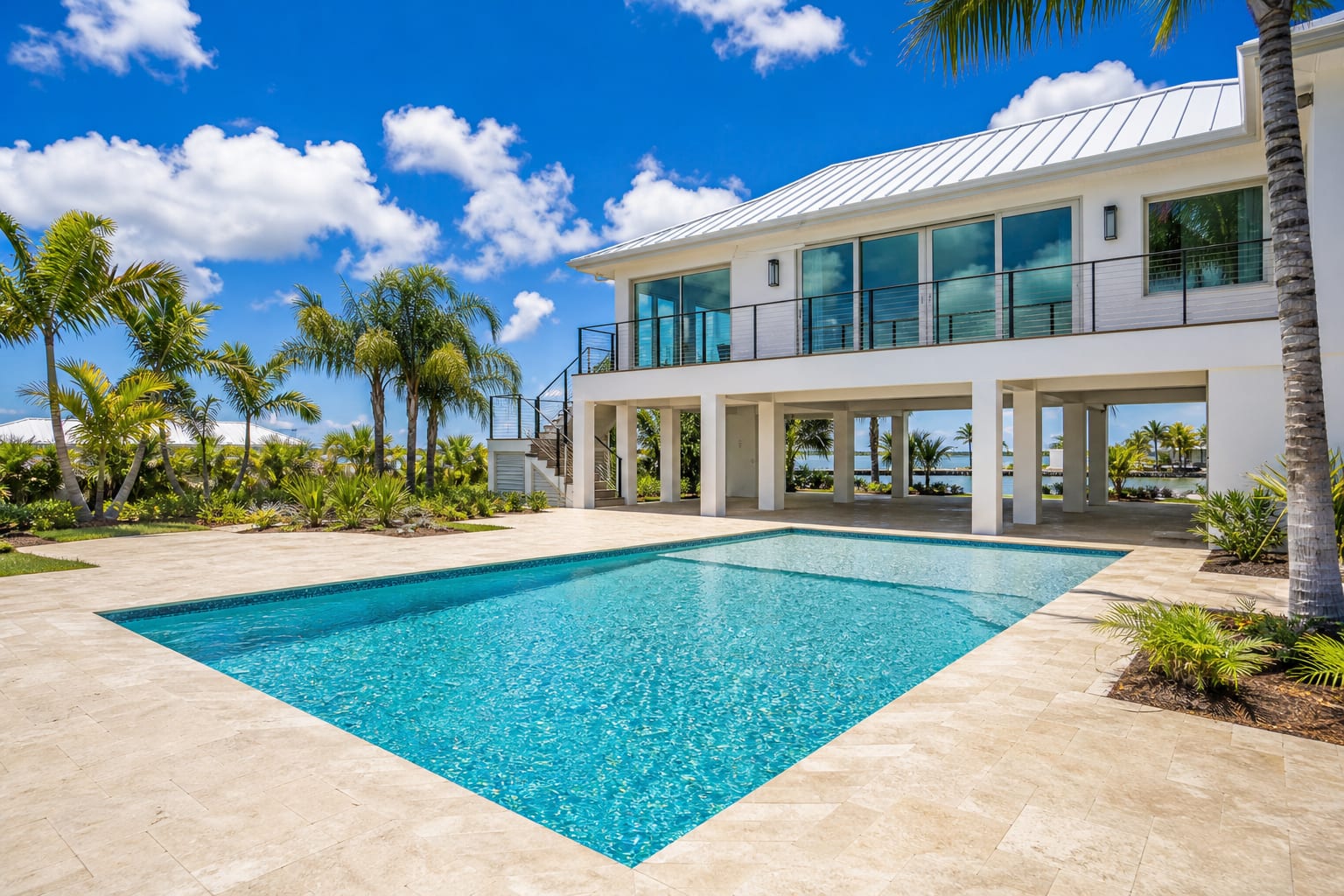
What should you check about the pool before buying a home on Fort Myers Beach?
Find out what the pool and its equipment went through in Hurricane Ian and what was repaired or replaced afterward, where the pump, filter and heater sit and how the salt air has treated them, whether the pool, deck and any enclosure have permits with final inspections behind them, and how your insurance would treat each part. On a Gulf-front lot, also ask whether the work met the state's coastal construction rules and the Town's sea turtle lighting rules. Those answers tell you whether the pool is ready to use the week you close or a repair list waiting for you.
I am Kris Asquith, Broker Associate at Premiere Plus Realty, and I help buyers and sellers on Fort Myers Beach and in eight other Southwest Florida markets. Not every home on the island has a pool, and the ones that do range from older ground-level homes with a pool beside the slab to newly built elevated homes with a pool at ground level beside the house, along with condominium buildings that share one. Each comes with its own questions.
Why does a pool on Fort Myers Beach need a closer look than one inland?
Because of where the island sits. Fort Myers Beach is on Estero Island, with the Gulf on one side and Estero Bay and Matanzas Pass on the other, and Hurricane Ian's storm surge in 2022 reached much of it. A pool that sat under surge can fill with sand, silt and debris, the deck around it can be undermined, and equipment at ground level can be submerged in salt water. Some of that was repaired properly and documented. Some was cleaned up and put back in service. From the edge of the pool on a sunny showing, the two can look exactly the same.
So treat a pool here the way you would treat any other system that may have been through a storm: ask what happened, then check the answer against the records. My article on what to check before buying a rebuilt home on Fort Myers Beach explains why the paperwork behind a repair tells you more than the finish on it.
Will your home inspector look at the pool?
Often only briefly. Many general home inspections note whether the pump runs and whether the surface shows visible damage, and some leave the pool out entirely. Read the inspection agreement before you book, and if the pool is excluded or listed as visual only, add a separate inspection from a company that works on pools every day. Book it the day you go under contract, alongside the general inspection, the wind mitigation report and any termite inspection, because all of it needs to be back before your inspection period ends. My step-by-step buying process shows where that period falls.
A pool inspector runs the pump, filter, heater and any automation, looks for leaks, checks the surface and the tile line, and checks the lighting and the electrical bonding that ties the metal parts of the pool area together. Ask for the findings in writing with photographs. If the inspector suspects a leak in the shell or the lines, a leak detection company can pressure-test them, and that is worth doing on a pool that may have been undermined by surge.
What should you ask about the pool equipment and where it sits?
Start with the date on each piece. The pump, filter, heater and control panel each carry a data plate, and the dates tell you whether they were replaced after Hurricane Ian or are older than the storm. If they are older and the home took water, ask the seller directly whether the equipment was under water and what was done about it. Compare the answer with the permit record and with the seller's written flood disclosure, which Florida now requires at or before the time the contract is signed. My article on what Florida's flood disclosure law means on Fort Myers Beach explains what that form asks and what it leaves out.
Then look at where the equipment stands. On an older ground-level home it is usually on a pad beside the house. On some rebuilt and newer homes it has been placed higher. Ask how high it sits compared with the flood elevation on the home's elevation certificate, and ask the Town of Fort Myers Beach how its flood rules applied when the pool and equipment were installed. Equipment that sits low is not a reason to walk away, but it is part of what a future storm could cost you.
How does salt air wear on a pool on the island?
It works on the metal first. A pool heat pump looks much like an air conditioning condenser and wears the same way, with fins and coils that corrode in salt air. Look for flaking fins, white crust on aluminum, rust on cabinets and fasteners, and pump motors that run loud or hot. If the home has a screen enclosure, walk all the way around it and look up at the roof panels, at the screws and anchors, and at where the frame meets the deck, where corrosion and storm damage tend to show first. Railings, ladders and light fixtures in and around the pool deserve the same look.
Ask who has been servicing the pool and whether the seller has their records, since a regular pool company often knows the equipment's history better than anyone. My article on checking for salt air corrosion before buying on Fort Myers Beach covers the rest of the metal and concrete on and around the house.
Were the pool, deck and enclosure permitted by the Town?
They should have been. The Town of Fort Myers Beach handles building permits for homes on the island, so the record for an address there comes from the Town. Building a pool, rebuilding a deck, building or structurally repairing a screen enclosure, adding a heater and running new electrical to the equipment generally need a permit and a final inspection. Line the record up against what you see on the lot, paying close attention to anything rebuilt after the storm.
Florida's Residential Swimming Pool Safety Act also requires a newly built residential pool to have at least one approved safety feature, such as a qualifying barrier, an approved safety cover, or alarms on the doors that open to the pool. If you plan to build a pool or rebuild one, your contractor works through those requirements as part of the permit.
What extra rules apply to a pool on a Gulf-front lot?
Two that an inland pool never meets. First, the state regulates construction close to the beach. Work seaward of the Coastal Construction Control Line generally needs a permit from the Florida Department of Environmental Protection in addition to the Town's building permit, and that can include a pool, a deck or a wall. If the home is on the Gulf side, ask whether the pool and deck sit seaward of that line and, if they do, for the state permit as well as the Town's.
Second, the Town has rules to protect nesting sea turtles, and they cover lighting on properties near the beach that can be seen from it. Pool lights, deck lights and landscape lighting can all be part of that. Ask the Town how the rules apply to the specific address before you change any outdoor lighting, and ask the seller whether the current fixtures were chosen with those rules in mind.
How does your insurance treat the pool, the equipment and the enclosure?
Ask the agent quoting the home to say in writing. Homeowners policies treat pools, equipment and screen enclosures in different ways, and some limit or exclude an enclosure for wind damage unless coverage is added. Flood insurance raises its own questions, because flood policies limit what they cover outside the building and below the lowest elevated floor, so ask how the pool, the deck and the equipment would be treated on the policy you are quoting.
Get those answers early in your inspection period, with the wind mitigation report and the elevation certificate in hand. My article on how flood insurance works when you buy on Fort Myers Beach covers the rest of the flood side.
What if the pool belongs to a condominium?
Then the pool is a common element that the association maintains, and what you are really checking is the association's plan for it. Read the budget and the reserves to see whether money is set aside for resurfacing, equipment and the deck, and read recent board minutes for any talk of pool repairs or a special assessment. If the building was damaged in the storm, ask what was repaired at the pool and whether its equipment and deck were replaced, and ask for the rules on its use. My article on what to look for in the condo documents before buying on Fort Myers Beach covers the documents and the short window Florida law gives you to review them.
What should you do with what you find?
Sort the findings into three groups. Safety and code items come first: a pool door that does not latch, an electrical problem, or a pool, deck or enclosure with no permit behind it. Storm damage and active failures come second: equipment that was submerged and never replaced, a confirmed leak, or a deck that has settled. Age comes third: equipment or a surface that works but is near the end of its life is usually better planned for in your budget than argued over. Ask a licensed pool contractor for written estimates on the first two groups, then decide whether to ask the seller for a repair, a credit or different terms.
If you are selling, gather the pool, deck and enclosure permits, any state coastal permit, the equipment invoices with dates, and the records of what was done after the storm before you list. My page on buying a home on Fort Myers Beach covers the wider picture, and I am glad to look at the pool on a specific home with you. Get in touch or call (239) 300-1427.
This article is a general overview and is not legal, insurance or engineering advice about any particular property. Confirm the specifics with a licensed pool contractor, your home inspector, your insurance agent, the association, the Florida Department of Environmental Protection and the Town of Fort Myers Beach.
Frequently Asked Questions
Do I need a separate pool inspection when buying on Fort Myers Beach?
It is a good idea. Many general home inspections look at a pool only visually, and some leave it out. A pool specialist runs the equipment, checks for leaks, looks at the surface and tile, and checks the lighting and electrical bonding. On the island, ask them to look for signs of past storm damage too.
How can I tell whether the pool equipment was replaced after Hurricane Ian?
Read the dates on the data plates of the pump, filter, heater and controls, ask the seller what happened to the equipment in the storm, and compare both with the Town of Fort Myers Beach permit record and the seller's written flood disclosure.
Does a pool on a Gulf-front lot need a state permit?
It can. Construction seaward of the Coastal Construction Control Line generally needs a permit from the Florida Department of Environmental Protection in addition to the Town's building permit. Ask whether the pool and deck sit seaward of that line and, if so, for both permits.
Who issues pool permits on Fort Myers Beach?
The Town of Fort Myers Beach handles building permits for homes on the island. Ask the Town for the permit history on the address and check that the pool, deck, enclosure and equipment work each show a final inspection.