2026-08-09 · 14 min read · Naples
Waterfront Home Buying in Naples, FL: The Complete Guide
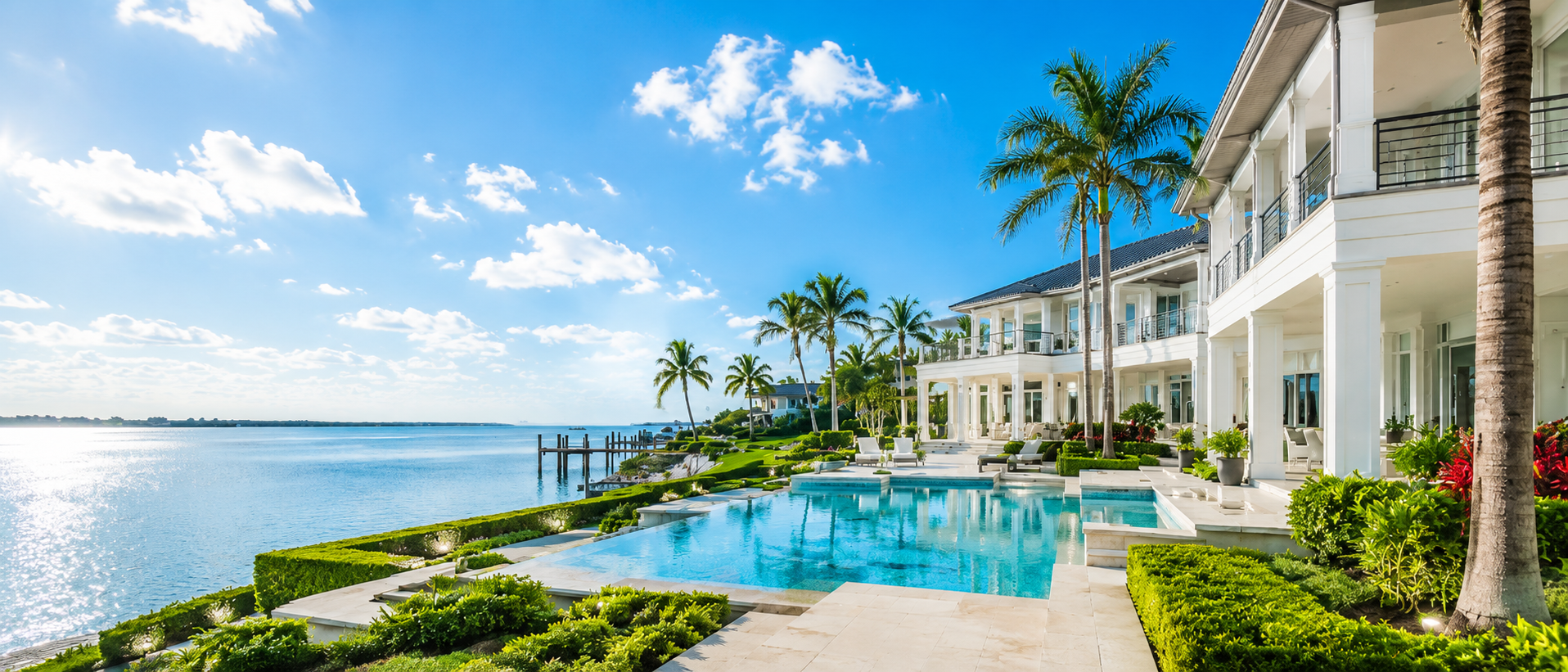
Here's what you actually need to know before buying waterfront in Naples
Waterfront in Naples isn't just about the view. It's about orientation, seawall integrity, dock restrictions, boat slip depth, flood insurance cost, and how the property holds its value over time. The difference between a smart buy and a money pit often comes down to details that show up in a marine survey, not the listing photos.
I'm Kris Asquith, a luxury real estate agent specializing in waterfront properties throughout Southwest Florida, including Naples' premier communities. I've worked with out-of-state buyers navigating waterfront purchases, people who fell in love with a view and needed someone to help them understand what they're actually buying.
This guide walks you through the specifics: which neighborhoods hold value, what you're really paying for, and the checklist every buyer needs before making an offer.
What Does Your Budget Actually Get You in Naples Waterfront?
Pelican Bay, in north Naples a few minutes from Mercato, for a bay-front or gulf-front home. These are typically newer construction (1990s–2010s), well-maintained seawalls, and direct gulf or Naples Bay views. On the bay-front side, Pelican Bay has strict HOA rules about dock design and maintenance, which keeps the community looking polished. The trade-off: you're paying for that consistency and location.
Royal Harbor, on the eastern shore of Naples Bay about two miles from Fifth Avenue South, for waterfront. Bay-front and canal-front homes on deep-water canals with no-bridge access out to the bay and the Gulf, and private docks that take large vessels. It is non-gated with no mandatory association, which is unusual here and is why the housing runs from 1950s originals to modern rebuilds on the same street. A bay-front lot here sits on a supply constrained by location, which is what holds demand for it.
Bonita Bay, just south of Naples, for waterfront. Bonita Bay is the most diverse waterfront community in the region. You can find everything from canal-front estates to bay-front homes with serious dockage. The neighborhood splits between bay-facing (premium) and interior bay-side (still waterfront, lower premium). Bonita Bay keeps steady inventory flow because it is a larger community, so there is usually something trading.
Gulf-front and bay-front sit in the most established communities, including Pelican Bay and Naples Grande. The primary driver is scarcity. There are only so many bay-front lots, so they hold value.
Gulf-Front vs. Bay-Front vs. Canal-Front: What's Actually Different?
This distinction matters more than most buyers realize.
Gulf-Front: Direct gulf views, beach frontage, and the heaviest saltwater and storm exposure of the three, which shows up in the insurance. A Gulf-front home does not have a dock behind it: it fronts open beach rather than navigable water. If keeping a boat at the house matters to you, Gulf-front is the wrong category and Gulf access is the one you want. Supply is fixed.
Bay-Front: Open water views of Naples Bay, Naples Harbor, or Estero Bay. Seawall maintenance is moderate, since bay water is calmer than the Gulf. This is the category where a dock sits behind the house, and what that dock will take is a question for the specific property: confirm depth at low tide, any fixed bridge on the route out, and the rated capacity of the dock and lift. These homes have the best lifestyle and price balance, with real water access and view quality without the gulf-front price tag.
Canal-Front: A narrower and shallower waterway than the bay. You can keep a boat, but the mooring is tighter and depth is the binding constraint, so it has to be checked at low tide for the specific canal rather than assumed. The advantage: quieter, more private, lower HOA costs. The trade-off: less view and less flexibility on the boat.
If you want the open-water view and a dock at the house in the same property, bay-front in Royal Harbor or Bonita Bay is the combination to look at. Gulf-front buys the beach and the view; it does not buy dockage.
What Does a Dock Actually Add to Your Home Value?
A functioning dock adds meaningfully to what a home fetches, but only if it is in good condition. A seawall or dock that needs serious repair? That dollar-for-dollar reduces the offer.
Here's what matters to the appraiser:
- Seawall integrity (concrete cracking, pilings corroded, settlement)
- Dock construction (wood vs. concrete, bearing capacity, mooring posts)
- Boat slip size (can it accommodate your boat?)
- Depth (4-foot depth vs. 6-foot depth changes everything)
- Maintenance records (vinyl sheathing installed recently, pilings reinforced, etc.)
I always recommend buyers hire a marine surveyor before making an offer. It is a small cost against what it can save you. The surveyor will tell you whether the seawall has years left in it or needs major work shortly. That information changes your negotiating position.
The Dock Inspection Checklist Every Waterfront Buyer Needs
Before you offer on waterfront, walk through this with your marine surveyor:
- Seawall: Is it bulging? Cracked concrete? Corroded pilings? Settlement on one end?
- Dock structure: Is wood rotting? Are pilings solid? Is decking safe to walk on?
- Water depth at the dock: Use a depth gauge. Is it 4 feet at low tide or 2 feet?
- Boat slip: Measure the length and width. Will your boat fit?
- Electrical: Is there power to the dock? 30-amp or 50-amp service?
- Mooring posts: Are they epoxied into concrete? Corroding?
- Maintenance records: Has the seawall been inspected recently? When was the last vinyl sheathing installed?
A solid dock means low maintenance costs and strong resale value. A dock with hidden damage means you are inheriting someone else's capital project.
Waterfront View Orientation: Why It Matters More Than You Think
In Naples, orientation is one of the things waterfront buyers actively compare, and east-facing, south-facing and west-facing each draw a different buyer.
Why? Morning light and afternoon shade. An east-facing bay-front home gets morning sun (warming your pool by 10 AM), then shaded afternoon hours (keeping the house cooler). A west-facing property gets afternoon sun (hotter interior, higher AC costs), which buyers notice immediately when they're viewing on a 85-degree day.
The pricing difference is real: east or south-facing waterfront in Pelican Bay against The a substantial premium for better orientation is consistent across Naples waterfront neighborhoods.
This isn't glamorous. It's just how bodies of water work. South and east face the sun most of the day; west-facing properties are backlit in the evening (less dramatic, less valued by luxury buyers).
Seawall and Dock Maintenance: What You'll Actually Spend
If you're buying waterfront, budget for maintenance:
Annually: seawall and dock upkeep (vinyl sheathing inspection, pilings sealed, dock pressure-cleaned, mooring posts checked).
Every few years: vinyl seawall sheathing replacement, or major dock repairs covering decking, hardware and electrical updates.
Every couple of decades: full seawall replacement, with pilings replaced and concrete poured. This is rare but it happens, especially in properties over 40 years old.
The key: get a marine survey BEFORE you buy. If the seawall is failing, you need that information in your offer. If it's solid, budget the annual maintenance and you'll be fine.
Why Naples Waterfront Holds Its Value
The driver: scarcity. You cannot create new waterfront. Inventory is fixed. As Naples grows, with steady demand from out-of-state buyers, the pressure on a fixed waterfront supply does not ease.
The caveat: condition matters. A failing seawall, an outdated dock or a property that floods narrows your buyer pool sharply when you come to sell, and all three are expensive to put right. Those are the things to price during the inspection period rather than after.
Ready to Buy Waterfront in Naples?
If you're serious about waterfront in Naples, whether it's your primary residence or a Gulf Coast second home, the first step is a conversation with someone who understands the market, the maintenance costs, and the neighborhoods that hold value. I'm Kris Asquith, Broker Associate at Premiere Plus Realty, and waterfront is most of what I do.
I've helped out-of-state buyers find the right waterfront property, navigate inspections, understand dock regulations, and close with confidence. Every buyer is different. Your boat size, your view priorities, your budget, and your long-term hold period all shape which property makes sense.
Let's talk about what Naples waterfront could look like for you. No pitch, just honest guidance.
For more on the market itself, start with Naples real estate, then Naples waterfront homes for the dock-and-access side specifically. If you are weighing a second home rather than a primary residence, Naples vacation and second homes covers what changes. The step-by-step buying process shows how the inspection period actually gets used on a waterfront purchase.