2026-10-10 · 7 min read · Naples
How Do You Reach the Gulf by Boat From a Naples Waterfront Home?
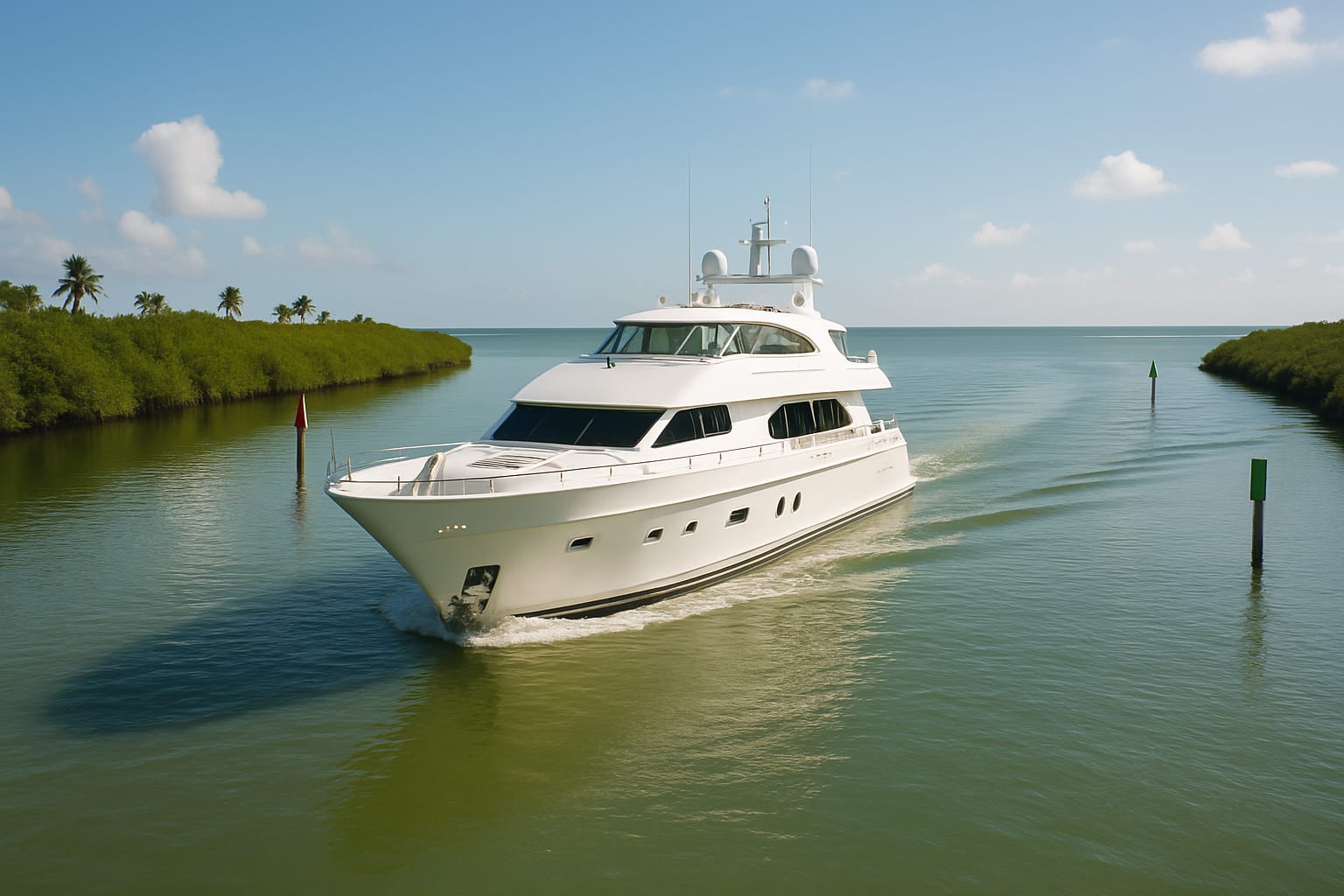
How does a boat get from a Naples waterfront home to the Gulf?
Through one of three passes: Gordon Pass at the south end of the city, Doctors Pass in central Naples north of downtown, or Wiggins Pass at the north end. Which one your boat uses depends on which body of water the home sits on, and the run between your dock and that pass, with its depth, bridges and speed zones, decides what you can comfortably keep behind the house. I am Kris Asquith, Broker Associate at Premiere Plus Realty, and when I help buyers look at Gulf access homes in Naples, the route is one of the first things we map, before we fall for the kitchen.
A listing that says "Gulf access" tells you the water connects. It does not tell you how long the trip is, how much water you will have at low tide, or whether a fixed bridge sits between you and the pass. Those are the questions this article walks through.
Which pass serves which part of Naples?
Think of Naples waterfront in three groups, each draining to its own pass.
Naples Bay and Gordon Pass. Naples Bay runs along the south and east side of the city and opens to the Gulf at Gordon Pass. Port Royal, at the southern tip of Naples, and Royal Harbor, on the eastern shore of the bay, both sit on deep-water canals connected to Naples Bay, and both are recorded with no fixed bridges between their canals and the Gulf.
Central Naples and Doctors Pass. North of downtown, a set of bays and canals behind the beach reaches the Gulf through Doctors Pass, a narrow cut through the barrier beach.
North Naples and Wiggins Pass. At the north end of the city, waterways including the Cocohatchee River open to the Gulf at Wiggins Pass, beside Delnor-Wiggins Pass State Park.
Not every Naples home near water belongs to any of these. Many of the city's club communities sit inland on lakes, which are lovely to look at and do not connect to the Gulf at all. Grey Oaks is a good example: the enclave inside it is called the Estuary, which is a name, not a water route. My Naples waterfront buying guide covers the differences between frontage types in more detail.
Why does a Gulf-front home in Naples have no dock?
Because Gulf-front means the property fronts open beach. There is no protected, navigable water behind a beachfront home to tie a boat to, so Gulf-front homes and condos are bought for the sand, the view and the sunsets over the water, not for dockage. If the boat matters, you are looking for Gulf access: bay, canal or river frontage with a dock behind the house and a route out to a pass.
This is the distinction buyers most often get backwards. A larger boat does not call for Gulf-front; it calls for the right Gulf access home on deep enough water with no low bridge in the way. Gulf-front homes in Naples also come with their own set of rules about building near the beach, which I explain in my article on the Coastal Construction Control Line.
What should you check about water depth on the route?
Depth at low tide, along the whole route, not only at the dock. Naples Bay and the canals off it, the bays behind the beach, and the passes themselves are shallower in places than buyers expect, and the passes shoal and shift over time as sand moves. Water that is fine at high tide can be too thin for a deep-draft boat a few hours later.
NOAA nautical charts show depths at mean lower low water, a low-tide reference, which makes them a reasonable starting point. They are not the last word, because conditions change between surveys. The U.S. Coast Guard's Local Notice to Mariners reports shoaling, changed markers and channel work. Before you buy, ask the seller what boat they kept at the dock and how they used it, then confirm the depth at the dock and along the route with a marine contractor or a local captain who runs that water.
Do bridges limit what boat you can keep at a Naples home?
They can, and a fixed bridge is the one limit you cannot work around. A boat with a tall tower, hardtop or flybridge needs more vertical clearance than a low-profile center console, and a sailboat's mast needs more still. If a fixed bridge crosses the route between your dock and the pass, its clearance sets the ceiling on what you can keep at that house.
Charted bridge clearances are generally measured at mean high water, so you will usually have a little more room at low tide and less during an unusually high one. Measure your boat's height above the waterline with any antennas, outriggers or radar arches, compare it with every bridge on the route, and leave a margin. Some Naples waterfront, including the two Naples Bay communities named above, is recorded with no fixed bridges to the Gulf, and for a buyer with a tall boat that single fact can narrow the search quickly.
How do speed zones affect the trip to the Gulf?
They set how long it takes. Much of the inland water in and around Naples carries posted slow-speed and idle-speed zones, many of them to protect manatees, and they are enforced. A home a short distance from a pass as the crow flies can still mean a slow ride out if most of that distance is a posted zone.
When you compare two homes, time the run rather than measuring it. Ask the seller how long the trip to open water takes at the posted speeds, and if you can, ride the route yourself. The difference between two otherwise similar homes is often a matter of minutes each way, and those minutes add up over years of ownership.
What should you check about the dock itself?
The dock, the lift and the seawall are equipment, and they deserve their own inspection. Find out the rated capacity of the boat lift and whether it suits the boat you plan to keep, the age and condition of the pilings, decking and seawall, and whether the dock and lift were permitted. Ask for permit records and any recent repair invoices.
Who issues dock and seawall permits depends on where the home sits. A home inside the City of Naples deals with the city, while one in unincorporated Collier County deals with the county, and state and federal agencies can be involved for work over the water. My guide to whether a home is in the City of Naples or in Collier County explains how to tell. If you plan to replace or enlarge a dock, ask the right office what is allowed at that address before you rely on it.
When in the buying process should you check the boating route?
Early, and certainly before your inspection period ends. I build the route questions into the inspection period of my buying process, alongside the home inspection, the seawall and dock inspection, and insurance quotes, so you still have room under the contract to ask questions, negotiate or walk away.
For sellers, the same questions are an opportunity. A listing that answers them up front, with the pass the home uses, the bridges on the route if any, the dock and lift specifications and the permits, gives a boating buyer what they need on the first visit. That belongs in any plan for marketing a Naples waterfront home. This article is a general overview and is not navigation, engineering or legal advice for any property.
If you are looking at Naples waterfront homes and want to know how each one actually reaches the Gulf, get in touch or call (239) 300-1427. I will help you map the route for the specific homes on your list, before you commit to one.