2026-11-02 · 8 min read · Bonita Springs
What Should You Check About the Boat Lift Before Buying a Waterfront Home in Bonita Springs?
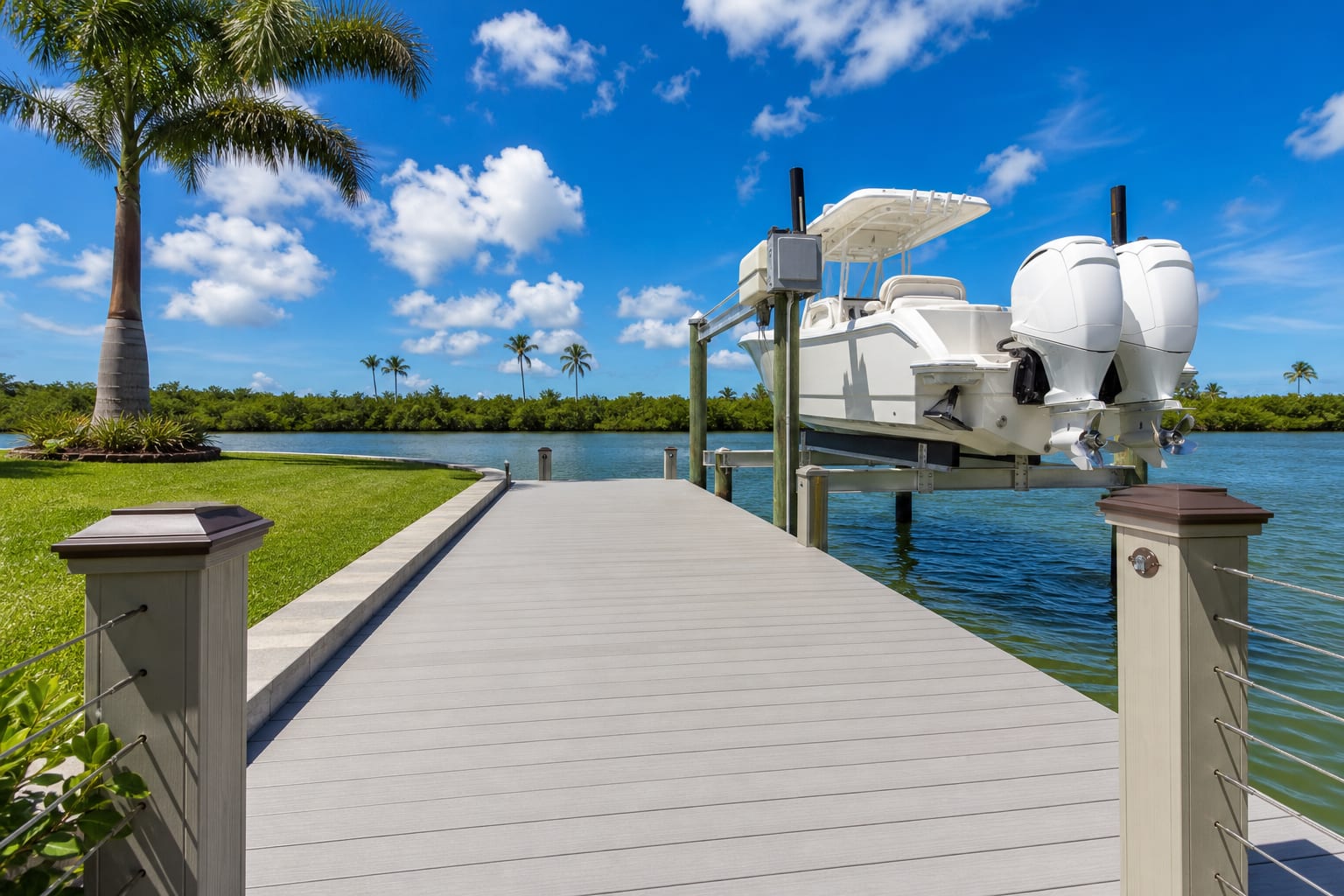
What should you check about the boat lift before buying a waterfront home in Bonita Springs?
Check six things: what the lift is rated to carry and whether that fits your boat, the condition of the cables, motor, gearbox and cradle, the pilings it stands on, the wiring that powers it, the permits behind it, and whether your contract and your insurance actually include it. A general home inspection often stops at the seawall or skips the dock entirely, so the useful step is a separate look by a marine contractor during your inspection period.
I am Kris Asquith, Broker Associate at Premiere Plus Realty, and I help buyers and sellers across Bonita Springs and eight other Southwest Florida markets. Waterfront homes here sit on bay water, canals and the Imperial River, and the lift is the piece of equipment a boater uses most. It also lives in salt water, sun and storm surge, which is why it deserves its own checklist rather than a glance from the lanai.
Does a regular home inspection look at the boat lift?
Often not, or only briefly. Many home inspectors exclude docks, seawalls and lifts in their agreement, and those who include them usually note only what can be seen from the deck. Read the inspection agreement before you book. If the lift is excluded or covered visually, add a marine contractor or a dock and lift company to your inspection period. They can run the lift through a full cycle, look at the parts that wear, and tell you what is due soon.
Book that visit the day you go under contract. Your contract sets how long you have to inspect and decide, and marine contractors in Southwest Florida can be booked out, especially after a storm season. My step-by-step buying process shows where the inspection period falls and what happens when it ends.
How do you know whether the lift can hold your boat?
Find the capacity rating. Most lifts carry a manufacturer's plate or label stating the rated capacity, and that number is the starting point, not the listing description. Compare it with the weight of the boat you own or plan to buy, loaded the way you actually use it: fuel, water, engines, batteries and gear all add weight beyond the dry figure in a brochure.
Then look at fit. The bunks or cradle should match the hull shape, the guide posts should clear the beam, and the lift should raise the boat fully clear of the water at a normal high tide. A lift sized for the seller's boat may not suit yours, and swapping bunks, adding capacity or replacing the lift is a cost to know about before you commit. Water depth at low tide and the route out to a pass are separate questions from the lift itself; my article on how boat access works in Bonita Springs' bay communities covers those.
Which parts of a boat lift wear out first?
The moving parts, because they work in salt water. Ask the contractor to look closely at each of these and to estimate their age.
- Cables. Look for broken strands, kinks, rust staining and flattening where the cable wraps the drum. Cables are a routine replacement item, and a frayed one is a safety issue under a loaded boat.
- Pulleys and sheaves. Worn or seized sheaves chew through new cables, so they are worth checking even if the cables look fine.
- Motor and gearbox. Ask the contractor to raise and lower the lift and listen for grinding, slipping or a motor that labors. Check whether the motor has a cover and whether it shows corrosion.
- Cradle, bunks and beams. Look for cracked welds, corroded fasteners and worn bunk boards or carpet that no longer protects the hull.
- Controls. Make sure the switch or remote works from where you would stand, and ask whether the remotes convey with the home.
None of these is a reason to pass on a home. They are a list of what you will likely replace and when, which belongs in your budget and possibly in your negotiation.
What should you check about the pilings and dock the lift stands on?
The lift is only as sound as what holds it up. Most lifts on residential docks here are mounted on pilings, and some are attached to the seawall or the dock structure itself. Ask the contractor to look at each piling at and just below the waterline, where marine borers and rot do their damage, and to check whether the pilings lean, have been sleeved or wrapped, or show cracking where the lift mounts bolt in.
Look at the dock and seawall around it at the same time, because a lift that pulls on a weak piling or a failing seawall becomes a bigger repair. My article on who is responsible for seawall and dock repairs in Bonita Springs explains what an owner maintains and what, in some communities, an association does.
Is the boat lift wiring safe?
Ask the question directly, because water and electricity meet at the dock. The lift motor and any dock lighting should be on a proper circuit with ground-fault protection, with weatherproof boxes and wiring that has not been run across the decking or patched together over the years. Ask the contractor or a licensed electrician to test the ground-fault protection and look at the connections.
Electrical work at the dock typically needs a permit, the same as electrical work inside the house. My article on checking the electrical system before buying in Bonita Springs covers the panel side of the same question, including what an insurer looks for.
Why do the permits behind the lift matter?
Because you inherit whatever was built without one. Installing or replacing a lift, adding pilings and running new electrical to the dock typically require permits, and work over the water can also involve state and federal review. The City of Bonita Springs holds the building permit history for homes inside its limits; a home with a Bonita Springs mailing address outside the city limits falls under Lee County. Ask your agent to pull the record for the address and compare it with what is on the water. A lift or dock that was rebuilt after Hurricane Ian should show a permit with a final inspection.
If the record shows nothing, ask the seller who installed the lift and when. Unpermitted work can complicate insurance, a future sale or a later repair that needs a permit of its own. My article on checking the permit history before buying in Bonita Springs shows how to read the record.
Does the boat lift come with the house, and is it insured?
Make sure of both in writing. A lift bolted to pilings is usually treated as part of the property, but sellers sometimes plan to take a lift they bought for a particular boat, and remotes, covers and boat-specific bunks can go missing between showing and closing. List the lift and its accessories as included in the contract so there is no question on the final walkthrough.
Then ask the insurance agent quoting the home how the dock and lift are covered. Homeowners policies treat docks, seawalls and lifts in different ways, and some limit or exclude them. Get that answer during your inspection period, not the week before closing.
What does the lift tell you about the water behind the home?
That the home has water a boat was kept on, which is not the same as every waterfront home in the city. Bonita Springs has bay, canal and river frontage with docks, beachfront homes with no dock at all, and lake homes whose water is a view rather than a route anywhere. In Barefoot Beach, for example, some homes sit on the beach while others have docks behind the house with Gulf access by boat, so the address decides which you are buying. My page on Gulf access homes in Bonita Springs sorts out which kind of water does what.
If you are selling, gather the lift's installation permit, any cable or motor service invoices and the manufacturer's capacity label before you list, so a buyer sees an organized record instead of a question. If you are buying, I am glad to walk a specific dock and lift with you. Get in touch or call (239) 300-1427.
This article is a general overview and is not legal, insurance or engineering advice about any particular property. Confirm the specifics with a licensed marine contractor, a licensed electrician, your insurance agent, a real estate attorney and the City of Bonita Springs or Lee County.
Frequently Asked Questions
Should I get a separate inspection for the boat lift when buying in Bonita Springs?
Usually, yes. Many home inspectors exclude docks and lifts or look at them only visually. A marine contractor can run the lift through a full cycle and check the cables, sheaves, motor, gearbox, cradle and pilings. Book it inside your inspection period.
How do I find out how much weight a boat lift can hold?
Look for the manufacturer's plate or label on the lift, which states its rated capacity. Compare it with your boat's weight as you actually use it, with fuel, engines, batteries and gear, not the dry weight. Ask the contractor to confirm the fit of the bunks and guide posts too.
Does a boat lift need a permit in Bonita Springs?
Installing or replacing a lift, adding pilings and running electrical to the dock typically require permits. The City of Bonita Springs holds permit records for homes inside its limits, and Lee County holds them for addresses outside the city. Ask for the permit and final inspection.
Can a seller take the boat lift when they move?
A lift attached to the pilings is usually treated as part of the property, but do not rely on that. Name the lift, its remotes, covers and bunks as included items in your contract, and confirm they are still there at the final walkthrough.