2026-11-19 · 8 min read · Estero
How Do You Check a Home for Mold and Humidity Before Buying in Estero?
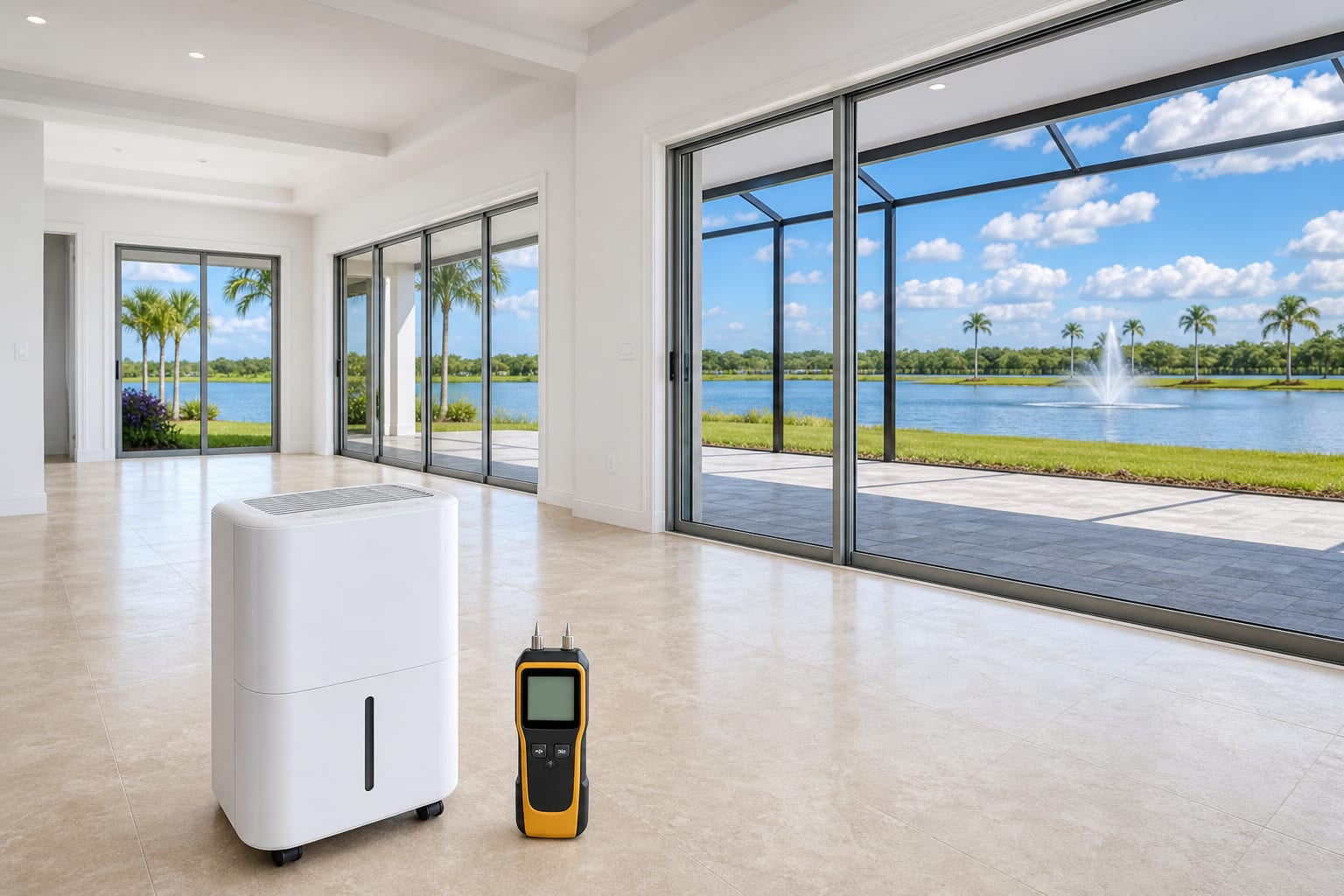
How do you check a home for mold and humidity before buying in Estero?
Walk the home looking and smelling for trapped moisture, ask the seller how the home was kept while nobody lived in it and whether it has ever had a leak or mold work, and pull the records that would show past water: the seller's disclosures, the insurance claims history and the permit history. If anything points to moisture, book a licensed mold assessor inside your inspection period, before you are committed to the purchase.
I am Kris Asquith, Broker Associate at Premiere Plus Realty, and I help buyers and sellers in Estero and eight other Southwest Florida markets. Estero is inland, with lake communities, homes along the Estero River and new construction that is still going up. None of that changes the basic fact of owning a home here: the outside air is warm and damp for much of the year, and the inside stays dry only as long as the roof, the plumbing and the air conditioning keep up. Mold is usually a symptom. What you are really trying to find is the water behind it.
Why does humidity matter so much in an Estero home?
Because mold needs very little to grow: moisture, warmth and something to feed on, such as the paper face of drywall, wood framing, cabinet bottoms or the dust inside ductwork. In a Southwest Florida home the air conditioning is doing two jobs at once. It cools the air, and it pulls water out of it. A system that is too large for the home cools quickly and shuts off before it has removed much moisture. A system that is switched off, or set too warm, removes almost none.
That is why a home that sat closed for a long stretch deserves the closest look. Ask what the thermostat was set to while the home was empty, whether a dehumidifier was running, and whether anyone checked on the home after storms or power outages. A home can look spotless on the day of a showing and still have spent months holding moisture in its closets and behind furniture against outside walls. My article on what to check about the air conditioning in an Estero home covers the age, sizing and service record of the system itself.
What signs of moisture should you look for at a showing?
Start with your nose. A musty or earthy smell when the front door opens, or inside closets, vanity cabinets and the air handler closet, is worth noting even when nothing is visible. Then look where water collects or travels:
- Ceilings. Rings, patched spots or fresh paint on one section of ceiling, especially under bathrooms, under the air handler and near where the roof changes direction.
- Under sinks and around wet areas. Swollen or stained cabinet bottoms, soft spots in the floor near toilets and tubs, and dark grout or caulk that does not clean.
- Windows and sliding doors. Staining, bubbling paint or warped trim at the corners, and condensation on the inside of the glass.
- The air handler closet. Rust on the cabinet, standing water in the drain pan, a damp floor and dark spotting around the supply vents in the rooms it serves.
- Baseboards and the lower walls. Swelling, new baseboards in an otherwise older home, or a band of newer drywall or paint at the same height around several rooms.
That last sign is a reason to ask questions, not a conclusion. It can mean the home took on water and the lower walls were replaced, and if so, you want to know when, how and by whom. Florida requires the seller of residential property to give the buyer a written flood disclosure at or before the time the contract is signed, covering flood damage the seller knows about during their ownership, so read that form alongside what you see.
Does a standard home inspection check for mold?
Only by looking. A standard home inspection is visual. A careful inspector will note visible growth, staining, damaged materials and conditions that invite mold, such as a clogged condensate line or a bathroom fan that does not vent outside, and many carry a moisture meter or a thermal camera. They generally do not take samples, open walls or tell you what kind of mold is present or how far it extends.
That work belongs to a mold assessor. Florida licenses mold assessors and mold remediators separately, and state law generally keeps an assessor from being paid to remediate a home it has recently assessed, so the person who tells you there is a problem is not the person selling you the fix. If your inspector reports moisture or growth, ask whether an assessment is worth it, and book it promptly, because the inspection period in your contract keeps running while you wait for an appointment.
What records can show past water in an Estero home?
Three sets of paper, read together, usually tell the story better than the walls do.
- The seller's disclosures. Florida law generally requires a seller to disclose known defects that materially affect a home's value and that a buyer could not readily see, and past water intrusion often falls into that category. Read the disclosure for leaks, flooding, mold and repairs.
- The insurance claims history. Insurers report claims, including water claims, to a shared database, and the report from it is called a CLUE report. A buyer cannot order it directly, but the owner can. My article on finding a home's insurance claims history in Estero explains how to get it from the seller and what it shows and leaves out.
- The permit history. If a past leak led to a new roof, new plumbing or electrical work, the permit record should show it with a final inspection. In Estero that record can sit with the Village of Estero for recent work and with Lee County for work permitted before 2016, so check both. My article on checking a home's permit history in Estero walks through each one.
When the three agree, you have a clear picture. When the disclosure says no water but the claims report shows a water claim, or the drywall is new but no permit or invoice explains it, ask before you go further.
What should you ask the seller?
Ask plainly, and ask for paper behind every answer:
- Has the home ever had a roof leak, a plumbing leak, an air conditioning leak or water come in from outside?
- Has mold ever been found, tested for or removed, and by which licensed company?
- Is there a written assessment from before the work and a clearance report from after it?
- Was an insurance claim filed for any of it?
- How was the home kept while it was empty, and who checked on it?
A seller who had a leak fixed at the source, with an assessment before the work and a clearance report after it, is offering you a documented history. A seller who painted over a stain is offering you a question. The two can look identical on the day of a showing, which is exactly why the paperwork matters. Leaks most often start at the roof and the plumbing, and my articles on checking the roof before buying in Estero and checking the plumbing in an Estero home cover what to ask about each.
Who answers for moisture in a condo or a new home?
In a condominium, water rarely respects the line between units. A leak from the unit above, a failed seal at a shared exterior wall or a roof problem over the building can end up inside your walls, and the declaration of condominium decides who is responsible for which part of the repair. Read it, ask the association whether there have been water intrusion repairs in the building, and ask whether any building-wide roofing, window or waterproofing project is planned, because large projects can be paid for by special assessment.
On a new home, ask how the builder handles moisture and mold under the warranty, what the warranty excludes and how long each part of it lasts. Have your own inspector walk the home before the final walk-through anyway. A brand-new home with its air conditioning not yet running steadily, or a lanai door that was not sealed properly, can show moisture early, and that is the time to have it corrected.
What should you do with what you find?
Find the source before you talk about the cost. Mold from a clogged drain line, a slow drip under a sink or a bathroom fan venting into the attic is usually a contained repair once the cause is corrected. Mold from repeated roof leaks or water inside the walls is a larger question, and it is worth a written scope from a licensed remediator and an estimate from the right contractor before you decide. Then decide with your eyes open: ask the seller to correct it, ask for different terms, or step back. My step-by-step home buying process shows where the inspection period falls and why the clock matters.
Once you own the home, keep the air conditioning running at a setting that controls humidity even when you are away, have the drain line serviced, and look under the sinks and around the air handler a few times a year. If you are selling, correct any active leak before you list and gather the assessment, the clearance report and the invoices, so a buyer's inspector finds documentation instead of a mystery. My page on buying a home in Estero covers the wider picture, and I am glad to go through a specific home with you. Get in touch or call (239) 300-1427.
This article is a general overview and is not legal, insurance, health or construction advice about any particular property. Confirm the specifics with your home inspector, a licensed mold assessor, your insurance agent, the association, the Village of Estero, Lee County and a real estate attorney.
Frequently Asked Questions
Does a home inspection in Estero include mold testing?
Usually not. A standard home inspection is visual: the inspector reports visible growth, staining and moisture, and may use a moisture meter or thermal camera, but generally does not take samples. If something is flagged, a licensed mold assessor can test and tell you how far it goes.
How can I tell whether an Estero home has had water damage?
Read the seller's disclosures and the flood disclosure, request the insurance claims history, and check the permit record with both the Village of Estero and Lee County. At the showing, look for stains, swollen baseboards and newer drywall at the same height around several rooms, and ask the seller directly.
Is a small amount of mold a reason to walk away?
Not necessarily. Small, contained growth from a corrected leak is a common repair. What matters is the source and whether it has been fixed. Repeated roof leaks or water inside the walls is a bigger question, so get the cause identified and a written scope before you decide.
Who pays for water damage in an Estero condo?
It depends on where the water came from and what the declaration of condominium says. The association is often responsible for common elements such as the roof and exterior walls, while the owner is often responsible for the inside of the unit. Read the documents and ask the association about past and planned water repairs.