2026-11-11 · 8 min read · Estero
What Should You Check About the Plumbing Before Buying a Home in Estero?
What should you check about the plumbing before buying a home in Estero?
Find out what the water supply pipes are made of, what condition the drain lines are in, how old the water heater is, whether there are signs of a leak in a place you cannot see, and whether any repipe or major repair has a permit and a final inspection behind it. Those answers decide whether the home can be insured on reasonable terms, whether a large repair is waiting out of sight, and what to raise with the seller before your inspection period ends.
I am Kris Asquith, Broker Associate at Premiere Plus Realty, and I help buyers and sellers in Estero and eight other Southwest Florida markets. Estero has resale homes of many ages alongside new construction that is still being built, and two homes on the same street can look equally fresh on a showing while having very different plumbing underneath. Faucets and fixtures are the easy part to replace and the easy part to admire. The pipe that matters is inside the walls, under the slab and above the ceilings.
Why does the type of supply pipe matter to an insurer?
Because insurers ask, and some materials make a home harder to insure. Many Florida insurers require a four-point inspection on an older home before they will write a policy, and plumbing is one of the four points, along with the roof, the electrical system and the heating and air conditioning. The inspector records what the supply pipes are made of, the age of the water heater and any active leaks.
The pipe that most often causes trouble is polybutylene, a gray plastic supply pipe installed in many homes built from the late 1970s into the mid-1990s. It has a history of failing without warning, and some insurers will not cover a home that still has it, or will only do so on narrower terms. Galvanized steel supply pipe, found in some older homes, can corrode from the inside and lose water pressure over time. Copper, CPVC and PEX are what you will usually see in newer homes and in homes that have been repiped. If the listing does not say, ask, and have your inspector confirm the material at the water heater, under the sinks and anywhere the pipe is exposed.
What can go wrong in the drain lines without anyone noticing?
Quite a lot, because nobody sees inside them. In some older homes the main drain lines are cast iron, which can corrode and crack from the inside over decades while the floors above look perfect. Tree roots can find their way into a line through a small crack. A belly, where a section of pipe has sagged, lets waste settle and slow down. The early signs are slow drains, gurgling, a sewer smell or repeated backups at the same fixture, and a seller who has lived with them for years may no longer notice.
A general home inspection runs water and watches the drains flow, but it cannot see inside the lines. A sewer camera inspection can: a licensed plumber runs a camera through the drain lines from a cleanout and records what it finds. On an older home, a home that has been empty for a season, or any home that took on water in a past storm, book it at the same time as the general inspection so both reports arrive inside your inspection window, and ask for the video, not only the summary. My article on what a home inspection covers in Estero explains which checks the general inspection leaves to specialists like this one.
How do you spot a leak under the slab?
Look for the symptoms, because the pipe itself is out of sight. Many Southwest Florida homes are built on a concrete slab, and in some of them supply or drain lines run beneath it. A leak there can go on for a long time before it shows. Warm spots on a tile floor, the sound of running water when every fixture is off, a water bill that is higher than the household's use explains, cracked floor tiles, damp baseboards or a musty smell in one room are all reasons to look further.
Ask your inspector to check the water meter with every fixture off: if the meter keeps moving, water is going somewhere. If anything points to a leak, a licensed plumber with leak detection equipment can usually locate it without opening the floor first. Ask the seller for the past year of water bills as well. They cost nothing to request, and a steady pattern is reassuring in a way a single bill is not.
What should you know about the water heater?
Its age, its type and where it drains. The age is usually printed on the data plate on the tank or the unit, or it can be read from the serial number. Some insurers ask the water heater's age when they write a policy, and a tank near the end of its life is a predictable cost that is easier to plan for before closing than after. Wherever it sits, whether in the garage, a utility closet or the attic, ask the inspector to check the temperature and pressure relief valve and its discharge line, look for rust or seepage at the base, and see whether a drain pan is in place where one would protect finished space.
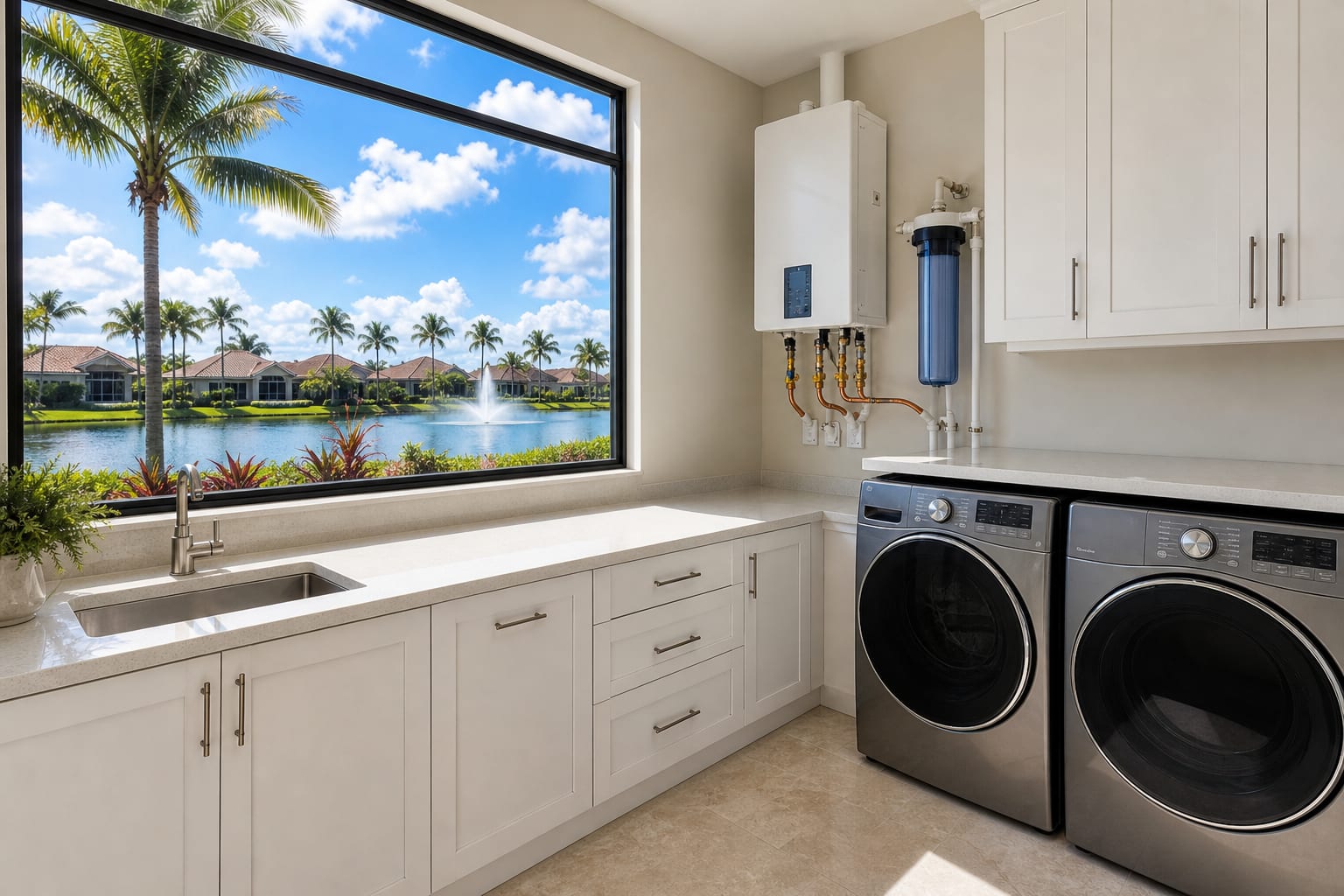
If the home has a tankless unit, ask when it was last descaled or serviced. If it has a water softener or a whole-house filter, ask whether the equipment is owned or rented, and when it was last serviced, because a rental agreement is something you would be taking over rather than buying.
What can the permit record tell you about past plumbing work?
Whether major work was done properly and inspected. Repiping a home, replacing a water heater and replacing a sewer line typically require permits. In Estero that record can sit in one of two offices: the Village of Estero holds permits for work since it took over building services, and Lee County holds the record for work permitted before 2016, because Lee County Community Development handled building and permitting for the Village until then. An older home can have its original plumbing on the county's record and a repipe on the Village's, so check both before you conclude anything is missing. My article on checking a home's permit history before buying in Estero explains how to request each one.
If the record shows nothing but the pipe is clearly new, ask who did the work and when. You inherit unpermitted work when you buy, and an insurer or a future buyer may ask about it. A cluster of plumbing and drywall permits close together can point to a past water leak, and my article on checking a home's insurance claims history in Estero shows how to compare that record with any water damage claims.
What else is worth a look while the plumber is there?
The small parts that cause large damage. Ask the plumber or inspector to check the main water shutoff and confirm it turns, the shutoff valves under sinks and behind toilets, the washing machine supply hoses, the ice maker line behind the refrigerator, and the drain line from the air conditioning air handler. A clogged condensate line is one of the most common sources of water damage in Southwest Florida homes, and my article on checking the air conditioning before buying in Estero covers that drain line in more detail.
Ask, too, how the home is connected: whether it is on central water and sewer, which utility serves the address, and whether the lawn irrigation runs on the home's own water, a well, or a separate supply, and who maintains it. Confirm the answers with the utility rather than assuming. If the home has a pool, its plumbing and equipment deserve their own look from someone who services pools.
Does buying new construction or a condo change the plumbing checks?
It changes who you call. On a new home, the plumbing is usually covered by the builder's warranty for a set period, and the warranty documents say what is covered and for how long. Read them before closing, and have your own inspector look at the home before the final walk-through anyway, because a fitting that drips now is easier to raise before you own the house. My article on what to ask about a builder's warranty in Estero explains how the different parts of that warranty are layered.
In a condominium, responsibility for plumbing is usually split between the unit owner and the association, and the building's own declaration sets the line. Pipes that serve only your unit may be yours, while the main stacks and lines inside common walls may belong to the association. Read the documents rather than assuming, and ask whether the building has had, or is planning, a repipe or drain line project, because a building-wide project can lead to a special assessment. The meeting minutes and reserve schedule are where it usually shows up first.
What should you do with what you find?
Sort it into three groups: what affects insurability, what is a large repair, and what is routine. Polybutylene supply pipe, an active leak, a damaged drain line or a failing water heater belong in the first two groups, and they are worth resolving before you commit, whether by asking the seller to repair, adjusting the terms, or getting a licensed plumber's written estimate and an insurance quote so you know exactly what you are taking on. A worn supply hose or a sticky shutoff valve is ordinary upkeep. Your contract's inspection terms set how long you have to decide, so book the specialists the day you go under contract. My step-by-step home buying process shows where the inspection period falls, and run every faucet and flush every toilet again on the final walk-through before closing.
If you are selling, gather the repipe permit, the water heater receipt and any plumbing invoices before you list, so a buyer sees an organized record rather than a question. My page on buying a home in Estero covers the wider picture, and I am glad to go through the inspection reports on a specific home with you. Get in touch or call (239) 300-1427.
This article is a general overview and is not legal, insurance or plumbing advice about any particular property. Confirm the specifics with a licensed plumber, your home inspector, your insurance agent, the association, the utility that serves the address, the Village of Estero and Lee County.
Frequently Asked Questions
Will an insurer cover an Estero home with polybutylene pipes?
Some will not, and others will only on narrower terms. Polybutylene is a gray plastic supply pipe found in many homes built from the late 1970s into the mid-1990s. Ask your insurance agent before you commit, and have your inspector confirm what the pipes are made of.
Does a home inspection check inside the drain lines?
Not usually. A general inspection runs water and checks that drains flow, but it cannot see inside the lines. A sewer camera inspection by a licensed plumber can, and on an older home it is worth booking during your inspection period.
How can I tell if an Estero home has a leak under the slab?
Look for warm spots on the floor, the sound of running water with every fixture off, cracked tiles, damp baseboards or a water bill higher than the household's use explains. Ask the inspector to watch the water meter with everything off, and call a licensed plumber with leak detection equipment if anything points to a leak.
Where do I find the plumbing permit history for an Estero home?
Check both offices. The Village of Estero holds permits for work since it took over building services, and Lee County holds records for work permitted before 2016. Look for plumbing permits with a final inspection, especially for a repipe or a water heater replacement.