2026-11-03 · 8 min read · Estero
What Should You Check About Solar Panels Before Buying a Home in Estero?
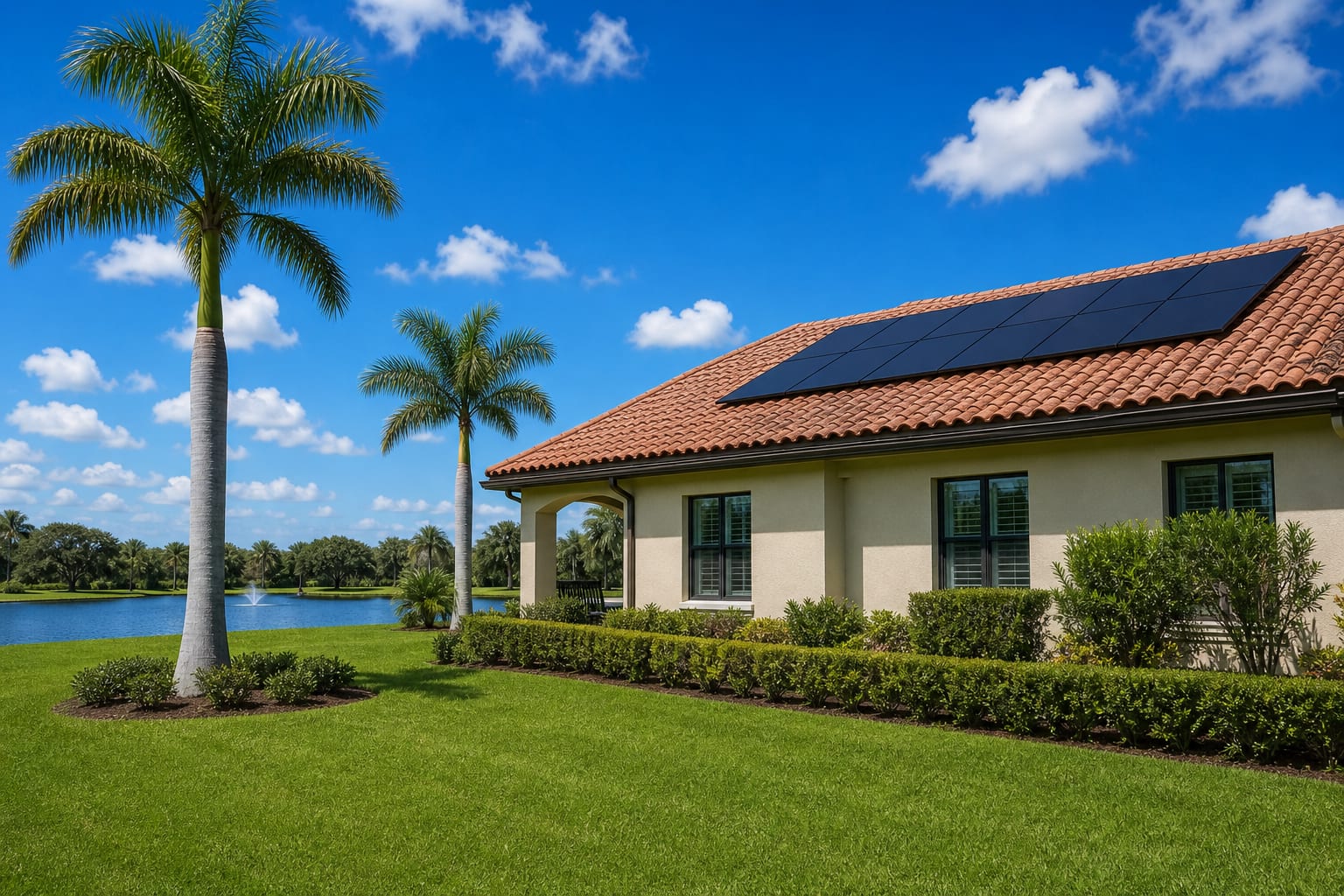
What should you check about solar panels before buying a home in Estero?
Find out who owns the system first, because that decides everything else. Then check five more things: whether any loan, lease or assessment is attached to it, whether it was installed with permits that passed final inspection, how old the roof underneath is, how your insurance company will treat it, and what the seller can hand you in writing about warranties and the utility account. A solar system can be a genuine asset on a home, or a contract and a payment you did not realize you were taking on. The paperwork tells you which.
I am Kris Asquith, Broker Associate at Premiere Plus Realty, and I help buyers and sellers across Estero and eight other Southwest Florida markets. Estero is an inland village of master-planned communities, and most of its homes sit under concrete or clay tile roofs in full sun. Panels show up on more of those roofs every year, and they deserve their own line in your due diligence rather than a glance from the driveway.
Who actually owns the solar panels on the house?
Ask the seller directly, and ask for the documents that prove the answer. Residential systems usually fall into one of four arrangements.
- Owned outright. The seller paid for the system and it conveys with the home like any other fixture. This is the simplest case.
- Owned with a loan. The seller financed the system. The loan generally has to be paid off at or before closing, and some solar lenders record a notice against the property, so your title company needs to know about it early.
- Leased, or a power purchase agreement. A solar company owns the panels and the seller pays a monthly lease or buys the power they produce. You would either take over that contract, which usually requires the company's approval, or the seller would need to buy it out. Read the transfer terms, the remaining length and any payment increases before you agree to anything.
- Financed through PACE. The cost is repaid as an assessment on the property tax bill. That one needs its own question, covered below.
Ask for this early in the contract period, not at the closing table. A lease transfer can take time, and a payoff changes the seller's numbers. My step-by-step buying process shows where your inspection and due diligence period falls and why these questions belong inside it.
What is a PACE assessment, and how do you know if the home has one?
PACE stands for Property Assessed Clean Energy. Florida law lets owners finance qualifying improvements, solar among them, through a non-ad-valorem assessment that is collected on the property tax bill year after year. Because the assessment belongs to the property rather than the person, it can stay with the house when it sells unless it is paid off.
Look at the most recent tax bill for the address. A PACE assessment appears in the non-ad-valorem section, separate from the taxes based on value. Many mortgage lenders require a PACE assessment to be paid off before they will make a new loan on the home, so if one is there, raise it with your lender and the seller right away. My article on how non-ad-valorem assessments work explains how to read that part of the bill, and the same layout applies to Estero tax bills.
Were the panels permitted and inspected?
Ask for the permit record. Installing a solar system generally requires building and electrical permits, and the Village of Estero handles building permits for homes inside its limits. The record for the address should show when the permit was issued and whether it passed final inspection. Some Estero homes were built before the Village incorporated in 2014, so older records may sit with Lee County; ask your agent to check both.
A system with no permit behind it is a question to answer before closing, not after. It can complicate insurance, a future roof replacement that needs its own permit, and your eventual sale. If the house also has a battery backup, ask whether it was included in the same permit or added later, since batteries add their own wiring and installation requirements.
What does the roof underneath the panels look like?
This is the question buyers most often skip. Panels are mounted through or onto the roof, and when the roof needs replacing the panels usually have to come off and go back on again, which is a separate cost from the roof itself. So compare the age of the roof with the age of the system. A new array on an old tile roof means paying to remove and reinstall panels sooner than you might expect.
Ask your inspector or a licensed roofer to look at the mounting points, flashing and any tiles around them for cracks, slipped tiles or signs of water getting in, and to check the attic below the array. Many inspectors will not walk a tile roof, so read your agreement to see what kind of look you are paying for. My articles on what to check on the roof before buying in Estero and what a home inspection covers in Estero go further on both.
Can an Estero HOA stop you from having solar panels?
Florida law limits an association's ability to prohibit solar collectors on a home, but it does allow the association a say in where on the roof they go, within limits set in the statute. In practice, most Estero communities have an architectural review process, and panels, battery equipment, conduit and inverters on an exterior wall usually need approval before they go up.
If you are buying a home that already has panels, ask the seller for the architectural approval letter. If you plan to add panels after you buy, read the community's guidelines during due diligence so you know the approval process and any requirements on placement or appearance. The association's estoppel and resale documents are the place to confirm there is no open violation tied to the system; my article on the HOA estoppel certificate in Estero explains what that document covers.
How do solar panels affect insurance and property taxes?
Ask the insurance agent quoting the home how the carrier treats the system. Some policies cover roof-mounted panels as part of the dwelling, some ask for details of the system, and wind is the risk every Florida carrier prices first. Get the written quote during your inspection period so there is time to act on anything the carrier asks for.
On taxes, Florida law generally excludes the added value of a residential renewable energy device from a home's assessed value, so panels are not usually meant to raise the assessment on their own. A PACE assessment, if there is one, is a separate charge on the same bill. Confirm how both apply to a specific address with the Lee County Property Appraiser and the Lee County Tax Collector.
What paperwork should transfer with the solar system?
Ask for it as a package, and list the system as an included item in your contract. The useful documents are the purchase or lease agreement, the panel, inverter and battery warranties and how each one transfers, the installer's workmanship warranty, the permit and final inspection, the HOA approval, and the paperwork from the electric utility showing the system is approved to connect to the grid. Ask for a year of electric bills too, so you can see how the system has actually performed in this house.
The utility account and any credit for power sent back to the grid need to move into your name after closing. Ask the seller who they called to do that, and make sure the monitoring app or login is handed over. Then test the system on your final walk-through: the inverter should show it producing power, with no fault lights. My article on what to check on the final walk-through in Estero covers that last look.
What should a seller with solar panels prepare before listing?
Gather the same package a careful buyer will ask for: who owns the system, any loan or lease with its payoff or transfer terms, the permit and final inspection, the warranties, the HOA approval and a year of electric bills. A seller with a lease should call the solar company before listing to learn how a transfer works and how long it takes. Buyers and their lenders read an organized file as a known quantity, and a missing document as a question.
If you are comparing homes, my page on buying a home in Estero covers the wider picture, and I am glad to look at a specific listing, its tax bill and its permit record with you. Get in touch or call (239) 300-1427.
This article is a general overview and is not legal, tax, insurance or engineering advice about any particular property. Confirm the specifics with your CPA or tax advisor, a real estate attorney, a licensed roofer or electrician, your insurance agent, your lender, the association, the Village of Estero and Lee County.
Frequently Asked Questions
Can I take over the solar lease when I buy a home in Estero?
Often, yes, but it usually needs the solar company's approval and may include a credit check. Read the remaining term, the monthly payment and any increases first. If you do not want the lease, the seller may be able to buy it out before closing. Settle which it will be during your due diligence period.
How do I know if a home's solar panels were financed through PACE?
Look at the property tax bill. A PACE assessment appears in the non-ad-valorem section, separate from the taxes based on value. Many mortgage lenders require it to be paid off before they will make a new loan, so raise it with your lender and the seller as soon as you see it.
Do solar panels raise property taxes in Estero?
Florida law generally excludes the added value of a residential renewable energy device from a home's assessed value. A PACE assessment, if there is one, is a separate charge on the tax bill. Confirm both for the specific address with the Lee County Property Appraiser and your CPA.
Can my Estero HOA refuse to let me install solar panels?
Florida law limits an association's ability to prohibit solar collectors, but the association can have a say in where on the roof they go, within limits the statute sets. Most Estero communities require architectural approval first, so read the guidelines before you buy if you plan to add panels.