2026-11-10 · 8 min read · Fort Myers Beach
What Should You Check About the Air Conditioning Before Buying a Home on Fort Myers Beach?
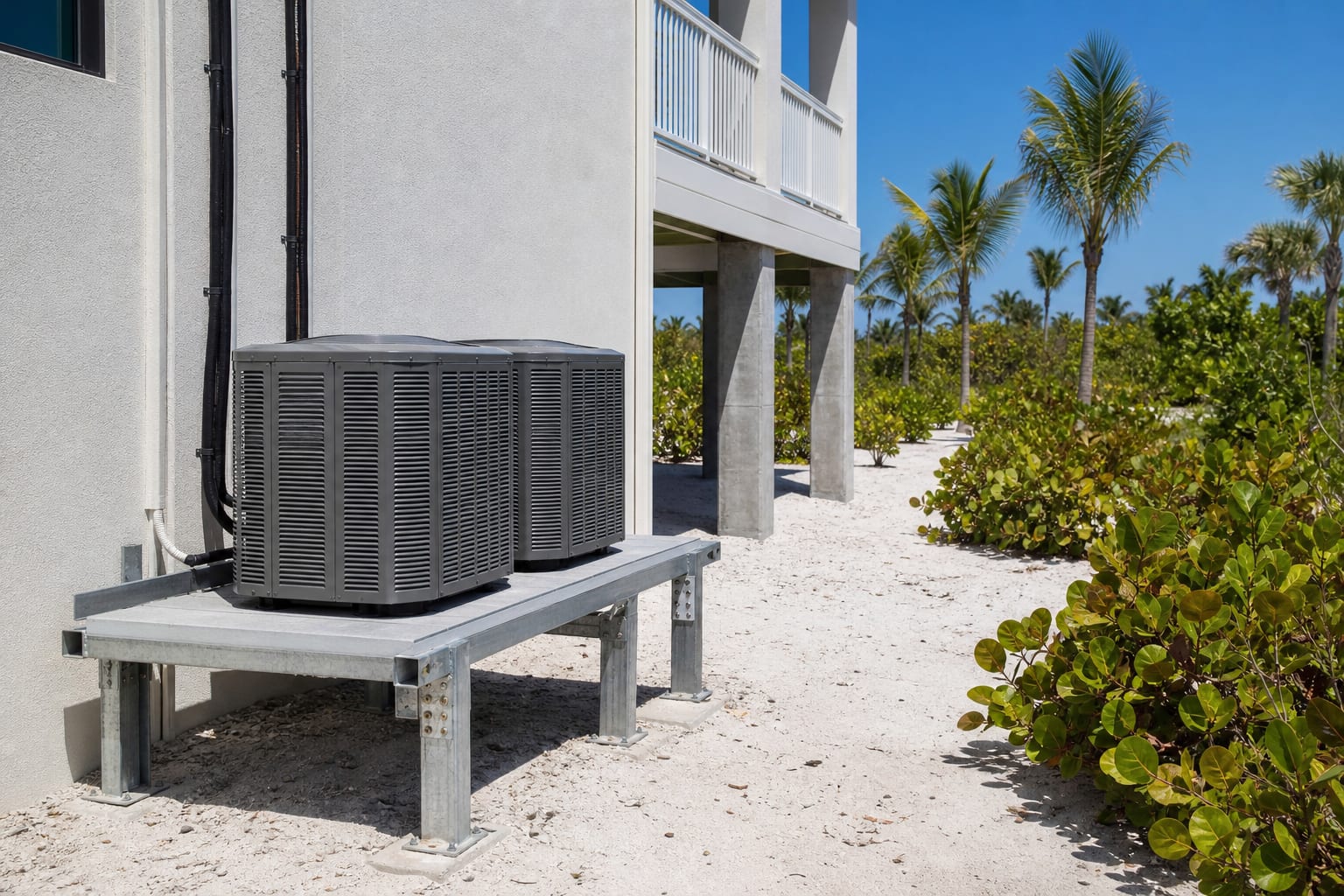
What should you check about the air conditioning before buying a home on Fort Myers Beach?
Find out how old the outdoor condenser and the indoor air handler each are, how high the outdoor unit sits compared with the flood elevation, whether either piece took water in a recent storm, whether any replacement was done under a permit that passed final inspection, which refrigerant the system uses, and what condition the drain line and ductwork are in. A cool room on a showing tells you the system runs today. It does not tell you whether it is close to the end of its life, whether it was dried out after a flood rather than replaced, or whether an insurer will accept it.
I am Kris Asquith, Broker Associate at Premiere Plus Realty, and I help buyers and sellers on Fort Myers Beach and in eight other Southwest Florida markets. The island has newly built elevated homes, older ground-level homes, homes rebuilt after Hurricane Ian and condominiums, often on the same few blocks, and each of them can have a very different air conditioning story behind the same cool air.
How do you find out how old the A/C really is?
Read the labels, then read the permit record. The outdoor condenser and the indoor air handler each carry a manufacturer's data plate with a serial number, and the manufacture date can usually be read from it or looked up. The two pieces are not always the same age. A newer condenser paired with an original air handler is a common finding, and so is the reverse.
Replacing an air conditioning system generally needs a mechanical permit, and the Town of Fort Myers Beach handles building permits for homes on the island, so the permit history for an address there comes from the Town. If the seller says the system is new, the record should show the permit and a final inspection. If the equipment is clearly new and the record shows nothing, ask who installed it and when, because unpermitted work passes to the new owner at closing. My article on what to check before buying a rebuilt home on Fort Myers Beach explains how to read the permit record against a home's storm history.
How high should the outdoor unit sit on an elevated home?
At or above the flood elevation the Town requires, on a home built or substantially improved under current flood rules. Equipment that serves the house, such as the air conditioning, the water heater and the electrical panel, is expected to sit at that height or to be built to resist flood damage where it cannot be raised. That is why, on many elevated homes, you will see the condensers on a raised platform or a wall bracket rather than on a pad on the ground. My article on what you can use the ground floor for under an elevated home explains how the space below the flood elevation is meant to work.
On an older ground-level home, the condenser may still sit on a pad near the slab. That does not make the home a bad purchase, but it is worth knowing before you get an insurance quote. Either way, ask your inspector whether the unit is strapped or bolted to whatever it sits on, and look at the platform or bracket itself, since that support is usually metal and lives in the same salt air as the unit.
Did the system take water in Hurricane Ian or a later storm?
Ask the seller directly, and ask what was done afterward. Hurricane Ian flooded ground levels across much of the island in 2022, and equipment that sat in salt water may have been replaced, or it may have been dried out and put back in service. Those are very different outcomes for a buyer, even when both units cool the house on the day you see it.
Compare the answer with the paperwork. A replacement after a storm should show up as a permit with a final inspection, and an insured loss may appear on the home's claims history. Florida's flood disclosure law also requires sellers of residential property to tell buyers about known flood damage and certain flood insurance claims, so read that form alongside the permit record. Where the three agree, you can move ahead with more confidence. Where they do not, ask why.
How does salt air affect the air conditioning on the island?
Mostly through the outdoor unit. Its thin metal fins and coils are exposed to salt air every day, and corrosion there is one of the most common reasons coastal equipment is replaced sooner than it would be inland. Ask whether the unit has a coastal or corrosion-resistant coating, when the coils were last cleaned, and who has been servicing it. Flaking fins, a white or green crust on the coil, and rust on the cabinet or its fasteners are the signs to look for. My article on checking for salt air corrosion before buying on Fort Myers Beach covers the condenser and the rest of the metal on and around the house.
Why does the type of refrigerant matter?
It can decide whether an older system is worth repairing. Many older systems use R-22, a refrigerant the EPA phased out of new production in 2020, so recharging one today depends on recovered or recycled supply. The refrigerant type is normally printed on the outdoor unit's label. Ask your inspector or a licensed air conditioning contractor to note it, and ask a plain question: if this system lost its charge or its compressor next summer, would that be a repair or the start of a replacement? The answer tells you whether the air conditioning belongs in this year's budget or a later one.
What does a home inspection miss, and when do you need an A/C contractor?
A general inspection usually runs the system, compares the air going in with the air coming out, looks at the visible equipment and checks the filter and the condensate drain. It is a snapshot from one day, and it usually does not include testing refrigerant pressures or looking inside the ductwork. If the system is older, if it went through a flood, or if the home has been closed up for the season, book a licensed air conditioning contractor during your inspection period as well.
Ask them to look at the evaporator coil, the drain pan, the float switch that shuts the system off before a clogged drain can overflow, the ductwork and any sign of moisture or mold around the air handler, and ask for photographs. A clogged condensate line is one of the most common sources of water damage in Southwest Florida homes, and my article on checking the plumbing before buying on Fort Myers Beach covers it with the rest of the home's water lines.
Can the air conditioning affect insurance on a Fort Myers Beach home?
Yes. Many insurers ask for a four-point inspection on an older home before they will write a policy, and the heating and air conditioning is one of the four items, along with the roof, the electrical system and the plumbing. The inspector records the system's age and working condition on a form the underwriter reads. My article on what a four-point inspection covers on Fort Myers Beach walks through the whole report. Ask for a written quote on the specific address early in your inspection period, so that if the carrier wants something addressed you still have time to raise it with the seller.
Who is responsible for the A/C in a Fort Myers Beach condo?
Often the unit owner, but the declaration decides. In many buildings the system that serves only your unit is yours to maintain and replace, even when the condenser sits on the roof, on a shared platform or in a common area. Read the documents rather than assuming, and ask the association how a replacement is approved and scheduled if it means crews or a crane crossing common areas. Ask too whether the association has rules on where outdoor units may sit, since that matters if a new unit is a different size.
What should you do with what you find?
Sort it into three groups: what affects insurance, what is a large cost, and what is routine. A system that is not cooling, one that sat in flood water and was never replaced, or one the insurer will not accept belongs in the first two, and it is worth resolving before you commit, whether by asking the seller to repair or replace it, adjusting the terms, or getting a contractor's written estimate. A system that works but is near the end of its useful life is a budgeting question. If the seller agrees to replace it, ask that the work be permitted and pass final inspection, and that you receive the permit, the contractor's warranty and the manufacturer's registration. Your contract's inspection terms set how long you have to decide, and my step-by-step buying process shows where that window falls.
If you are selling, gather the permit, the service records and any warranty paperwork before you list, and have the coils cleaned and the drain line cleared. My page on buying a home on Fort Myers Beach covers the wider picture, and I am glad to go through the permit record and inspection reports on a specific home with you. Get in touch or call (239) 300-1427.
This article is a general overview and is not legal, insurance or engineering advice about any particular property. Confirm the specifics with a licensed air conditioning contractor, your home inspector, your insurance agent, a real estate attorney, the association and the Town of Fort Myers Beach.
Frequently Asked Questions
Where do I find out when the A/C was replaced on a Fort Myers Beach home?
Ask the Town of Fort Myers Beach for the permit history on the address, since the Town handles building permits for homes on the island. Then compare the dates with the data plates on the outdoor condenser and the indoor air handler, which are not always the same age.
Should the A/C condenser be raised on an elevated home?
On a home built or substantially improved under current flood rules, equipment such as the air conditioning is expected to sit at or above the flood elevation the Town requires, or be built to resist flood damage. That is why many elevated homes have their condensers on a raised platform or wall bracket.
How do I know whether the air conditioning took water in Hurricane Ian?
Ask the seller directly what happened to the equipment and what was done afterward, then compare the answer with the permit record, the flood disclosure and any claims history. A unit replaced after a storm should have a permit with a final inspection behind it.
Does salt air shorten the life of an air conditioner on Fort Myers Beach?
It often does. The outdoor unit's fins and coils are exposed to salt air every day. Ask whether it has a corrosion-resistant coating and when the coils were last cleaned, and have your inspector look at it closely.