2026-11-03 · 8 min read · Fort Myers Beach
What Should You Check About Termites Before Buying a Home on Fort Myers Beach?
What should you check about termites before buying a home on Fort Myers Beach?
Book a wood-destroying organism inspection, usually called a WDO or termite inspection, with a licensed pest control company as soon as you go under contract. Read the report for live activity, visible damage, signs of past treatment and the list of areas the inspector could not reach. Then ask the seller for the treatment history and any termite bond, and on the island ask one more question: did this home take on water in a storm, and what happened to the wood afterward? Those answers tell you whether you are looking at routine upkeep, a repair to price in, or something to settle before you commit.
I am Kris Asquith, Broker Associate at Premiere Plus Realty, and I help buyers and sellers on Fort Myers Beach and across eight other Southwest Florida markets. Termites are common throughout Florida, so a record of past treatment is not unusual and is not by itself a reason to walk away. What matters on the island is whether there is activity now, whether earlier damage and storm-soaked wood were dealt with properly, and whether the home is protected going forward.
How is a WDO inspection different from a home inspection?
It is a separate inspection by a separately licensed professional. A general home inspector looks at the structure and systems of the whole house. A WDO inspection is done by a pest control company licensed by the state, and it looks specifically for wood-destroying organisms. Florida law defines those as termites, powderpost beetles, old house borers and wood-decaying fungi, so the report covers wood rot as well as insects. On a barrier island where wood sees salt air, humidity and the occasional flood, that rot line matters as much as the termite line.
The findings go on a standard state report form, so reports from different companies follow the same layout. Some home inspectors also hold a pest control license and can do both, but often they are two appointments, so book them together so both reports arrive inside your inspection window. My article on what a general home inspection covers explains where the general inspection stops and the specialists begin. Some loan programs, VA loans among them, generally call for a WDO inspection on a Florida purchase, so ask your lender early whether yours does.
Which termites should you watch for on the island?
Two broad kinds, treated differently. Subterranean termites live in the soil and travel up into a home through gaps in the slab, along pilings and foundation walls, or through any wood that touches the ground, often building mud tubes to do it. Drywood termites live entirely inside the wood they eat, with no contact with the soil, and turn up in roof framing, door and window frames, trim and furniture. Florida has both, along with invasive subterranean species established in parts of the state.
The signs differ too. Subterranean activity shows as mud tubes, wood that sounds hollow, or mud packed into joints. Drywood activity shows as small, hard pellets, called frass, piled below a tiny kick-out hole. Both kinds swarm at certain times of year, and piles of discarded wings on windowsills or near lights are a common clue that a colony is close by.
What should you check under and around an elevated home?
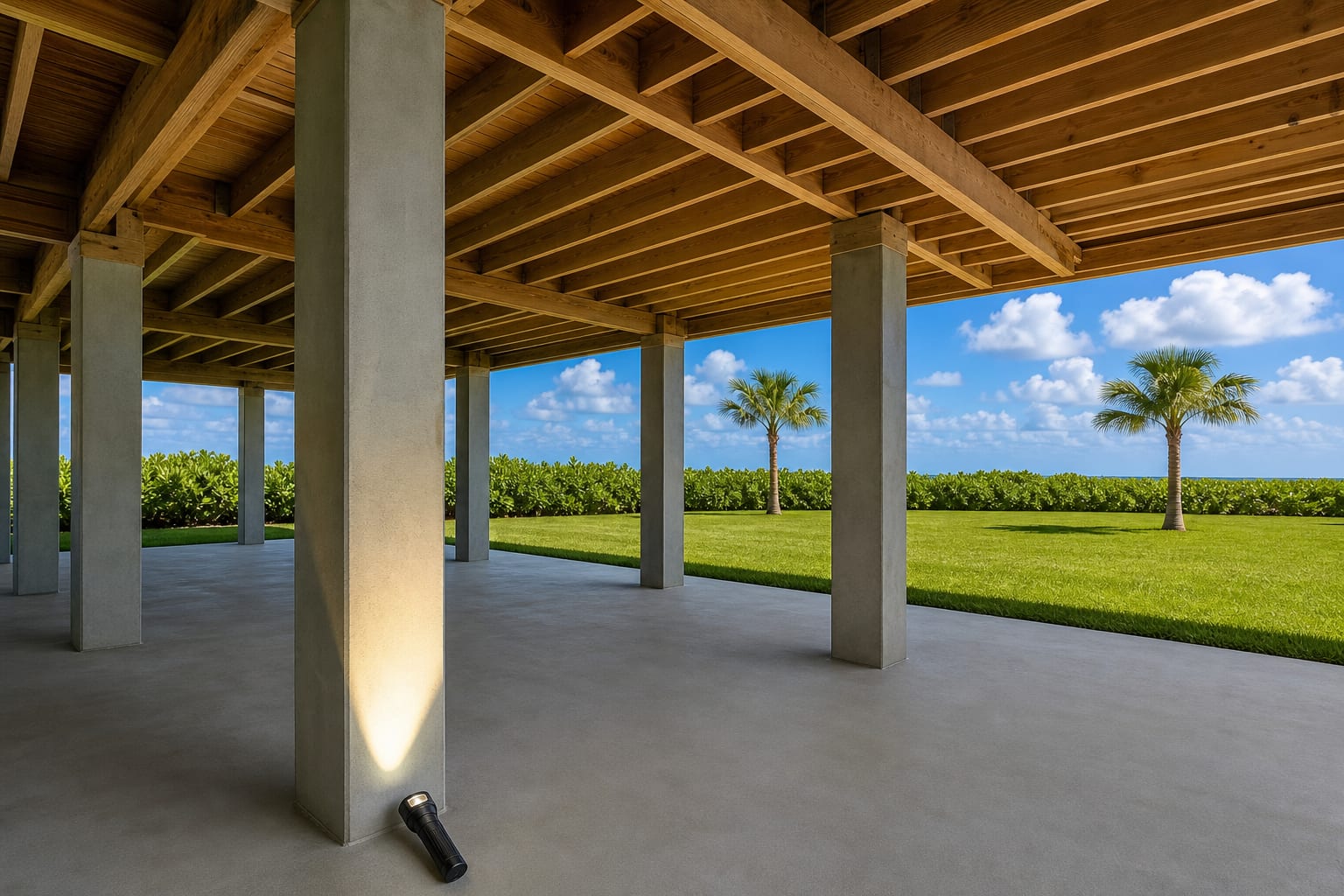
Many homes on Fort Myers Beach sit on pilings or a raised foundation with parking, storage or an enclosed area underneath. Raising the living space does not remove termite risk; it moves where the inspector should look. Ask that the inspection cover the area below the home and anything wooden that connects the ground to the house.
- Wood touching soil. Wooden stairs, landings, lattice skirting, fence posts against the house and stored lumber give subterranean termites a route up. Note anything wooden resting directly on the ground.
- Enclosures below the home. Storage rooms and walls built under an elevated home can hide the framing behind them. If they are finished, the inspector may list them as obstructed.
- Floor framing above. On homes where the underside of the first living floor is exposed, look at the joists and beams for damage, staining or soft spots.
- Decks and porches. Wide covered porches and decks are often wood, and wood next to irrigation, gutters or salt spray stays damp longer.
What can legally be built or kept under an elevated home is a separate question with its own rules. My article on what you can use the ground floor for under an elevated home on Fort Myers Beach covers that side.
Why does a home's storm history matter for termites and wood rot?
Because wet wood is where decay starts, and decay is one of the wood-destroying organisms the report is written to catch. Homes on the island that took on water in Hurricane Ian in 2022, or in later storms, may have had walls opened up, wood dried out or replaced, and new materials installed. Done well, that work can leave a home in better shape than before. Done hastily, it can leave damp framing sealed behind new drywall.
Ask the seller what flooded, how high the water reached, which wood was replaced and who did the work. Then compare those answers with the permit record. The Town of Fort Myers Beach handles building permits for homes on the island, so the record for the address comes from the Town. My articles on what to check before buying a rebuilt home on Fort Myers Beach and on Florida's flood disclosure law explain how to read a home's storm history and what a seller now has to tell you about it.
What does the WDO report leave out?
A WDO inspection is visual and non-invasive. It records what the inspector could see that day and does not look behind drywall, under flooring or inside sealed spaces. The report lists the areas that were inaccessible or obstructed, and that list deserves as much attention as the findings. Attics full of insulation, enclosures packed with beach gear and kayaks, and finished walls under an elevated home are the places most often written off on the island.
A clean report on a home with a long list of areas the inspector could not see is a narrower answer than a clean report on a home that was easy to inspect. If something important was blocked, ask the seller to clear it and the inspector to return before your inspection period ends.
What if the home has been treated, or has a termite bond?
Ask for the paperwork: who treated the home, when, for which kind of termite, and whether damaged wood was repaired afterward. For drywood termites, tenting the whole structure for fumigation is the standard answer to an established infestation, and smaller spot treatments are also used. For subterranean termites, the usual approaches are a liquid treatment in the soil around the home or a ring of bait stations around the perimeter.
A termite bond, sometimes called a termite warranty, is a contract with a pest control company. Some cover retreatment only; others also cover repair of new damage up to a stated limit. Most renew each year and require periodic inspections. Ask for the current contract, what it covers, when it renews, and whether and how it transfers to you. If the home is new construction, Florida's building code requires termite protection when a home is built, so ask the builder for that documentation and any warranty that comes with it.
Who handles termites in a Fort Myers Beach condo?
Usually the association, but the documents decide. In a condominium, the declaration sets what the association maintains, and treating the building structure and common elements normally sits with it. Tenting a multi-unit building has to be coordinated across every unit, and the cost may come from the operating budget, reserves or a special assessment.
Ask the association whether it holds a termite contract, which buildings it covers, when each was last treated and whether any treatment is planned. The budget and the board minutes are where those answers tend to show up. My article on what to look for in the condo documents on Fort Myers Beach lists the documents worth reading before you commit.
What should you do with what you find?
Sort it like any inspection finding. Live activity calls for treatment, and it is worth agreeing in writing who arranges it and pays for it. Visible damage or soft, rotted wood calls for a licensed contractor's look and a written estimate before you decide whether to ask for a repair, a credit or a change in terms. An old, documented treatment with no current activity is usually a maintenance item: keep the bond going or arrange your own protection after closing. Your contract sets how long you have to decide, so book the WDO inspection the day you go under contract. My step-by-step buying process shows where the inspection period falls.
If you are selling, gather your treatment records, bond paperwork and receipts for any wood that was repaired or replaced before you list. My page on buying a home on Fort Myers Beach covers the wider picture, and I am glad to go through a WDO report on a specific home with you. Get in touch or call (239) 300-1427.
This article is a general overview and is not legal, pest control or construction advice about any particular property. Confirm the specifics with a licensed pest control company, your home inspector, a licensed contractor, a real estate attorney, the association and the Town of Fort Myers Beach.
Frequently Asked Questions
Is a termite inspection required to buy a home on Fort Myers Beach?
Not by state law for every purchase, but some loan programs, VA loans among them, generally call for one on a Florida home, and it is a sensible inspection on any purchase. Ask your lender early whether your loan requires it.
Can an elevated home on pilings still get termites?
Yes. Drywood termites do not need soil at all, and subterranean termites can reach a raised home through wooden stairs, lattice, enclosures or anything wooden touching the ground. Ask the inspector to cover the area under the home as well as the living space.
Does a WDO inspection look for wood rot from flooding?
It looks for visible evidence of wood-decaying fungi along with termites and beetles, so rot it can see should be on the report. It does not look behind walls, so ask the seller what flooded and what wood was replaced, and check the Town's permit record for the repairs.
Who pays to tent a condo building on Fort Myers Beach?
In most condominiums the association treats the building and common elements, paid from the budget, reserves or a special assessment. The declaration decides it, so ask the association about its termite contract and any planned treatment before you buy.