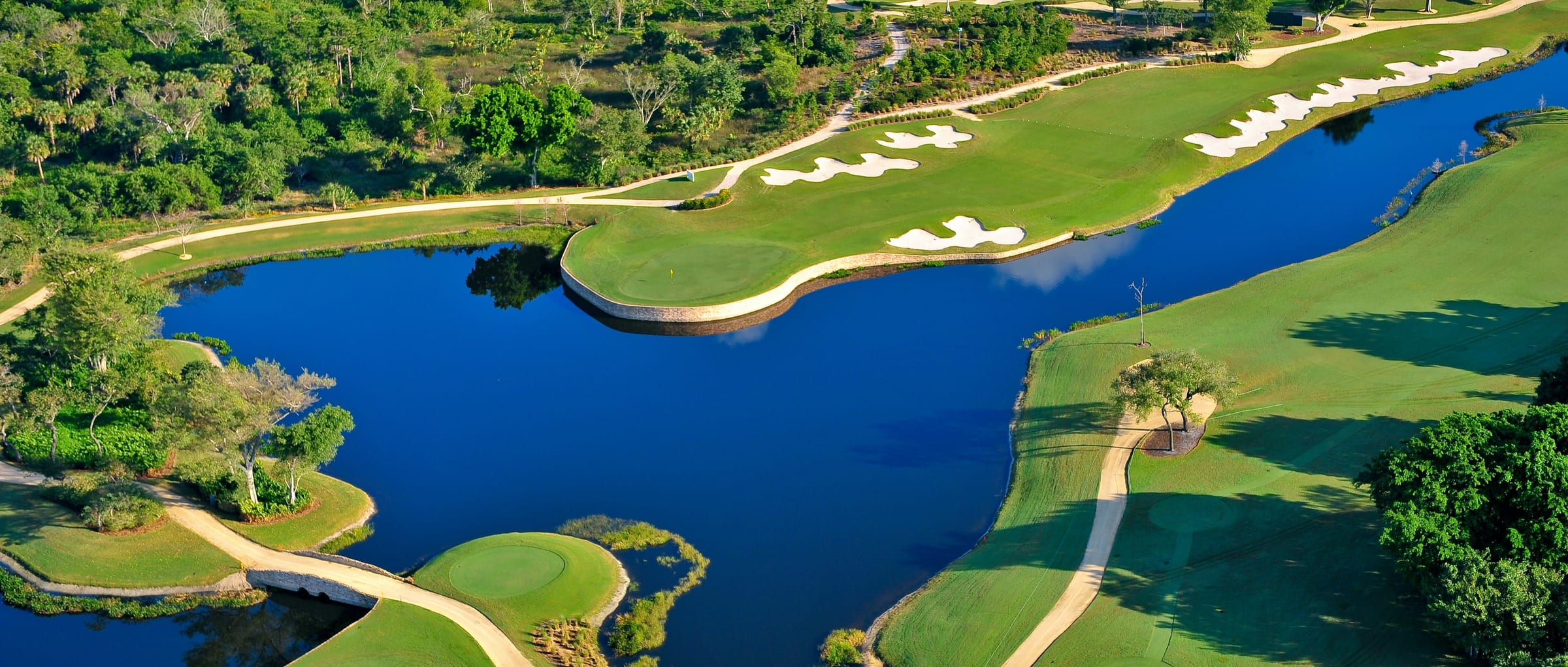
Golf Communities in Southwest Florida
Championship courses and club life, where golf enthusiasts find their perfect home.
Why does membership structure matter more than the course?
Because the course is what you came for and the membership is what you are actually signing.
In a golf community the club is not an amenity you may choose to use. It is frequently part of the purchase, with an obligation attached that continues whether you play thirty rounds a year or none. Buyers who evaluate the golf and skip the structure are the ones who feel differently about the community six months later.
So understand the structure first. It is the part that is hardest to change afterwards.
I am Kris Asquith, Broker Associate at Premiere Plus Realty, working across nine Southwest Florida markets.
Find the Right Club Structure
What are the main membership structures?
Three broad shapes, and they produce very different obligations.
Bundled. Membership comes with the home automatically and the cost sits in your dues. Everybody in the community is a member. This suits people who will genuinely use the club, and it charges people who will not.
Equity. You buy into the club itself and hold an interest in it. This creates an asset with its own terms around transfer, refund and waiting lists, and those terms deserve reading carefully.
Optional or non-equity. Membership stays separate from the home, sometimes with a waiting list. This gives flexibility and it can also mean the thing you moved for is not immediately available to you.
Ask which structure applies, what transfers at closing, on what terms, and whether you can change category later if how you use it changes.
What questions should you take to the club?
Ask the club directly rather than relying only on the seller or the listing, because the club is who will hold you to the answer.
Find out what is mandatory and what is elective. Establish what the total annual obligation looks like across dues, minimums and any assessments. Ask whether membership transfers automatically or requires approval, and what happens if you sell.
Ask about the waiting list if there is one, and how long it currently runs. Ask what capital work the club has planned, because members fund it.
Then ask the same questions of the community association, which is a separate body with a separate budget. People conflate the two constantly and they are not the same thing.
Do you need to play to live here?
No, and it is worth knowing that a golf community is often the better value for a non-golfer than they expect.
These communities usually carry substantial non-golf amenities: dining, fitness, tennis, pickleball, bocce and social programming. Plenty of residents never touch a club. Under a bundled structure, though, you pay for the golf regardless, so the sums only work if you value what else is there.
If you want the amenity package without the course and its obligation, those communities exist. Estero has a well-known example built deliberately without a golf course. That is worth knowing before you assume the choice is golf or nothing.
Where are the golf communities?
Across all nine markets, with genuinely different characters.
Naples spans the widest range and the highest tier. Bonita Springs has established bayfront club communities. Estero offers newer master-planned options. Fort Myers and Cape Coral offer more varied choices again.
There is more on the governance side in gated communities, since nearly all of these are gated too. Tell me how often you actually play and I will tell you which structure fits. Get in touch or call (239) 300-1427.
Frequently Asked Questions
What are the main golf membership structures?
Bundled, where membership comes with the home automatically and sits in your dues; equity, where you buy into the club and hold an interest with its own transfer and refund terms; and optional or non-equity, where membership stays separate from the home, sometimes with a waiting list. Each produces a very different obligation.
Does golf membership transfer when you buy?
It depends on the structure, and you should ask the club directly rather than relying on the seller. Establish what is mandatory versus elective, what transfers at closing and on what terms, whether approval is required, what the total annual obligation looks like across dues and minimums, and whether you can change category later.
Do you have to play golf to live in a golf community?
No. These communities usually carry substantial non-golf amenities including dining, fitness, tennis, pickleball, bocce and social programming, and plenty of residents never use the course. Under a bundled structure you pay for the golf regardless, so the sums only work if you value what else is there.
Is there an alternative to a golf community with the same amenities?
Yes. Some master-planned communities are built deliberately without a golf course while keeping a full amenity package, and Estero has a well-known example. That is worth knowing before assuming the choice is golf or nothing, particularly if a bundled obligation does not suit how you would actually use it.
Who can help you buy in a golf community?
Kris Asquith, Broker Associate at Premiere Plus Realty, covers nine Southwest Florida markets. Call (239) 300-1427 or use the contact page and say how often you actually play, because that answer determines which membership structure works in your favour.
How the golf membership is structured
Bundled, equity and non-equity are genuinely different purchases, and all three exist across these markets. It decides whether the club comes with the house and whether you can be turned down.
Keep exploring
Ready to make your move with Kris Asquith at Premiere Plus Realty?