2026-11-07 · 8 min read · Fort Myers Beach
What Should You Check About the Generator Before Buying a Home on Fort Myers Beach?
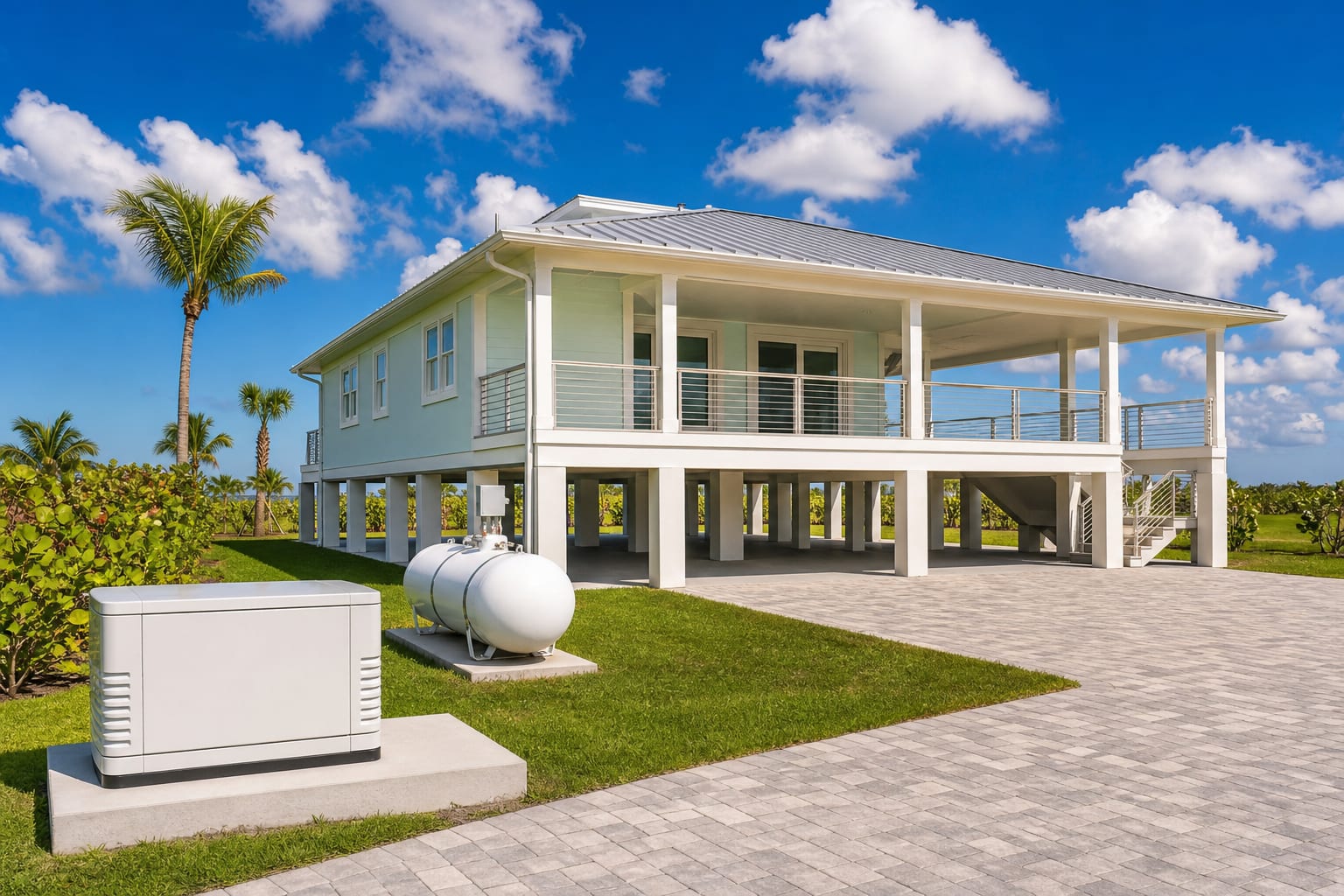
What should you check about the generator before buying a home on Fort Myers Beach?
Find out what kind of generator it is, which parts of the home it actually powers, what fuel it runs on and where that fuel is kept, how high it sits above flood water, whether it and its transfer switch were installed under a permit, and who has been servicing it. Then have a licensed electrician or generator technician test it during your inspection period, because a general home inspector will usually note that a generator is there and stop short of running it under load. Those answers tell you whether the generator will do its job after the next storm or whether it is a repair you would be taking on.
I am Kris Asquith, Broker Associate at Premiere Plus Realty, and I help buyers and sellers on Fort Myers Beach and in eight other Southwest Florida markets. On the island, a generator is about the days after a storm has passed and the power is still out. It is never a reason to stay through one: when Lee County orders an evacuation, leave. But on an elevated home, where the living floors sit a story or more above the ground, a generator that can keep the air conditioning, the refrigerator and the elevator running changes what coming home to a dark street feels like.
What kind of generator does the home have, and what does it power?
Start with the type. A permanent standby generator is fixed outdoors, connected to the home through an automatic transfer switch, and starts on its own when utility power drops. A portable generator is wheeled out when needed and connected through a power inlet and either a transfer switch or an interlock on the electrical panel. Some homes have neither and rely on extension cords, which is a different arrangement altogether.
Then ask what it carries. A transfer switch can be set up to run the whole panel or a chosen group of circuits, so "has a generator" can mean the entire home or a refrigerator and a few lights. Ask the seller and your electrician for the list: air conditioning, kitchen, water heater, pool equipment, lighting, and on an elevated home, the elevator. If the elevator is meant to run on the generator, ask whether anyone has actually tested it that way. My article on checking the elevator in an elevated home on Fort Myers Beach covers the elevator itself.
Where does the generator sit, and was it in the water during Ian?
Look at its height first. On an elevated home, anything placed at ground level sits in the area built to let flood water pass through, and Hurricane Ian flooded ground levels across much of the island in 2022. Homes that were built new or substantially improved under current flood rules generally have to keep the equipment that serves them at or above a required height, so on a newer or rebuilt home a standby generator may sit on a raised platform. On an older home, it may still sit near the slab.
Then ask the seller directly: did water reach the generator in Ian or any later storm, and what was done afterward? Salt water reaches the engine, the alternator and the controls, so a unit that sat in it may have been replaced, or it may have been dried out and put back in service. Those are very different outcomes for a buyer. Compare the answer with the permit record. My article on what to check before buying a rebuilt home on Fort Myers Beach explains how to read a home's storm history and its permits together, and my article on what you can use the ground floor for under an elevated home explains how that lower level is meant to work.
What fuel does it run on, and where is the fuel kept?
Standby generators commonly run on propane or natural gas, and some larger units run on diesel. Ask which one this home uses, where the tank or the gas line is, and whether the fuel system was installed under its own permit. If there is a propane tank, ask whether the seller owns it or leases it from a propane company, because a leased tank comes with the supplier's account and terms rather than with the deed. Ask how full it is too.
On the island, the tank's anchoring matters as much as its size. Flood water can lift a fuel tank that is not tied down, and FEMA's guidance for buildings in flood zones calls for tanks to be anchored so they cannot float away. Ask your inspector to look at how the tank is secured and whether it sits at the same raised height as the generator. Ask the technician, too, how long the fuel on hand will run the generator at the load it is set up to carry, so you know what the home can actually do after a storm.
What permits and records should the seller have?
Ask for the permit and final inspection for the generator, the transfer switch and the fuel system, plus the service history and any warranty paperwork. The Town of Fort Myers Beach handles building permits for homes on the island, so the record for the address comes from the Town. A transfer switch matters for safety as well as convenience: a generator connected without one can send power back into the utility lines, which is a hazard to the home and to the crews restoring power after a storm.
Read the service record for gaps. Standby generators need regular maintenance, such as oil, filters and the starting battery, and most run a short automatic self-test on a schedule, so ask whether that test is still running. A unit that went years without service, or one replaced after a storm with no permit behind the work, is a question for the seller before you commit, because unpermitted work passes to the new owner at closing. If there is a warranty, read whether it transfers to a new owner and what it takes to register. My article on checking the electrical system before buying on Fort Myers Beach covers the panel and wiring the generator feeds.
How does salt air affect a generator on the island?
Slowly and constantly. A generator spends nearly all of its life sitting outdoors, waiting, in humid salty air. Look at the enclosure for rust or bubbling paint, especially at the seams, hinges and base, and at the bolts that hold it to its pad or platform. Ask your technician to open it and check the battery terminals, the wiring connections and the control board for corrosion, since those are the parts that decide whether it starts when you need it. Ask how old the unit is and whether its enclosure was built for coastal exposure. My article on checking for salt air corrosion on Fort Myers Beach covers the air conditioning, railings and fasteners around the rest of the home.
What about a portable generator?
Ask how it is meant to connect. A portable generator should feed the home through a permitted inlet and a transfer switch or panel interlock, never by plugging it into a wall outlet. Then think about where it would run. The U.S. Consumer Product Safety Commission warns that portable generators produce carbon monoxide and should never be run inside a home or garage or in any enclosed or partly enclosed space, and should be kept well away from windows, doors and vents. The enclosed area under an elevated home is not a safe place to run one, even with the doors open. Check that the living floors have working carbon monoxide alarms.
Also confirm whether it stays. A portable generator is usually treated as personal property rather than part of the home, so if you expect it to come with the house, write it into the contract.
Who looks after the generator in a Fort Myers Beach condo?
Usually the association, if the building has one. Ask whether the building has an emergency generator, what it runs (elevators, hallway and stair lighting, fire safety equipment, pumps), when it was last tested and serviced, and whether it appears in the reserve schedule, because replacing a building generator is a large project that may be paid from reserves or from a special assessment. Ask, too, whether owners may keep or install a generator of their own, since the declaration and the rules decide that, not the seller. My article on what to look for in the condo documents on Fort Myers Beach shows where those answers tend to show up.
What should you do with what you find?
Sort it like any inspection finding. A generator that starts and carries its load, sits above flood height, has permits behind it and a steady service record is a maintenance item: keep the service going after closing. Rust, a unit near the slab, an unanchored tank, missing permits or a storm replacement with no paperwork call for a technician's written assessment and estimate, so you can decide whether to ask for a repair, a credit or a change in terms. Your contract sets how long you have to decide, so book the generator test as soon as you go under contract. My step-by-step buying process shows where the inspection period falls.
If you are selling, gather the generator, transfer switch and fuel permits, the service records, the warranty and any propane lease before you list, and have the unit serviced so it runs when a buyer's technician tests it. I am glad to go through the records on a specific home with you. Get in touch or call (239) 300-1427.
This article is a general overview and is not legal, insurance or construction advice about any particular property. Confirm the specifics with a licensed electrician or generator technician, your home inspector, your insurance agent, a real estate attorney, the association and the Town of Fort Myers Beach.
Frequently Asked Questions
Does a home inspection cover the generator?
Usually only briefly. A general home inspector will note that a generator is there and may look at it, but a licensed electrician or generator technician is the one to start it, run it under load, check the transfer switch and look inside for corrosion. Book that visit during your inspection period.
Does a generator stay with the house when it sells?
A permanently installed standby generator is usually treated as part of the home, while a portable one usually is not. Whatever you expect to stay, write it into the contract so there is no question at closing.
Can I run a portable generator under my elevated home on Fort Myers Beach?
No. The U.S. Consumer Product Safety Commission warns never to run a portable generator in a garage or any enclosed or partly enclosed space because of carbon monoxide. Run it outdoors, well away from windows, doors and vents, and keep working carbon monoxide alarms on the living floors.
How do I know if the generator was damaged in Hurricane Ian?
Ask the seller directly whether water reached it and what was repaired or replaced, ask for the invoices, and compare the answers with the Town of Fort Myers Beach permit record. Then have a technician inspect it before your inspection period ends.