2026-11-16 · 8 min read · Estero
What Should You Check About the Electrical System Before Buying a Home in Estero?
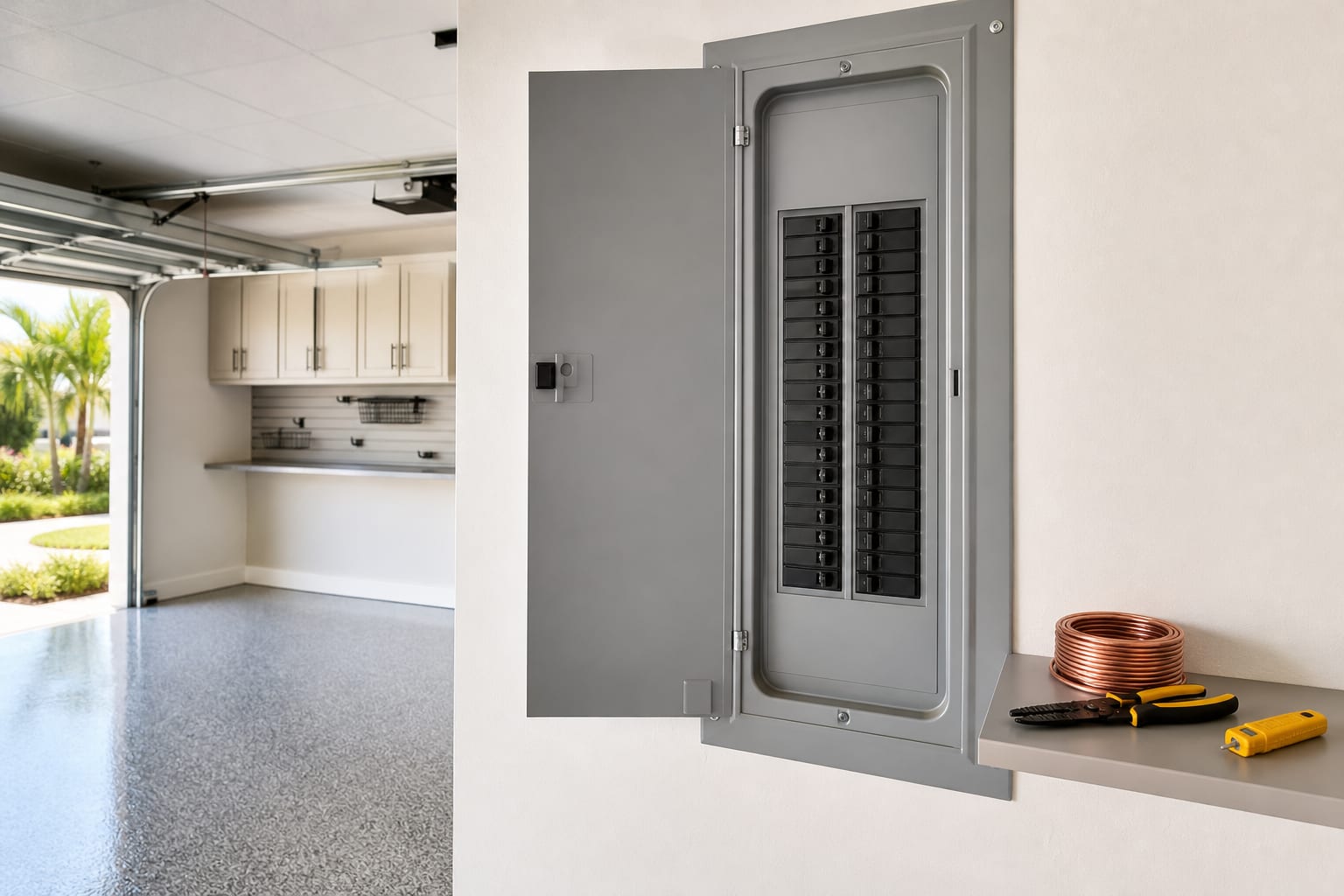
What should you check about the electrical system before buying a home in Estero?
Find out what brand and age of electrical panel the home has, what kind of wiring runs through it, whether any of it was ever damaged by water, what equipment has been added to the system over the years, and whether past electrical work has a permit and a final inspection behind it. Those answers decide whether the home can be insured on ordinary terms, whether a repair bill is waiting behind the walls, and what to raise with the seller before your inspection period ends.
I am Kris Asquith, Broker Associate at Premiere Plus Realty, and I help buyers and sellers in Estero and eight other Southwest Florida markets. Estero has resale homes of many ages alongside new construction that is still being built. A home can show beautifully, with new fixtures and fresh paint, while the panel in the garage is original and the wiring behind it has never been looked at. A showing almost never opens that panel door. Your inspector should.
Why do insurers look so closely at the electrical panel?
Because many Florida insurers require a four-point inspection on an older home before they will write a policy, and the electrical system is one of the four points, alongside the roof, the plumbing and the heating and air conditioning. The inspector removes the panel cover and records the brand, the amperage, the type of wiring and any visible hazards, such as scorched or melted breakers, two wires sharing one breaker terminal, missing knockouts or a cover that does not fit. The insurer reads that report before it decides whether to offer coverage and on what terms.
Two panel brands come up again and again: Federal Pacific Electric, especially its Stab-Lok line, and Zinsco. Some insurers will not write a home that still has one, and others will only on narrower terms. A fuse box in place of breakers is another common flag. If the listing does not say what panel the home has, ask, and have your inspector photograph the label inside the door so you and your insurance agent are working from the same facts.
What wiring questions should you ask about an older Estero home?
Start with the material. Aluminum branch wiring was used in some homes built from the mid-1960s into the early 1970s, and the concern is the connections at outlets, switches and fixtures, where aluminum can loosen and overheat over time. Some insurers decline it, while others accept it once a licensed electrician has made approved repairs at the connections and can document them. If the home is old enough to have it, ask the seller directly and ask your inspector to check.
In newer homes the questions are about change over time. Ask whether the panel is original, whether its capacity still fits how the home is used now, and what has been added since it was built. A pool heater, a larger air conditioner, an electric vehicle charger, an outdoor kitchen or a converted lanai each draws on the same panel. None of them is a problem in itself. Each one is a circuit that should have been added properly, and your inspector can tell you whether the panel looks crowded or improvised.
How do you find out whether the electrical system was ever damaged by water?
Ask, then check the records. Water does not have to come from a storm surge to reach the wiring. A roof leak, a burst supply line or a clogged air conditioning drain above a ceiling can soak a junction box or an outlet just as surely, and outlets, breakers and wiring that sat in water can corrode after they dry out. The usual guidance for electrical equipment that has been under water points toward replacing much of it rather than drying it out and putting it back in service.
Florida now requires the seller of residential property to give the buyer a written flood disclosure at or before the time the contract is signed, covering flood damage the seller knows about during their ownership, flood insurance claims and help received to repair flood damage. Read it alongside the permit record. If any part of the home took on water and there is no electrical permit afterward, that is a question to settle before you commit. My article on what a home inspection covers in Estero explains what the general inspector can and cannot see inside the walls.
What added equipment should you look at outside the walls?
Walk the outside of the home with your inspector and note everything that connects to the electrical system, because it all lives in Southwest Florida heat and rain.
- The meter and the main disconnect. Rust, a loose mast or a cracked meter base are worth noting, and some repairs here involve the utility that serves the address as well as an electrician.
- Pool and spa equipment. Pumps, heaters and lighting need correct bonding and ground-fault protection. My article on checking the pool and screen enclosure in Estero covers the rest of the pool equipment.
- A standby generator. It connects through a transfer switch, and both should have been installed under a permit by a licensed contractor. Ask for the permit, the service records and the age of the unit, and ask whether the community's architectural rules governed where it could go.
- Solar panels. They tie into the panel too. My article on checking solar panels before buying in Estero explains how to find out who owns the system and what comes with it.
- Landscape lighting, outdoor kitchens and car chargers. Each adds a circuit. Confirm each one works and ask whether it was permitted.
What can the permit record tell you about past electrical work?
Whether major work was done properly and inspected. Replacing a panel, rewiring, adding a generator and adding a solar system typically require permits. In Estero that record can sit in two places: the Village of Estero holds permits for work since it took over building services, and Lee County holds the record for work permitted before 2016, because Lee County Community Development handled building and permitting for the Village until then. An older home can have its original electrical work on the county's record and a newer panel on the Village's, so check both before you decide something is missing. My article on checking a home's permit history before buying in Estero explains how to request each one.
If the seller says the panel was replaced, the record should show it with a final inspection. If the panel is clearly new but the record shows nothing, ask who did the work and when. Unpermitted work passes to you when you buy, and an insurer or a future buyer may ask about it.
Does buying new construction or a condo change the electrical checks?
It changes who answers for the system. On a new home, the electrical work is usually covered by the builder's warranty for a set period, and the warranty documents say what is included and for how long. Have your own inspector look at the home before the final walk-through anyway, have the ground-fault outlets tested, and make sure the panel directory is filled in. My article on what to ask about a builder's warranty in Estero explains what to read before closing.
In a condominium, the electrical system is usually split between the unit owner and the association, and the declaration draws the line. Wiring and outlets that serve only your unit are often yours, while the main service, the meter rooms and the common-area wiring usually belong to the association. Read the documents rather than assuming, and ask the association whether any building-wide electrical project is planned, because large projects can be paid for by special assessment.
What should you do with what you find?
Sort it into three groups: what affects insurability, what is a safety repair, and what is routine upkeep. An insurer-flagged panel, aluminum wiring without documented repairs, or wiring that took on water and was never replaced belong in the first two groups. Resolve those before you commit, whether by asking the seller to repair, adjusting the terms, or getting a licensed electrician's written estimate and an insurance quote so you know exactly what you are taking on. A missing cover plate or an unlabeled breaker is ordinary upkeep. Your contract sets how long you have to decide, so book any specialist the day you go under contract. My step-by-step home buying process shows where the inspection period falls.
If you are selling, gather the panel or rewire permit, the generator and solar paperwork and any electrical invoices before you list, so a buyer sees an organized record instead of a question. My page on buying a home in Estero covers the wider picture, and I am glad to go through the inspection report on a specific home with you. Get in touch or call (239) 300-1427.
This article is a general overview and is not legal, insurance or electrical advice about any particular property. Confirm the specifics with a licensed electrician, your home inspector, your insurance agent, the association, the utility that serves the address, the Village of Estero and Lee County.
Frequently Asked Questions
Will an insurer cover an Estero home with a Federal Pacific or Zinsco panel?
Some will not, and others only on narrower terms. Those two brands are among the panels insurers most often flag on a four-point inspection. Ask your insurance agent before you commit, and have your inspector photograph the panel label so you know exactly what is there.
Is aluminum wiring a deal breaker in an older Estero home?
Not always. Some insurers decline aluminum branch wiring, while others accept it once a licensed electrician has made approved repairs at the connections and can document them. Ask the seller what was done and get an insurance quote during your inspection period.
Where do I find the electrical permit history for an Estero home?
Check both offices. The Village of Estero holds permits for work since it took over building services, and Lee County holds records for work permitted before 2016. Look for electrical permits with a final inspection, especially for a panel replacement, a generator or solar panels.
Does a home inspection open the electrical panel?
A general home inspection usually removes the panel cover where it is safe to do so and reports on the panel, the breakers and visible wiring. It cannot see wiring inside the walls, so if the report raises a concern, ask a licensed electrician to evaluate it during your inspection period.